How to Choose a Signature Scent: A Thoughtful Guide to Finding Your Perfume
Not the perfume everyone remembers. The one you recognise yourself in. A practical guide to scent families, skin testing and twenty different places to begin.
October 16, 2026
A perfume can feel right before you have the vocabulary to explain why. It might recall the peel of an orange, a freshly laundered shirt, a rose garden after rain or the warmth of a wooden room. Choosing a signature scent begins with noticing that response, not with memorising a list of fashionable bottles.
The difficulty is that perfume counters ask you to decide quickly. The opening is persuasive, the language can be opaque, and a fragrance that smells inviting on paper may become something quite different over an afternoon. A more useful method is to learn a little, sample selectively and give the final decision time.
This guide explains the main types of fragrance in everyday language, what notes and concentrations actually tell you, and how to test a perfume in your own life. The twenty examples are starting points for comparison, not a ranking or a promise of how something will smell on your skin. No single family, price or label makes a perfume more personal than another.
The short answer: how to find your signature scent
Start with two scent directions you already enjoy. Compare a small selection on paper, wear your favourites separately on skin, and judge the later scent as carefully as the first spray. Choose the one you want to return to on an ordinary day, not only the one that impresses you in a shop.
- Name three smells you love and three you would rather avoid.
- Choose two fragrance families to explore, then sample two or three perfumes within them.
- Wear one finalist at a time through a normal day, repeating the test on another occasion.
- Consider sweetness, texture, presence, comfort and the cost of replacing it.
- Buy a sample, discovery set or smaller bottle before committing to a full-size one.
What is a signature scent, really?
A signature scent is a perfume you wear often enough that it becomes familiar: to you first, and sometimes to the people close to you. It does not need to be rare, expensive or recognisable across a room. Familiarity comes from repetition and affection, not exclusivity.
Nor does choosing one require a lifetime commitment. You might have a dependable everyday fragrance and something different for evenings, or two related perfumes for warmer and colder weather. A small scent wardrobe can be as coherent as a single bottle.
Think of the choice as a relationship with a smell rather than an exercise in branding yourself. Your perfume does not have to announce that you are romantic, successful or adventurous. It needs to feel comfortable enough to live with.
A signature scent is not a personality test. It is a preference you keep returning to.
Fragrance families: a beginner’s map
Families group perfumes by their overall character. Different houses and classification systems draw the boundaries differently, and most modern compositions cross more than one. Use them as directions on a map, not rigid boxes. A floral can be crisp and green; a woody scent can be creamy; a vanilla fragrance can be smoky rather than sugary.
Fresh: citrus, green and aromatic scents
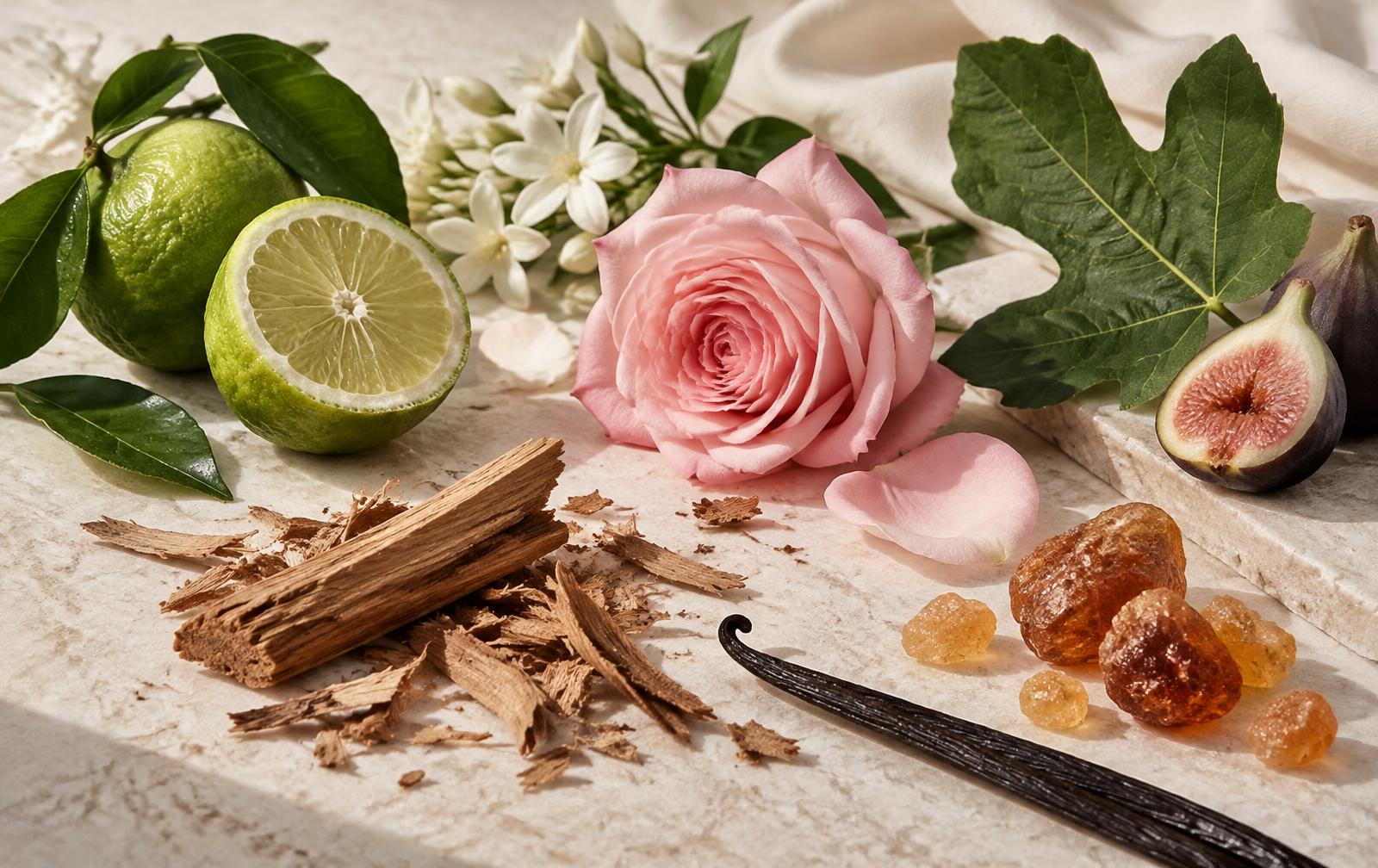
Citrus perfumes bring the impression of lemon, bergamot, mandarin or grapefruit peel. They can feel sparkling, bitter or juicy rather than merely sweet. Green fragrances suggest leaves, stems, grass or the milky greenness of fig. Aromatic compositions often introduce herbs such as sage, lavender or basil.
These are useful starting points if you enjoy freshness but dislike laundry-like perfume. Look beyond the opening: woods, musk or floral notes may give a bright scent a more substantial finish. For more focused comparisons, read our citrus perfume guide.
Perfumes to smell in this family: Hermès Un Jardin sur le Nil, for watery greenery and wood; Guerlain Aqua Allegoria Mandarine Basilic, for juicy citrus with herbs; Jo Malone London Wood Sage & Sea Salt, for a mineral, coastal freshness.
Floral: petals, bouquets and different kinds of softness
Floral does not automatically mean sweet or powdery. Rose can be fresh, peppery or jam-like; jasmine can feel airy in one composition and rich in another. White-floral perfumes often have a fuller, more enveloping character, while a sheer floral may suggest petals in water.
A fruity floral combines flowers with impressions such as pear, peach or berries. If you like flowers but dislike sweetness, ask for a green floral or a floral with a woody base. The question is not simply whether you enjoy flowers, but how you want them framed.
Perfumes to smell in this family: Dior J’adore, for a full, luminous bouquet; Chanel Chance Eau Tendre, for a softer fruity floral; Maison Margiela Replica Lazy Sunday Morning, for sheer petals and clean musk.
Fruity and gourmand: sweetness, fruit and modern comfort
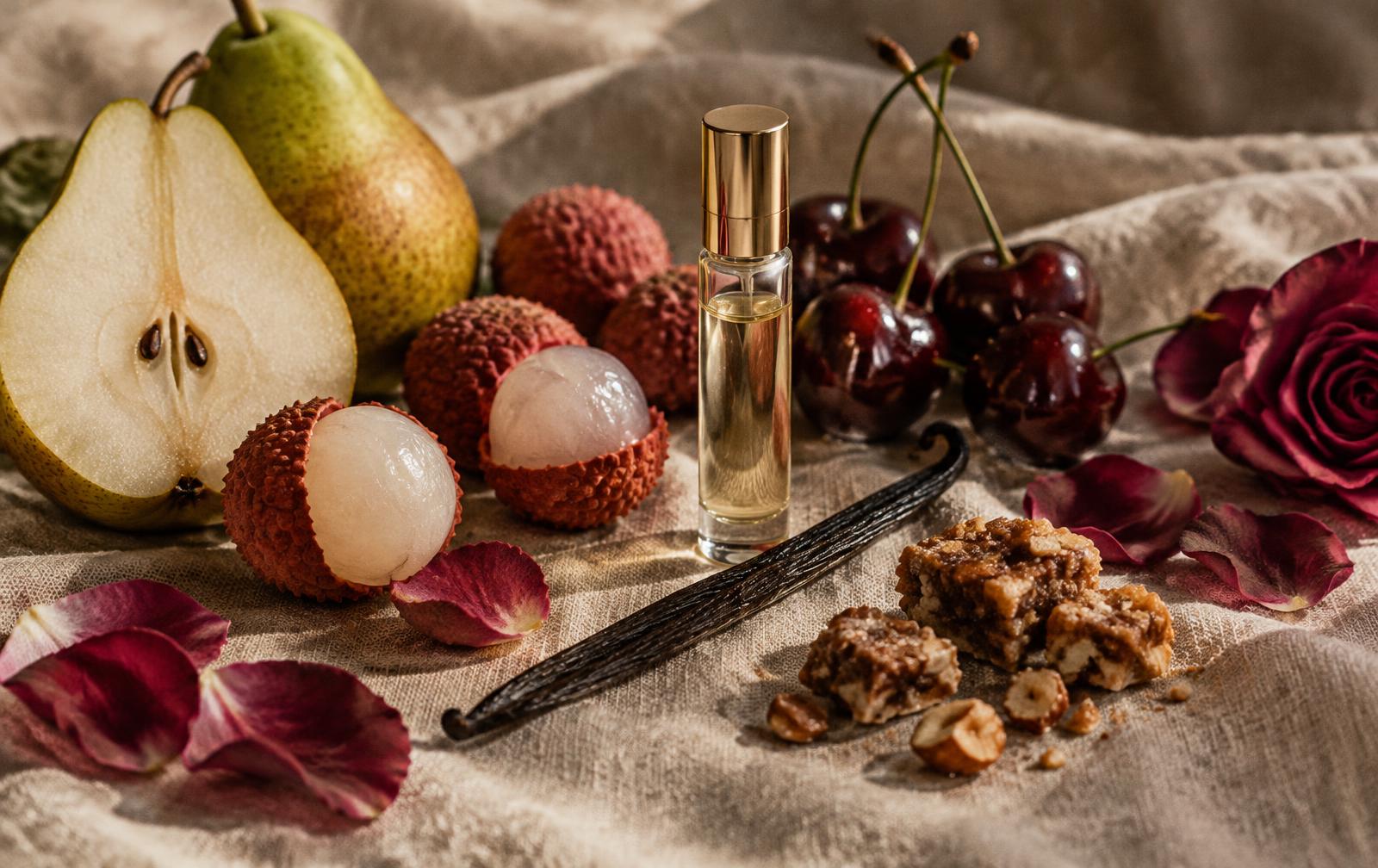
Many people choose a sweet or fruity perfume as their first signature, and there is nothing naive about that preference. Fruits other than citrus are rarely extracted directly; pear, peach, lychee or cherry are usually recreated as impressions. Gourmand scents draw on edible associations such as vanilla, caramel, praline, almond, coffee or a spun-sugar effect.
Fruity scents tend to move in two directions. Fresh fruit, such as pear, white peach, green apple or lychee, feels bright and easy to wear by day. Darker fruit, such as plum, black cherry, blackcurrant or ripe fig, feels more velvety, liqueur-like and evening-led.
Sweetness becomes refined when something balances it: woods, white flowers, spices, incense or a mineral, airy texture. If you love sweet perfume but find some cloying, look for that counterweight in the description and judge the drydown, which is where sugar tends to linger.
Perfumes to smell in this family: Jo Malone London English Pear & Freesia, for fresh pear and flowers; Parfums de Marly Delina, for lychee and rhubarb around rose; Tom Ford Lost Cherry, for dark, liqueur-like cherry with almond; Maison Francis Kurkdjian Baccarat Rouge 540, for an airy, sugared amber-wood effect; Kilian Love, Don’t Be Shy, for a plush, marshmallow-like orange blossom.
Woody: dry, creamy or smoky
Woody perfumes can evoke cedar’s pencil-shaving dryness, sandalwood’s rounded creaminess or vetiver’s root-like, earthy character. Some are airy and smooth; others feel smoky, leathery or dense. The word woody describes a broad texture, not a guarantee of heaviness.
If you want something grounded but not sweet, this is a useful family to explore. Compare a greener wood with a creamier one before deciding that all woody perfumes are alike. A fragrance marketed to men can be just as relevant to your search as one marketed to women.
Perfumes to smell in this family: Le Labo Santal 33, for dry, spicy, leathery wood; Byredo Gypsy Water, for pine, incense and soft sandalwood; Diptyque Philosykos, for fig wood with a green, milky softness.
Amber and gourmand: warmth is not always dessert
Amber in perfumery usually describes an accord, a blended impression of warmth that may involve vanilla, resins or balsamic materials. It is not a literal promise that fossilised amber is inside the bottle. Spices, incense and woods can make that warmth feel dry; other compositions are plush and sweet.
Gourmand scents draw on edible associations such as vanilla, caramel, almond, coffee or chocolate. There is overlap with amber, but the terms are not interchangeable. Vanilla paired with incense behaves differently from vanilla surrounded by praline. Our vanilla perfume edit explores that range, including richer choices rather than treating every vanilla as non-sweet.
Perfumes to smell in this family: Guerlain Shalimar, for classic amber with a bright opening; Diptyque Eau Duelle, for vanilla with spice and incense; Tom Ford Tobacco Vanille, for rich tobacco and gourmand warmth.
Musk, powder, leather and chypre: the useful extra vocabulary
Musky scents may feel clean, soft, warm or skin-like. The phrase skin scent describes an intimate effect rather than one official fragrance family, and not every musk stays close on every wearer. Powdery means an impression of cosmetic powder or soft, dry texture; iris, violet and other materials can help create it.
Leather is also an impression, sometimes supple and suede-like, sometimes darker and smoky. Chypre, pronounced roughly sheep-ra, traditionally describes a structure built around a bright citrus opening and a mossy, woody base; contemporary interpretations vary. Fougère, meaning fern, is a classic aromatic structure often associated with lavender and a coumarin-like, hay-toned warmth. Neither word refers to a single ingredient or a rule about who should wear it.
These terms become useful when a broad family is not enough. You might dislike sugary perfume yet love powder, or want a leather accent without a smoky room. Naming that distinction makes a conversation at a fragrance counter much more productive.
Perfumes to smell in this family: Le Labo Another 13, for an abstract, modern musk; Maison Margiela Replica Lazy Sunday Morning, for a clean-linen softness; Matière Première Vanilla Powder, for a powdery, woody vanilla.
Notes, accords and drydown: how to read a perfume description
A note is a named smell impression: rose, cedar, pear, sea salt. It is not necessarily an ingredient extracted from that object. An accord is a combination of materials designed to suggest a recognisable effect, such as leather or amber. The note list is an invitation to imagine the scent, not the complete formula or the ingredient declaration used for safety information.
The familiar top, heart and base pyramid describes how a perfume may unfold. Top notes are the first impression; the heart describes the developing character; the base is the more persistent foundation. The drydown is what remains as the composition settles. These stages overlap, and some perfumes change very little while others shift noticeably.
Imagine a scent that opens with bright bergamot, becomes floral, then settles into warm musk and wood. Loving the citrus opening is not enough if you dislike the later warmth. Your signature scent needs to work during the hours you actually wear it.
Do not reject a fragrance solely because one listed note sounds unappealing. A small touch of tobacco need not smell like a cigarette, and rose need not resemble rose water. Composition matters more than a checklist.
Eau de toilette vs eau de parfum: what changes?
Eau de cologne, eau de toilette, eau de parfum and parfum are labels commonly used to describe concentration categories. Cologne is generally lighter in concentration, with EDT, EDP and parfum usually moving upwards. But there are no universal percentages that let you compare every brand with precision, and those labels do not guarantee a fixed number of hours of wear.
Concentration is only part of performance. The formula, the materials, the dose and your environment all affect what you perceive. An EDP is not automatically better, more elegant or more noticeable than an EDT. A powerful formula may project strongly even at a lower concentration.
More importantly, the EDT and EDP versions of a named perfume may be different compositions, not simply more or less of the same liquid. Always sample the exact version you plan to buy. Treat extrait or parfum as another option to evaluate, not an automatic upgrade.
- Longevity: how long a fragrance remains detectable.
- Projection: how far its presence reaches around the wearer.
- Sillage: the trail a fragrance leaves as you move.
- Intensity: how strong the smell feels to you at a given moment.
Begin with your real preferences, not a personality label
Before browsing bottles, write down smells you enjoy outside perfumery. Citrus peel, black tea, clean cotton, a florist’s stems, polished wood, baking spices or the air after rain are useful clues. Then record your dislikes with the same specificity: syrupy sweetness, sharp detergent, heavy smoke, medicinal herbs or a dense floral bouquet.
Next, describe the effect you want. Do you prefer crisp or warm, dry or sweet, airy or enveloping? Would you like your scent to remain intimate, or do you enjoy a more noticeable presence? These contrasts tell you more than a quiz that assigns a perfume to your star sign or clothing style.
Finally, consider an ordinary day. A crowded commute, a shared office, warm weather and scent-sensitive people around you all matter. None of this bans a family of perfume; it changes the dose and the occasion. A signature scent should fit the life you lead, not only the evening you imagine.
- I enjoy the smell of…
- I would rather avoid…
- I want my perfume to feel…
- I will mostly wear it in…
- My comfortable budget for a replacement bottle is…
How to test perfume without overwhelming your nose
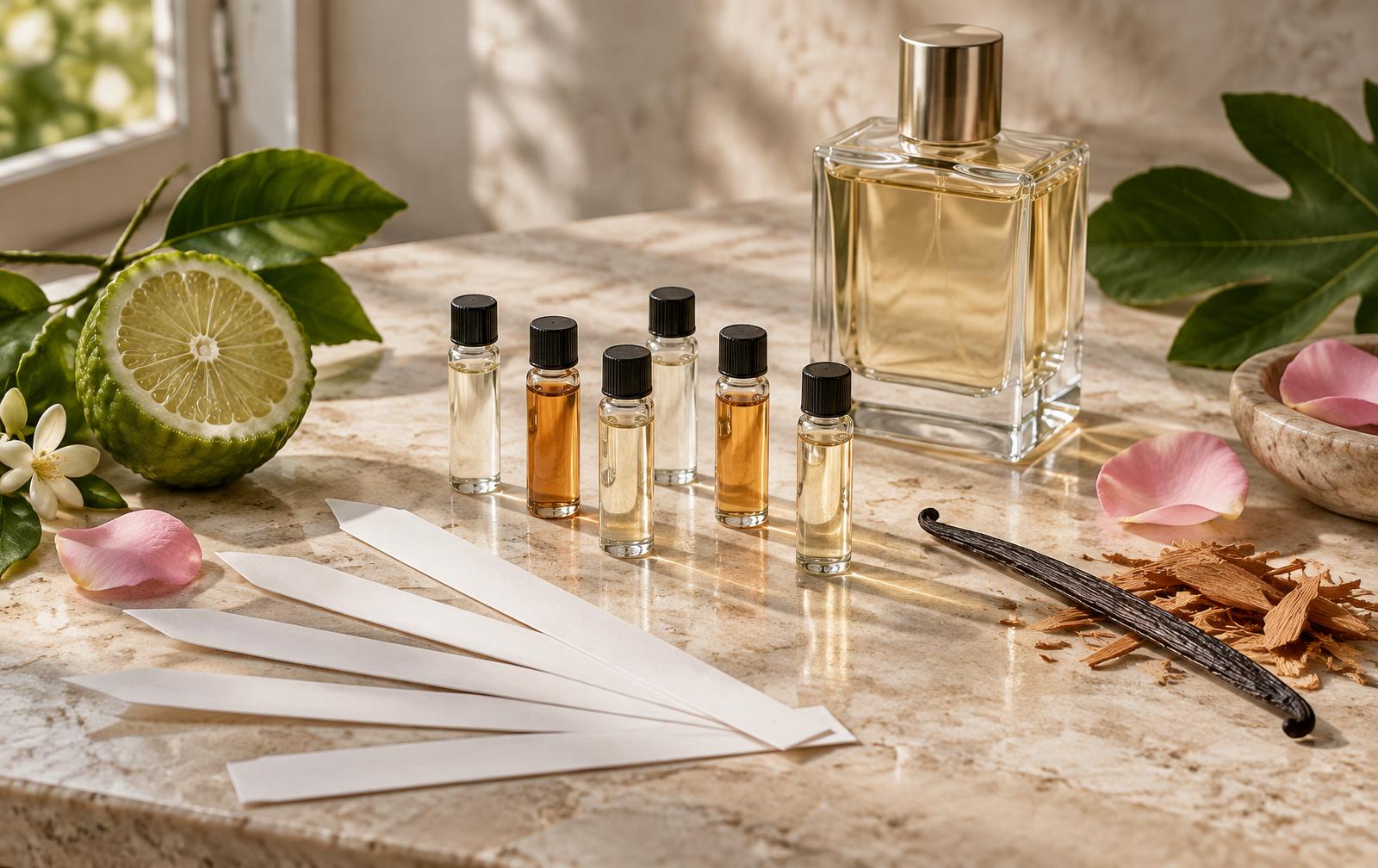
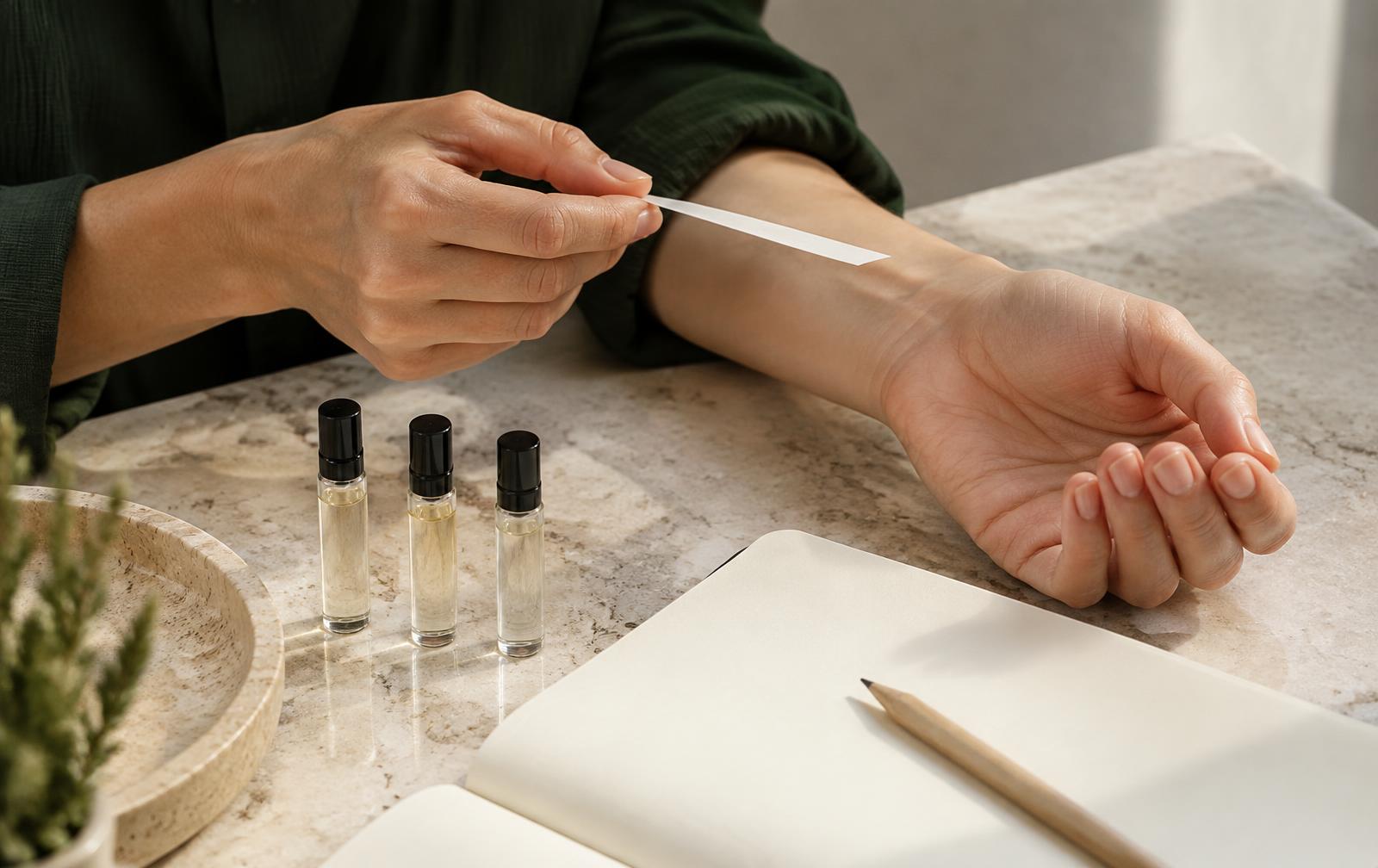
Use paper blotters to narrow the field, then skin to make the final choice. Write the perfume name and concentration on each strip. Allow the first spray to settle before smelling, and compare only a small group. If everything starts to smell similar, take a break in fresh air rather than forcing another comparison.
For finalists, wear one perfume at a time on clean, intact skin, following the product’s directions. Avoid a strongly scented body lotion during the comparison. There is no need to rub wrists together: letting the scent settle is a simpler way to observe its development. Note how it smells after the initial opening, later in the afternoon and towards the end of your day.
Repeat the test. Skin condition, application, temperature, other scented products and your own perception can change the experience. This does not mean there is a magical formula that will identify the correct perfume for your body chemistry. It means a single hurried sniff is a poor basis for an expensive decision.
If you have sensitive skin or a history of fragrance reactions, seek advice from a qualified clinician before experimenting on skin. Do not spray onto irritated areas, near eyes or mucous membranes. Stop using a product if it causes irritation or discomfort; an at-home trial does not establish that a fragrance is allergy-safe.
Keep a simple scent diary
A few words are more useful than a complex score. For each sample, note the exact name and version, your first impression, its later character and whether you wanted to smell it again. Describe your own response before looking up reviews.
For example: ‘Bright at first, softer and woodier after lunch. Comfortable in the office. Wanted another wear.’ Or: ‘Loved the opening, but the sweet base became distracting.’ The second entry is not a bad review. It is a useful answer to your particular search.
You can also ask someone you trust whether the fragrance is still noticeable at a comfortable distance. Olfactory adaptation means you may notice a familiar smell less with continued exposure; not smelling it yourself does not always mean it has disappeared. Resist the urge to keep adding sprays solely to chase your own first impression.
Twenty perfumes to sample, by scent direction
The following selection is deliberately varied. Compare neighbouring examples to discover your preferences rather than sampling all twenty in one sitting. The profiles use the brands’ published descriptions and our editorial reading of those directions, not claimed hands-on wear tests. Longevity, sweetness and projection are personal observations to check for yourself.
Use the full name, including EDT or EDP, when requesting a sample. Retailer availability, sizes and formulations can vary by market; check the exact listing before purchasing. Designer and niche are commercial categories, not a hierarchy of quality or a guarantee that a scent will suit you.
01 · Hermès Un Jardin sur le Nil Eau de Toilette
Scent direction: Green, fresh and gently woody.
Hermès describes green mango, lotus and sycamore. This is a useful first comparison if you want freshness that moves beyond citrus alone, towards watery greenery and wood rather than a sugary fruit effect.
Consider it if you enjoy a garden-like impression. Compare it with Philosykos to learn whether you prefer an airy green direction or a more milky, leafy one.
02 · Guerlain Aqua Allegoria Mandarine Basilic Eau de Toilette
Scent direction: Citrus and aromatic green freshness.
Mandarin and basil give this fragrance its central contrast: juicy brightness against herbal character. It is a useful reference for the citrus-aromatic direction rather than a dessert-like orange scent.
Sample it if citrus peel and kitchen herbs sound appealing. Check that you are trying Mandarine Basilic EDT rather than another variation in the Aqua Allegoria collection.
03 · Jo Malone London Wood Sage & Sea Salt Cologne
Scent direction: Aromatic, mineral and woody.
Jo Malone highlights ambrette seeds, sea salt and sage. The language is coastal rather than tropical: a mineral, herbal direction to compare with brighter citrus or more overtly floral perfumes.
Consider it if you want freshness without a prominent flower or vanilla theme. Do not assume the word cologne tells you exactly how long it will last on you; that is part of the sample test.
04 · Diptyque Philosykos Eau de Toilette
Scent direction: Leafy green, fig and woody softness.
Diptyque’s description centres on the fig tree, from leaf and fruit to its wood. It offers a helpful lesson in green perfume: a leafy impression can have a rounded, milky aspect without becoming a sugary gourmand.
Start here if the smell of gardens interests you more than a floral bouquet. Sample the EDT specifically; the EDP is a separate comparison, not an interchangeable purchase.
05 · Chanel Chance Eau Tendre Eau de Parfum
Scent direction: Fruity floral with a soft musky direction.
Chanel presents this version around jasmine and rose in a fruity-floral composition. It belongs on a shortlist for someone who wants flowers with a softer, approachable framing rather than pronounced smoke or dry wood.
Compare it with J’adore to decide how much floral fullness you enjoy. Make sure the sample is Eau Tendre EDP: Chance is a collection, not one uniform scent.
06 · Dior J’adore Eau de Parfum
Scent direction: A fuller floral bouquet.
Dior describes a bouquet involving ylang-ylang, Damascus rose and jasmine. This makes it a useful reference for a more expansive floral direction, rather than the idea that every floral perfume is delicate or powdery.
Consider it if you actively enjoy flowers as the centre of a perfume. Compare it with a cleaner musk to understand whether you prefer a recognisable bouquet or a subtler fabric-like impression.
07 · Jo Malone London English Pear & Freesia Cologne
Scent direction: Fruit and floral freshness with a grounded base.
The house highlights pear, freesia and patchouli. Pear offers an approachable fruity starting point, while the floral and base notes make this more than a literal fruit impression.
It is worth comparing if you like the idea of fruit but find rich gourmands too edible. Ask whether you enjoy the later scent as much as the pear-led opening.
08 · Maison Margiela Replica Lazy Sunday Morning Eau de Toilette
Scent direction: Soft floral musk with a clean-fabric association.
Maison Margiela frames this fragrance around fresh linen and highlights lily of the valley, iris and white musk. It is a useful reference for clean softness, distinct from the peel-like sharpness of citrus.
Consider it if you want a familiar, fabric-like comfort. If laundry scents are a dislike, sample cautiously rather than treating the word clean as automatically appealing.
09 · Le Labo Another 13 Eau de Parfum
Scent direction: Musky, ambery and textural.
Le Labo builds its description around ambroxyde, with jasmine and moss among the supporting references. The brand describes this central material as a synthetic animal musk; this is a good example of why a perfume need not revolve around a flower or edible object.
Explore it if you are curious about modern, abstract scents. Do not buy it on the assumption that a so-called skin scent will be quiet or equally detectable to everyone.
10 · Byredo Gypsy Water Eau de Parfum
Scent direction: Fresh woods with resin and a soft, sandy warmth.
Byredo describes bergamot, juniper berries and pine needles over incense, sandalwood and vanilla. It offers a bridge between freshness and woods, useful when a purely citrus scent feels too fleeting and a dense woody one feels too heavy.
Compare it with Santal 33 to decide whether you want an airy, resinous wood or a drier, more leathery one.
11 · Le Labo Santal 33 Eau de Parfum
Scent direction: Woody, spicy and leathery.
Le Labo highlights cardamom, iris, violet, sandalwood and cedarwood, with spicy, leathery and musky aspects. This is a reference for a woody perfume with several textures, not simply the smell of a piece of timber.
Consider it if drier, more textured scents appeal to you. Its recognisability is neither a reason to buy nor avoid it; the relevant question is whether you enjoy wearing it.
12 · Diptyque Eau Duelle Eau de Parfum
Scent direction: Vanilla with spice and incense.
Diptyque describes vanilla, pink peppercorn, cypriol and incense. The comparison is instructive: vanilla can sit within a spicy, resinous composition rather than act as a confectionery flavour.
Sample it if you want warmth but are unsure about sugary perfume. Judge the whole drydown rather than assuming that incense removes every impression of sweetness.
13 · Matière Première Vanilla Powder Eau de Parfum
Scent direction: Vanilla contrasted with woody and powdery elements.
The brand highlights vanilla alongside palo santo wood, coconut powder and white musks. This gives you another way to compare vanilla: not only smoky versus sweet, but woody, powdery and coconut-toned.
Consider it if you like warmth with a more contemporary texture. Powder in a name does not guarantee a faint perfume, and coconut may read sweeter to one wearer than another.
14 · Guerlain Shalimar Eau de Parfum
Scent direction: Amber, citrus and vanilla depth.
Guerlain describes bergamot, iris and vanilla in an ambery composition. Shalimar is a useful reference for the contrast between a bright opening and a much warmer foundation.
Sample it if you are curious about classic amber perfumery. It may be a more demanding first encounter than a fresh cologne, but beginners do not need to avoid depth if they enjoy it.
15 · Maison Margiela Replica Jazz Club Eau de Toilette
Scent direction: Tobacco, rum and warm vanilla associations.
Maison Margiela centres the story on tobacco and rum, with vanilla among the warm supporting notes. This is a comparison for someone drawn to darker, boozy or lounge-like impressions rather than airy freshness.
Think of it as a direction to test for cooler evenings, not a rule that forbids daytime wear. If tobacco or sweet warmth is already a dislike, another part of the selection will be more productive.
16 · Tom Ford Tobacco Vanille Eau de Parfum
Scent direction: Rich tobacco, spice and gourmand warmth.
Tom Ford describes tobacco leaf, spices, tonka bean, cocoa, dried fruit and vanilla. This is the richer end of the selection, where an edible warmth and tobacco character coexist.
Sample it if you actively enjoy sweetness with depth, rather than expecting every sophisticated perfume to be dry. Start with a restrained application and assess whether its presence feels comfortable in your usual surroundings.
17 · Parfums de Marly Delina Eau de Parfum
Scent direction: Fruity floral with lychee, rhubarb and rose.
Parfums de Marly highlights lychee, rhubarb and Turkish rose, with a softer musky, vanilla-toned base. It is a reference for fruit that feels bright and slightly tart rather than syrupy.
Compare it with Chance Eau Tendre to learn how much fruit and how much rose you want in a floral.
18 · Tom Ford Lost Cherry Eau de Parfum
Scent direction: Dark fruit, almond and liqueur warmth.
Tom Ford describes black cherry, bitter almond and a liqueur accord over warmer woods and tonka. It shows the darker, velvety side of fruity perfume.
Sample it if plum, cherry or amaretto sound appealing. Judge whether the sweetness still feels comfortable after several hours.
19 · Maison Francis Kurkdjian Baccarat Rouge 540 Eau de Parfum
Scent direction: Airy amber-wood with a sugared, mineral effect.
The house highlights saffron, jasmine, ambergris-like and woody materials. Many people read it as sweet, but the effect is more airy and crystalline than dessert-like.
It is widely recognised, which is neither a reason to choose nor avoid it. Compare it with a classic amber such as Shalimar to understand two very different kinds of warmth.
20 · Kilian Love, Don’t Be Shy Eau de Parfum
Scent direction: Gourmand floral with orange blossom and a marshmallow effect.
Kilian frames this scent around orange blossom with a soft, sugared, marshmallow-like accord. It is a reference for openly sweet perfume that still keeps a floral thread.
Sample it if you enjoy comfort and sweetness. Start with a light application; plush gourmands can feel stronger in warm rooms.
The mistakes that make choosing harder
Buying after the first spray rewards an opening you may wear for only a small part of the day. Sampling too many bottles at once makes differences harder to read. Choosing entirely from reviews substitutes another person’s perception for your own. Each mistake is solved by the same small shift: fewer candidates, more time.
Price is another distraction. A niche label, a high concentration or an expensive raw-material story can be interesting, but none proves that a perfume will suit you. Compare within a budget you can comfortably repeat. The bottle you hesitate to use because of its cost may be less useful than a simpler one you enjoy daily.
Finally, do not chase compliments as the main test. A perfume can be noticed because it is beautiful to someone else, but also because it is simply strong. Your comfort and consideration for people sharing your space are better guides than the number of reactions.
Before buying: five questions worth answering
A full-size bottle becomes a sensible decision when you have answered these questions from actual wear, not imagination. If two perfumes are tied, a smaller size or another sample is a better next step than forcing a winner.
- Do I enjoy the later scent? The settled fragrance matters as much as the opening.
- Do I want to wear it again? A repeated yes is more useful than one dramatic first impression.
- Does it fit my normal day? Consider shared spaces, climate and the dose you like.
- Is it comfortable? Discomfort, irritation or a headache is a reason to stop, not an obstacle to push through.
- Am I buying the version I tested? Confirm the full name, concentration, size and retailer before checkout.
Living with your perfume: application and storage
Follow the product directions and begin with less than you think you need. Application is not a competition to make a bottle perform at maximum volume. More sprays may create more presence, but that is not the same as a better experience.
Be cautious on clothing and jewellery: perfume can stain or affect delicate materials. Avoid spraying into your hair unless the product is specifically intended for that use. Store the bottle closed, away from direct sunlight, heat and temperature swings; a shelf outside a steamy bathroom is a more considered home for it.
There is no need to lock yourself into one perfume for every season. If a familiar warm scent feels too enveloping on a hot day, use a lighter application where appropriate or reach for a fresher companion. A signature can evolve without losing its coherence.
Frequently asked questions
How do I choose a signature scent if I know nothing about perfume? Start with everyday smells you enjoy, choose two broad scent directions and try a few samples. Wear the finalists separately before deciding. You do not need specialist vocabulary to recognise comfort or dislike.
Does a signature scent have to be one perfume? No. One dependable perfume, two seasonal choices or a small coordinated wardrobe can all express your preferences. A signature is a habit, not a restriction.
Is eau de parfum always better than eau de toilette? No. Concentration labels do not guarantee quality, projection or a specific wear time. Versions of the same named perfume may also have different formulas, so sample the exact one you will buy.
Can women wear fragrances marketed to men? Yes. Marketing categories do not determine who can enjoy woody, aromatic, floral or amber compositions. Choose by smell and comfort rather than the counter’s division.
Why can I stop smelling my own perfume? Adaptation can make a familiar smell less noticeable to you, though fading also happens. Take a break and, if useful, ask someone you trust before adding more. Your own reduced perception is not proof that the fragrance is gone.
Should I buy a perfume without testing it? A sample is the more reliable choice, especially for an unfamiliar family or an expensive bottle. Note lists and reviews can narrow the selection, but they cannot predict your response to the full scent.
Can a natural perfume be assumed safer for sensitive skin? No. Natural and synthetic fragrance materials can both cause reactions. Check the product information and seek professional guidance if you have a known allergy or a history of sensitivity.
Sources and editorial approach
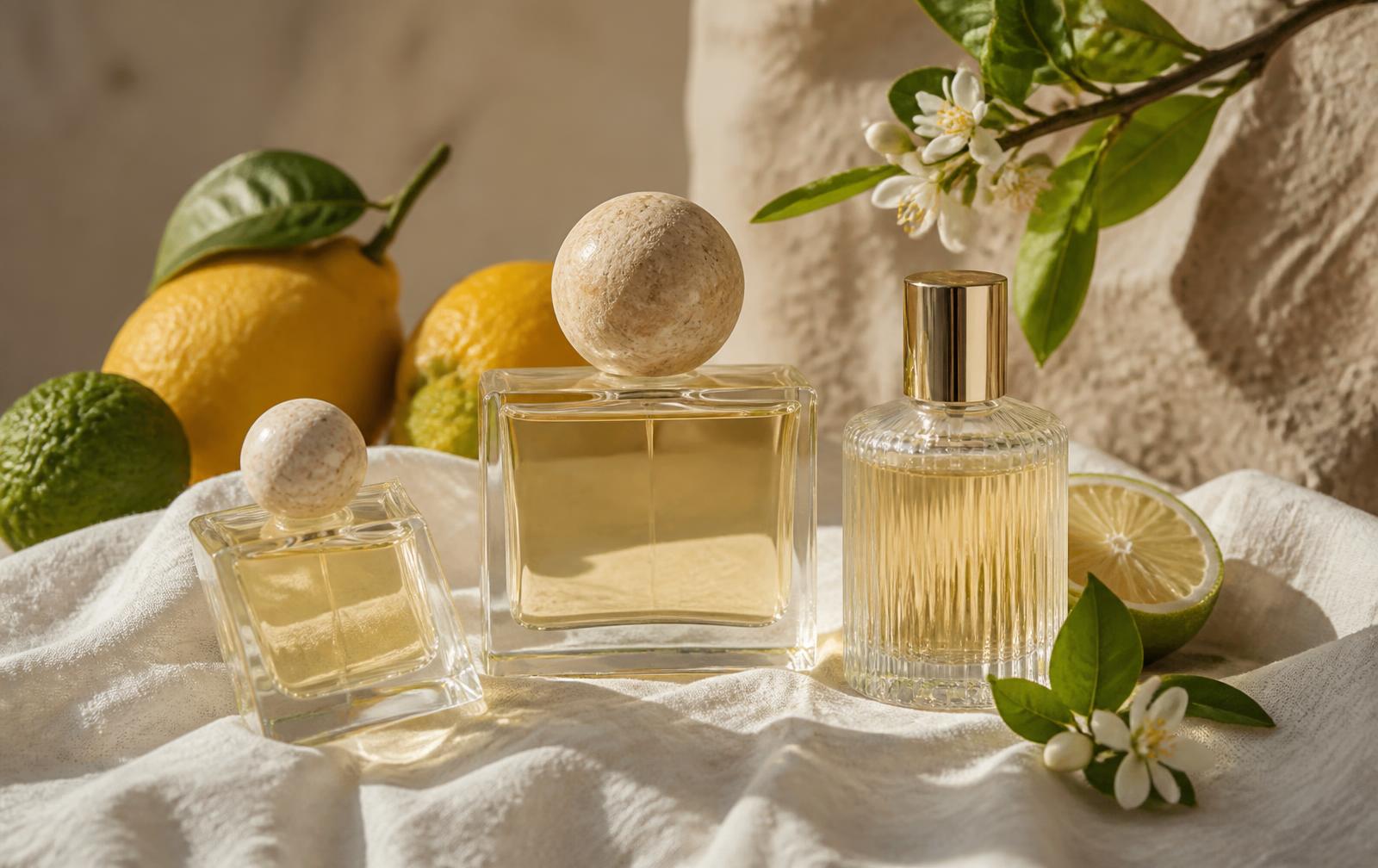
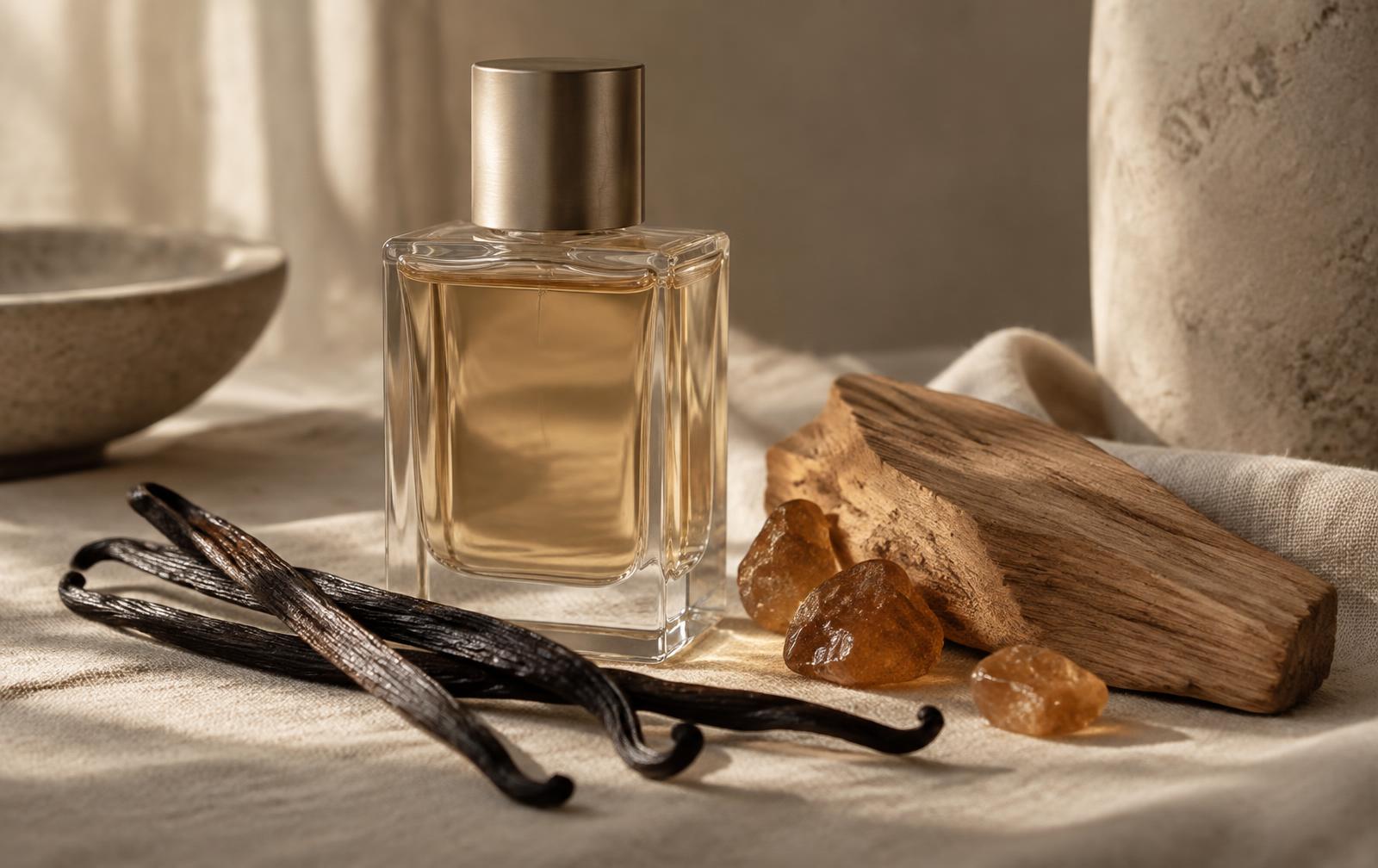
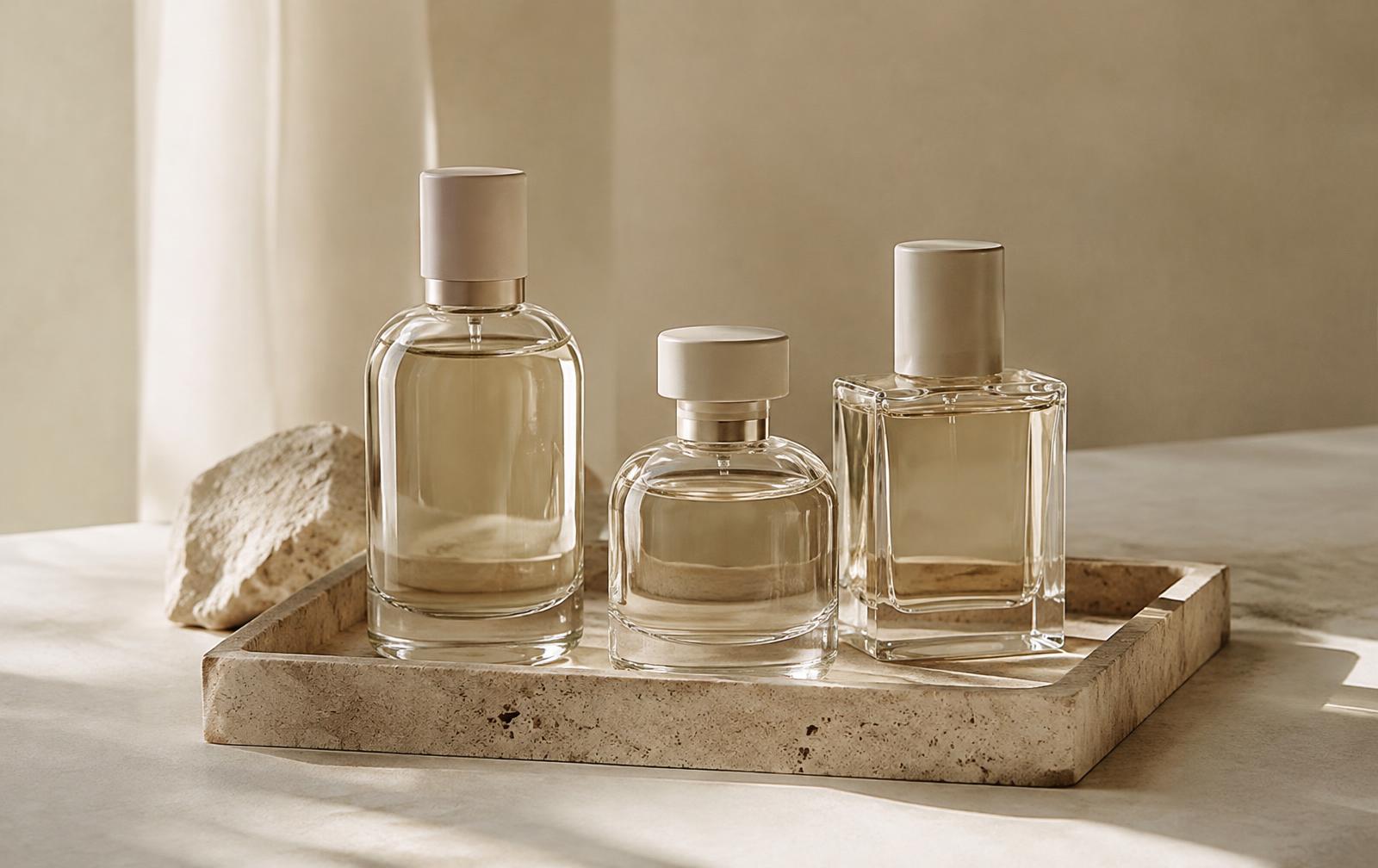
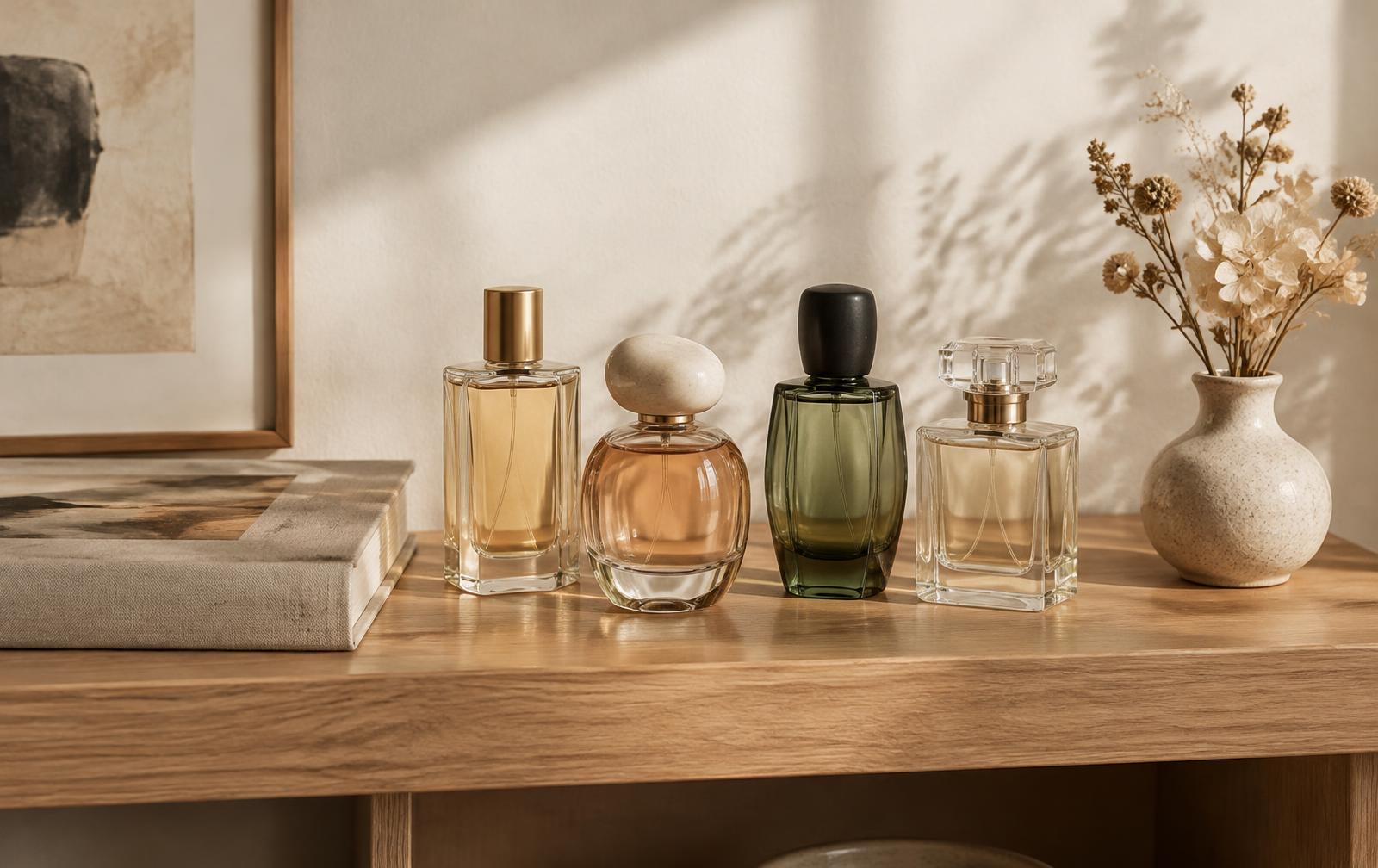
Fragrance profiles were checked against the houses’ own published descriptions. They are sampling suggestions, not laboratory performance claims, medical advice or accounts of an editorial wear test. The imagery is conceptual and does not depict the named perfumes.
- IFRA: how fragrance is made; British Society of Perfumers / Michael Edwards: fragrance family terminology.
- Diptyque: EDT and EDP explained; perfume storage guidance.
- Hermès Un Jardin sur le Nil; Guerlain Mandarine Basilic; Shalimar.
- Jo Malone Wood Sage & Sea Salt; English Pear & Freesia.
- Diptyque Philosykos EDT; Eau Duelle EDP.
- Chanel Chance Eau Tendre EDP; Dior J’adore EDP.
- Maison Margiela Lazy Sunday Morning; Jazz Club.
- Le Labo Another 13; Santal 33; Byredo Gypsy Water.
- Matière Première Vanilla Powder; Tom Ford Tobacco Vanille.
The most convincing signature scent is rarely the result of finding a perfect description online. It comes from a slower kind of attention: noticing what you enjoy, learning which contrasts matter to you, and discovering that one sample keeps being the one you reach for.
Learn enough to choose deliberately, then let pleasure have the final word. The right perfume does not have to explain who you are. It simply needs to feel like something you want close.
Continue with our guide to fresh citrus perfumes, explore vanilla in its woody, spicy and richer forms, or browse more of The Beauty Edit’s beauty coverage.
Save this edit
Keep this selection for later
Leave your email and we will send you the full list with links, plus new edits when they are published.
No spam. Unsubscribe at any time. See our privacy policy.