What Stood Out at London Fashion Week: The Trends Shaping Spring/Summer 2027
What Stood Out: London resisted a single aesthetic. Across five days, the useful story was the friction between precision and disorder, heritage and youth, romance and the clothes people actually wear.
September 25, 2026
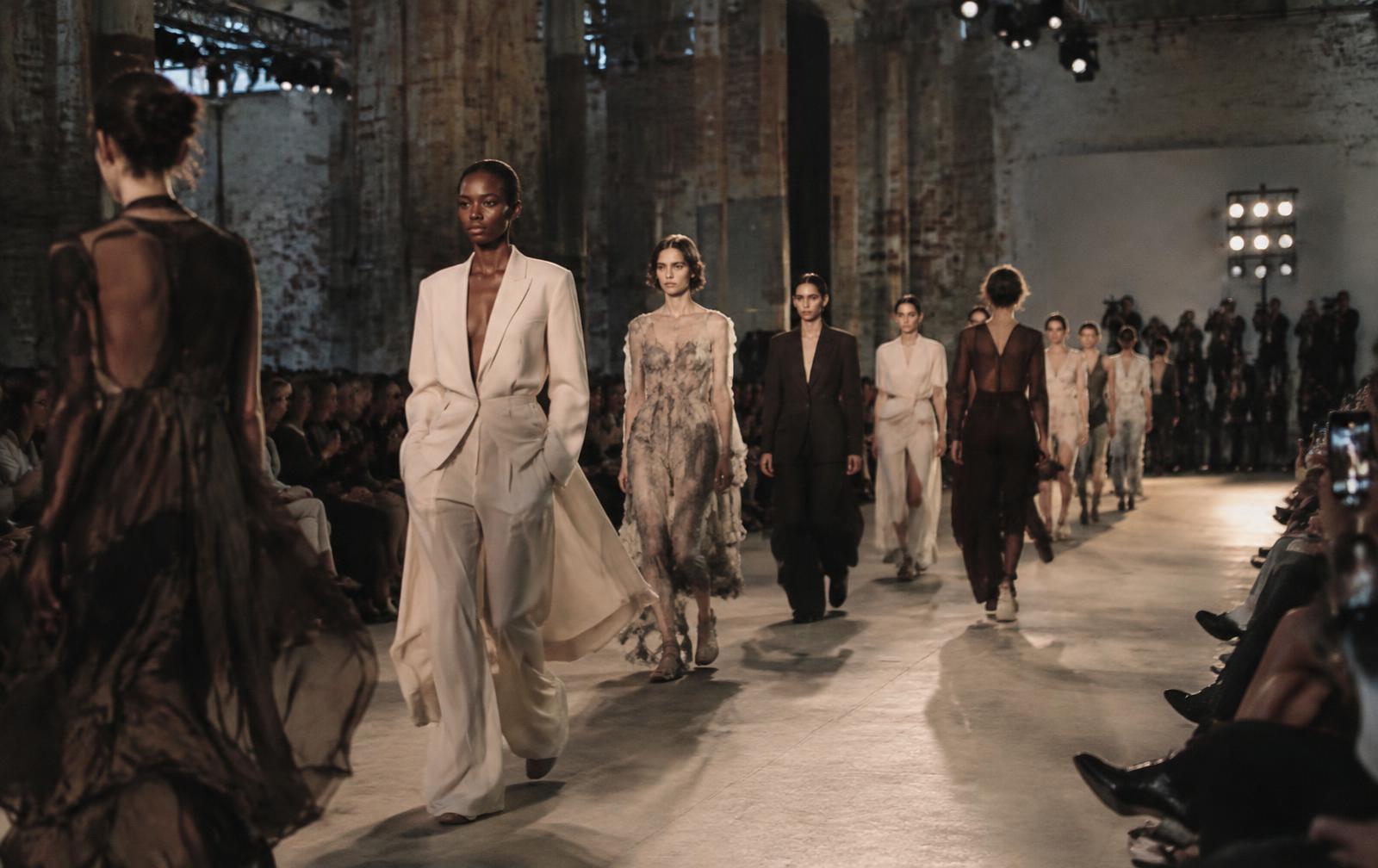
London Fashion Week Spring/Summer 2027 ran from 17 to 21 September 2026. By the end of the five days, there was no single silhouette to carry away, no one colour that explained the city. There was something more persuasive: designers making opposing ideas coexist in the same wardrobe. A precise jacket met a low waist. Delicate work was allowed to look handled. The familiar language of a British house sat beside a younger, less obedient one.
The British Fashion Council's September programme counted 47 catwalk shows, 23 presentations, 10 digital activations and 53 evening events. Those numbers describe more than scale. They describe a week in which established names, independent labels, NEWGEN designers and retail partners occupied the same conversation, though not necessarily the same aesthetic. The task after a week like this is not to turn every striking look into a trend. It is to notice where different designers reached for related solutions, and where the differences remain essential.
The Big Picture: Experimentation Meets Wearability
London's particular intelligence is its refusal to separate experiment from product. Its designers can treat a garment as a proposition about identity and still ask how it might live beyond the show. The productive tension ran through SS27: polished tailoring beside youth-culture references; romance interrupted by exposed construction; heritage given enough room to become slightly unruly.
There were also limits to the idea of a collective London mood. McQueen's discipline is not Rocha's intimacy; Burberry's negotiation with its archive is not Chopova Lowena's. Repetition matters only when we preserve those distinctions. In our Trend Studies, a signal becomes interesting when separate design languages independently produce a comparable shift in proportion, surface or attitude.
The editorial reading is an expanded idea of usefulness. The low waist, the worked surface and the strong shoulder are not instructions to dress alike. They are ways of giving familiar clothes a more specific point of view.
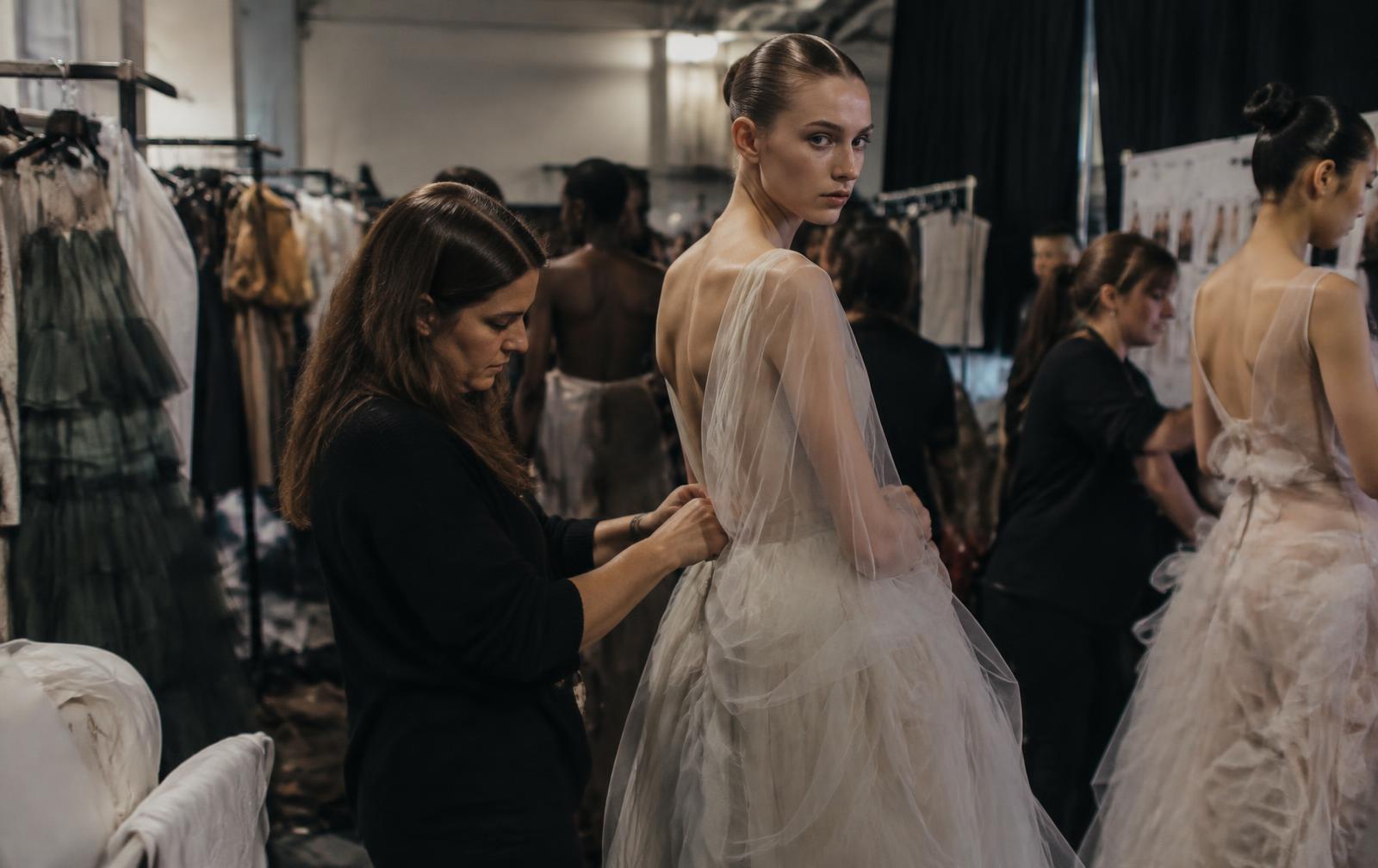
London did not choose between creativity and commerce. It tried to make them coexist.
01. The New Low-Rise
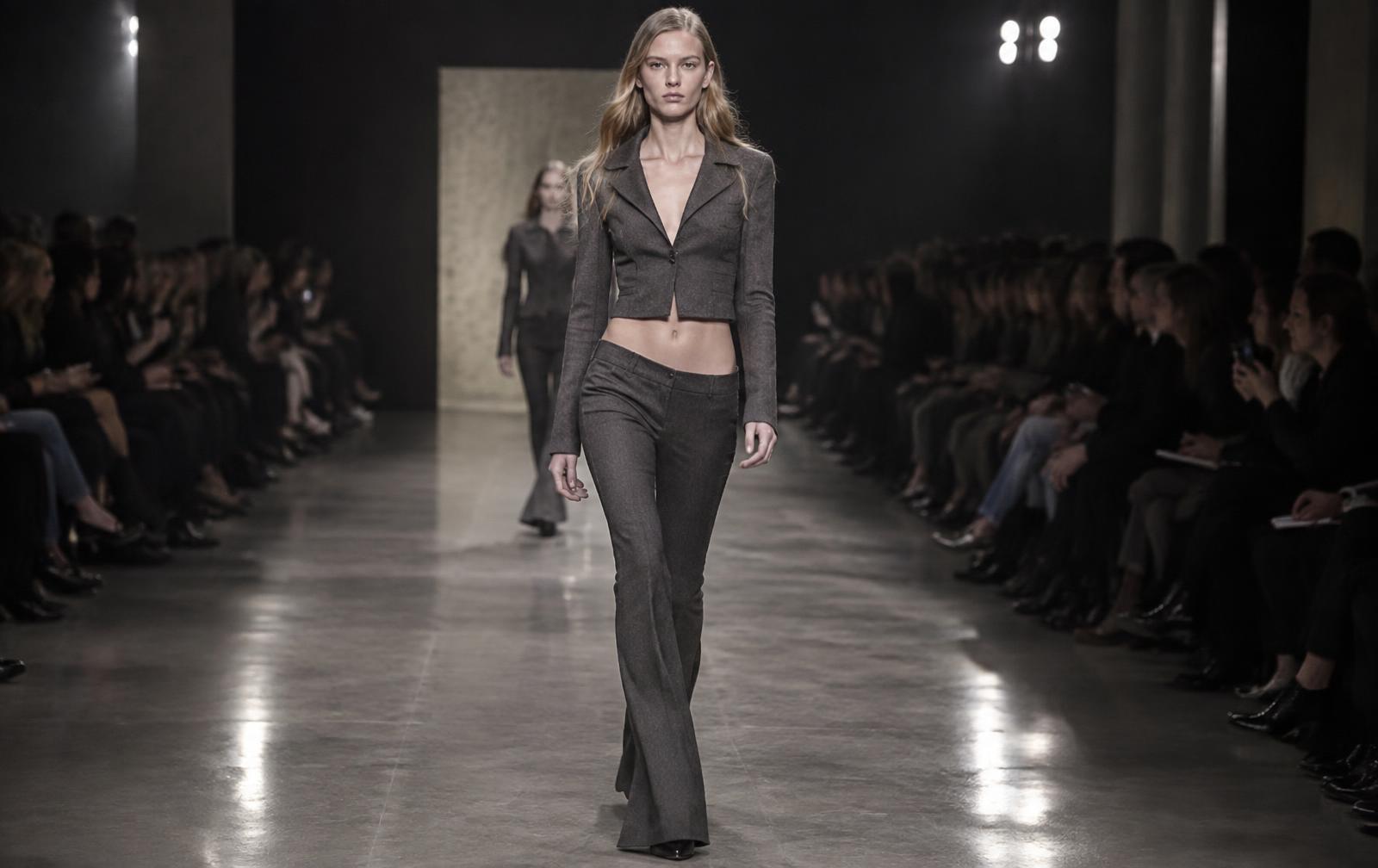
The lower waist returned without necessarily bringing back the baggy trouser that once accompanied it. Its more interesting partner was a slim, lengthened leg, sometimes ending in a restrained flare. The result pulled the eye downward and changed the relationship between jacket and hip. It reads differently from the wide-leg dominance of recent seasons because the whole outline is more vertical, even when the waistband sits low.
Aaron Esh and Talia Byre are useful names in this conversation for their attention to body-conscious proportion and clothes that do not behave like traditional occasionwear. But a designer's established vocabulary is not proof that every look in an SS27 collection carried the same detail. What makes the low-rise worth tracking is the broader shift in where the silhouette begins, not an attempt to attribute one cut to an entire calendar.
If this proportion travels, it will do so in trousers built for movement rather than in a literal Y2K uniform. A lean flare changes the line of a cropped jacket; a lower waist changes the apparent length of the torso. Those are design decisions, not simply a styling trick with an old pair of jeans.
02. Underwear Becomes Outerwear
Intimate garments moved into the architecture of the look: a sheer layer revealing what is beneath it, a corseted line under a jacket, delicate construction made deliberately legible. This is not simply a matter of showing more skin. It changes the order of dressing. What would once have been concealed can now establish the shape and tension of the outfit.
Erdem's historical vocabulary, Simone Rocha's delicate layering and KNWLS's more confrontational relationship with the body offer very different ways of thinking about that boundary. McQueen provides another, sharper point of contrast in the discussion of structure. They should not be flattened into one version of femininity: one approach can be theatrical, another tender, another defiantly direct.
The wider SS27 question is whether intimacy becomes a durable construction principle or remains a styling device for the runway. It begins to matter beyond a single show when the layering determines the garment's shape, rather than merely decorating an otherwise conventional look.
Underwear became part of the architecture of the look.
03. Romantic, But Undone
Lace, tulle, sheer cloth and flowers did not have to produce a pristine fairy tale. The stronger romantic proposition allowed an edge to remain visible: a dark layer against pale fabric, a slightly interrupted line, a finish that made the garment appear touched rather than preserved. Romance gained force when its perfection was disturbed.
Simone Rocha and Erdem belong in this discussion for different reasons. Rocha's language has long made softness feel complicated; Erdem's interest in historical dress makes embellishment a way of telling a story rather than simply adorning a surface. Richard Quinn shows the opposite end of the scale, where ornament can become overt spectacle. The shared question is what happens when elaborate femininity is given agency instead of being treated as innocence.
For the season ahead, the relevant signal is not lace alone. It is the pairing of delicacy with friction, a combination that gives romantic clothes a place in wardrobes not otherwise organised around romance.
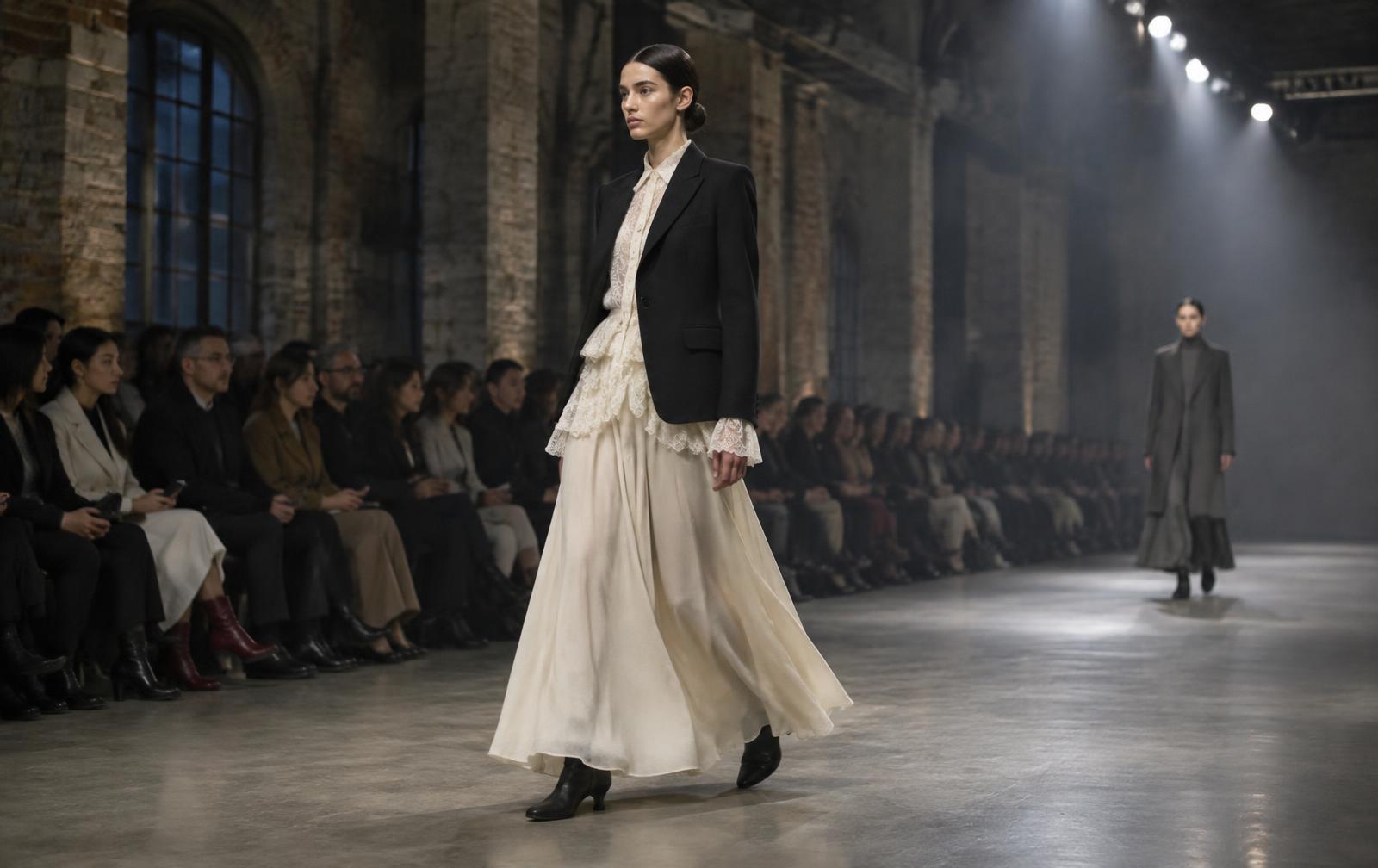
Romantic dressing came undone.
04. The Return of Power Dressing
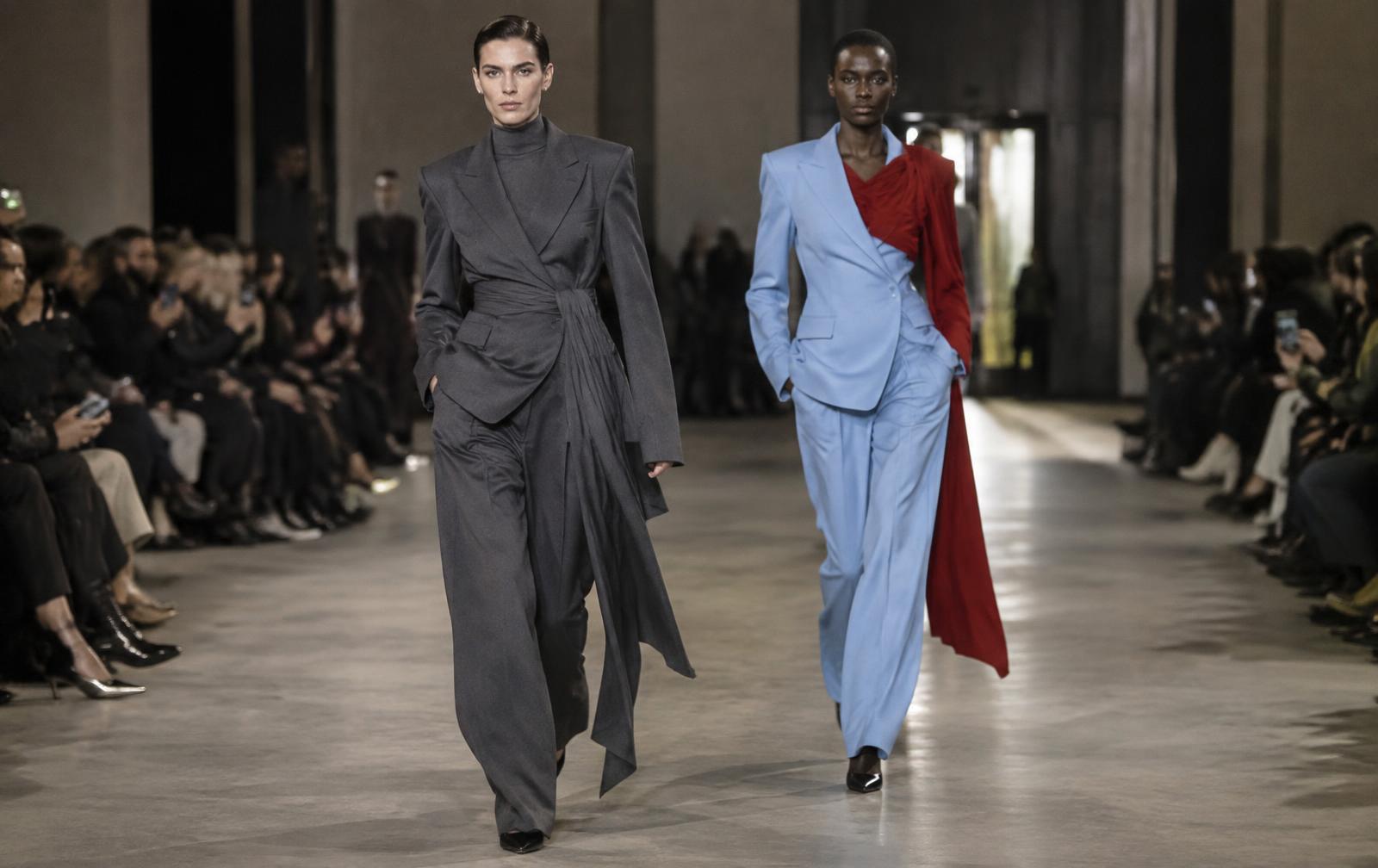
The shoulder asserted itself again, but an assertive shoulder does not require an equally rigid body beneath it. Sharply built jackets, concentrated volume at the top and defined waists formed one answer; fluid trousers and a softened lower half offered another. The 1980s reference is useful only when it explains proportion, not when it turns contemporary tailoring into costume.
Alexander McQueen, Roksanda and Petra Fagerström operate at different registers of authority. McQueen's relationship to British tailoring gives precision a charged history. Roksanda has made volume and colour part of an architectural vocabulary. An emerging name such as Fagerström belongs to a less codified conversation, one in which an inherited idea of the power suit can be pulled apart and recut.
The directional point is a new balance of force and ease. If a strong jacket works over a fluid garment, power dressing stops being a uniform and becomes a tool the wearer can use selectively.
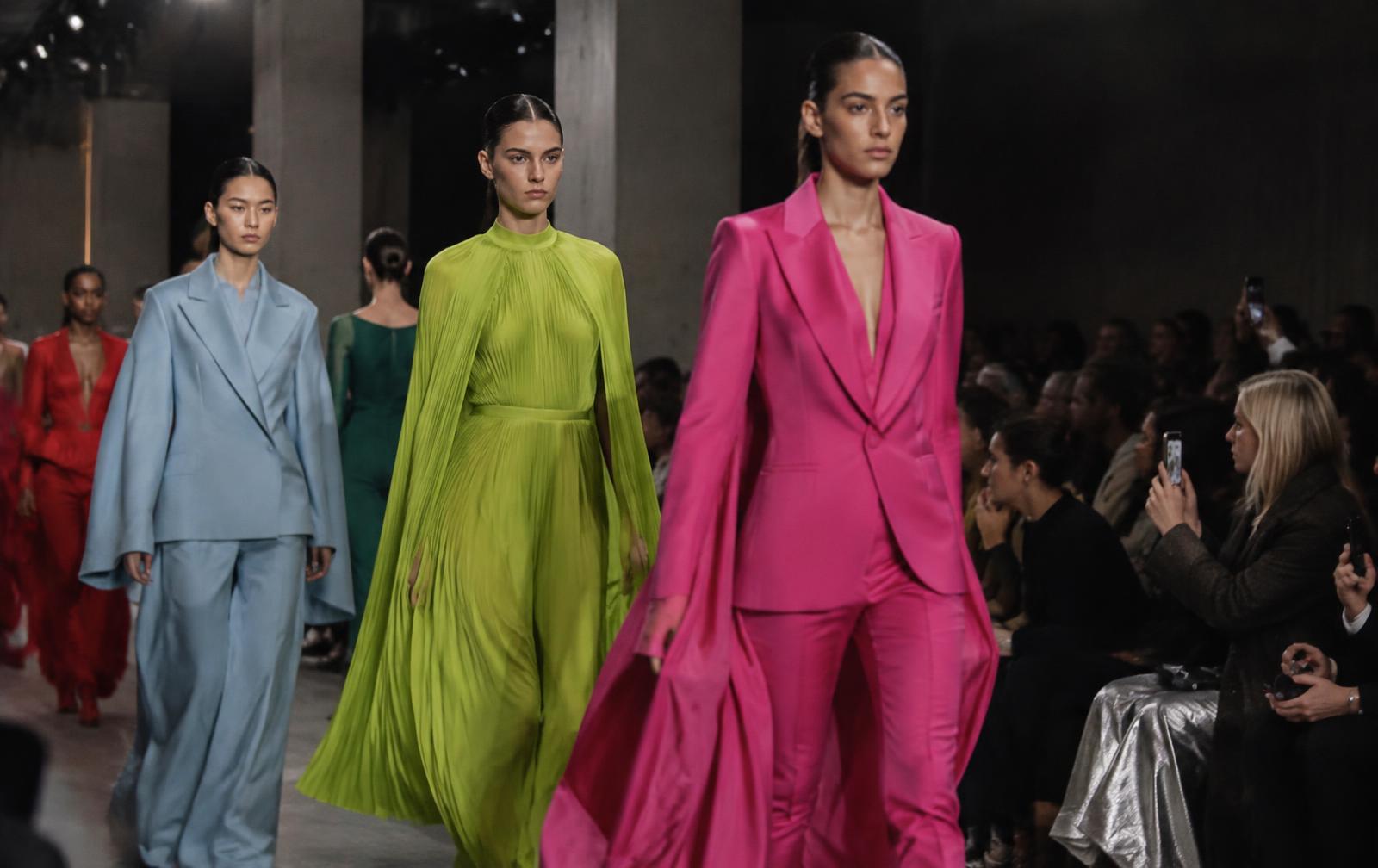
05. Hot Pink, Acid Green and Powder Blue
Colour moved between extremes: an assertive pink or acid green could sit against powder blue, deep red, butter yellow or a controlled neutral. The significant question is not whether a particular shade appeared, but what job it performed. Saturation can supply all the drama a simple cut requires; a pale colour can make a strong silhouette unexpectedly quiet.
Roksanda's longstanding command of expressive colour is one way into the subject. Richard Quinn's theatrical register offers another. A restrained wardrobe need not use colour with either volume or spectacle: even a single precise contrast changes the emotional temperature of a look. These are different design positions, not interchangeable sightings of a palette.
For Spring/Summer 2027, the more durable signal may be colour as a structural choice. When the cut is pared back, hue can carry identity; when the garment is elaborate, a carefully controlled shade can hold the excess in check.
06. Craft Becomes the Statement
Handwork is most persuasive when the viewer can see how much time it required. Embroidery that follows the cut rather than filling empty space; an appliqué that gives a surface relief; fabric shaped by the hand instead of digitally printed to resemble it. The construction is no longer concealed in the name of effortlessness. It becomes the point.
Erdem's relationship with ornament, Chopova Lowena's patchworked and folkloric vocabulary and Patrick McDowell's engagement with making and reuse point to different forms of value. One is meticulous finish; another gives disparate materials a new order; another asks what existing cloth can become. Treating all three as the same 'craft trend' would lose the politics and the pleasure of each approach.
This matters beyond the runway because physical workmanship is hard to flatten into a slogan. In a market full of images that can be generated instantly, evidence of a human decision, and the time behind it, acquires unusual weight.
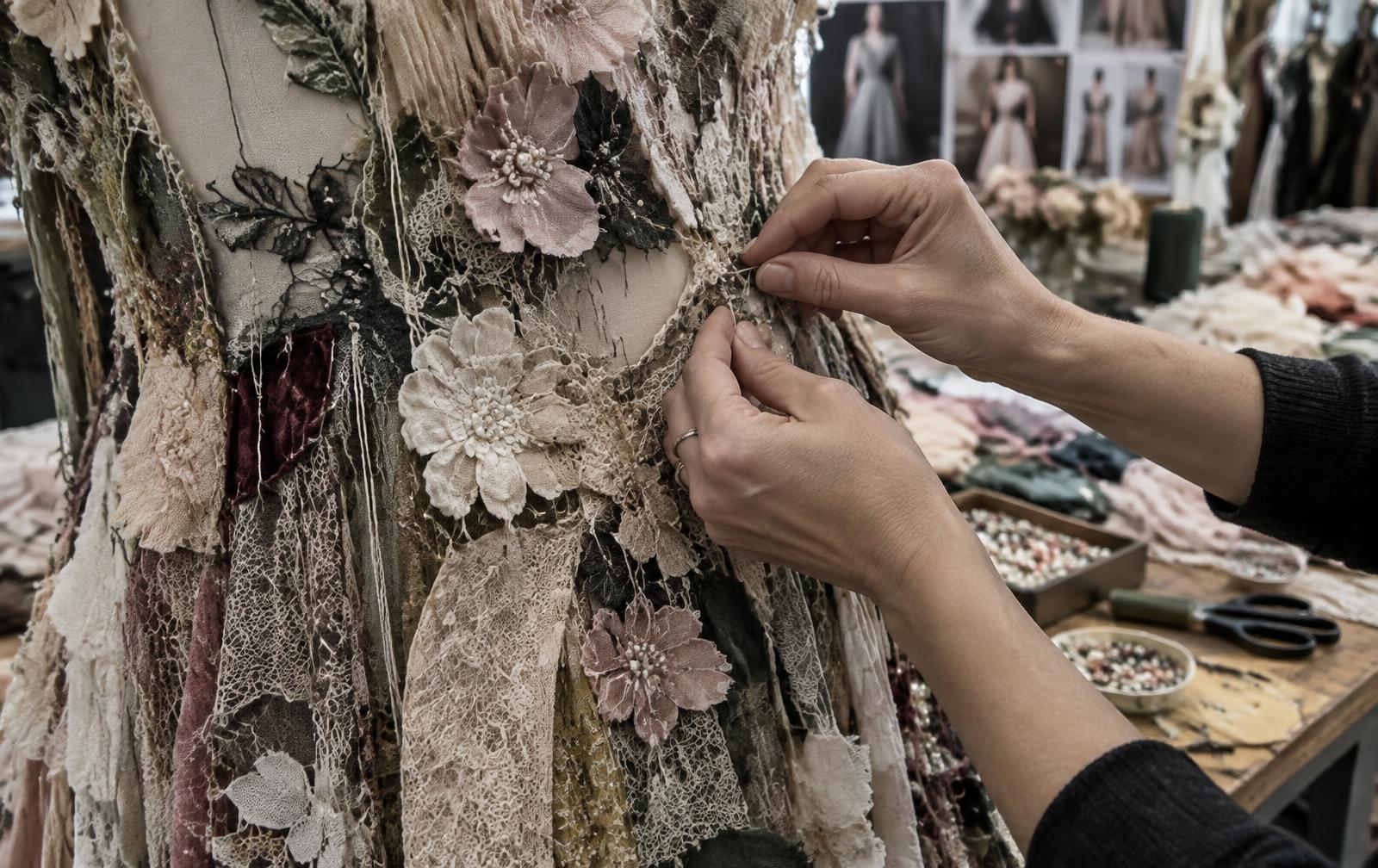
Craft became visible again.
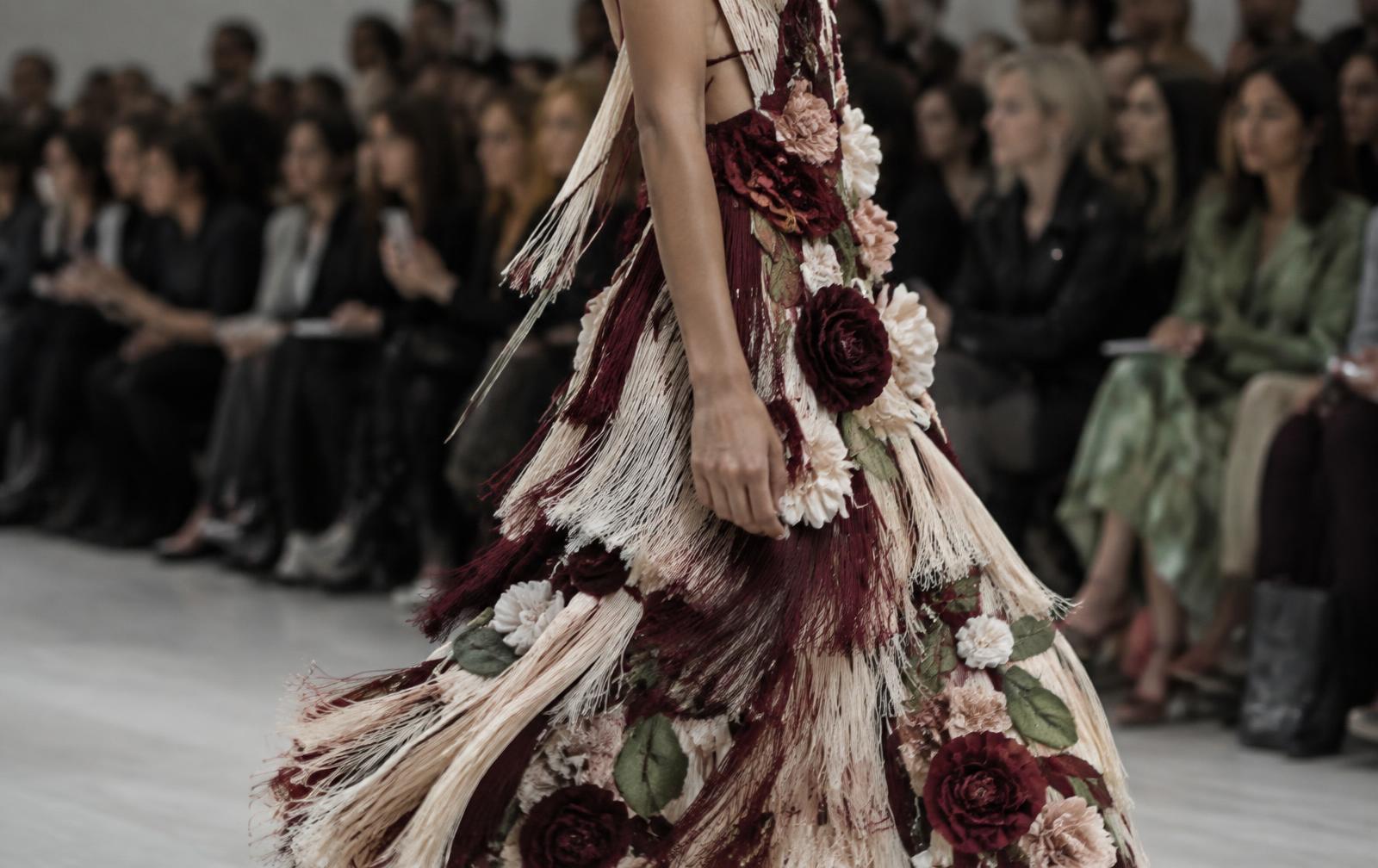
07. Fringe, Florals and Physical Texture
Movement became a way to read a garment before its silhouette had settled. Fringe changes with each step; a raised flower interrupts the outline; lace and layered cloth make shadow part of the surface. A print can suggest a flower, but an appliqué flower has weight. The difference is physical, and it is visible in motion.
Simone Rocha's romantic language, Roksanda's tactile sense of scale and the more direct sensuality associated with KNWLS show why one motif can mean several things. Burberry's material vocabulary belongs in the conversation about finish, but a house code should not be mistaken for evidence that all its looks shared the same surface treatment. The relevant overlap is a renewed appetite for clothes that cannot be fully understood from a flat image.
Where craft emphasises the making, texture emphasises the encounter. The SS27 potential lies in surfaces with a life beyond their first photograph: details that move, catch light and reward another look.
08. Denim Gets Designed
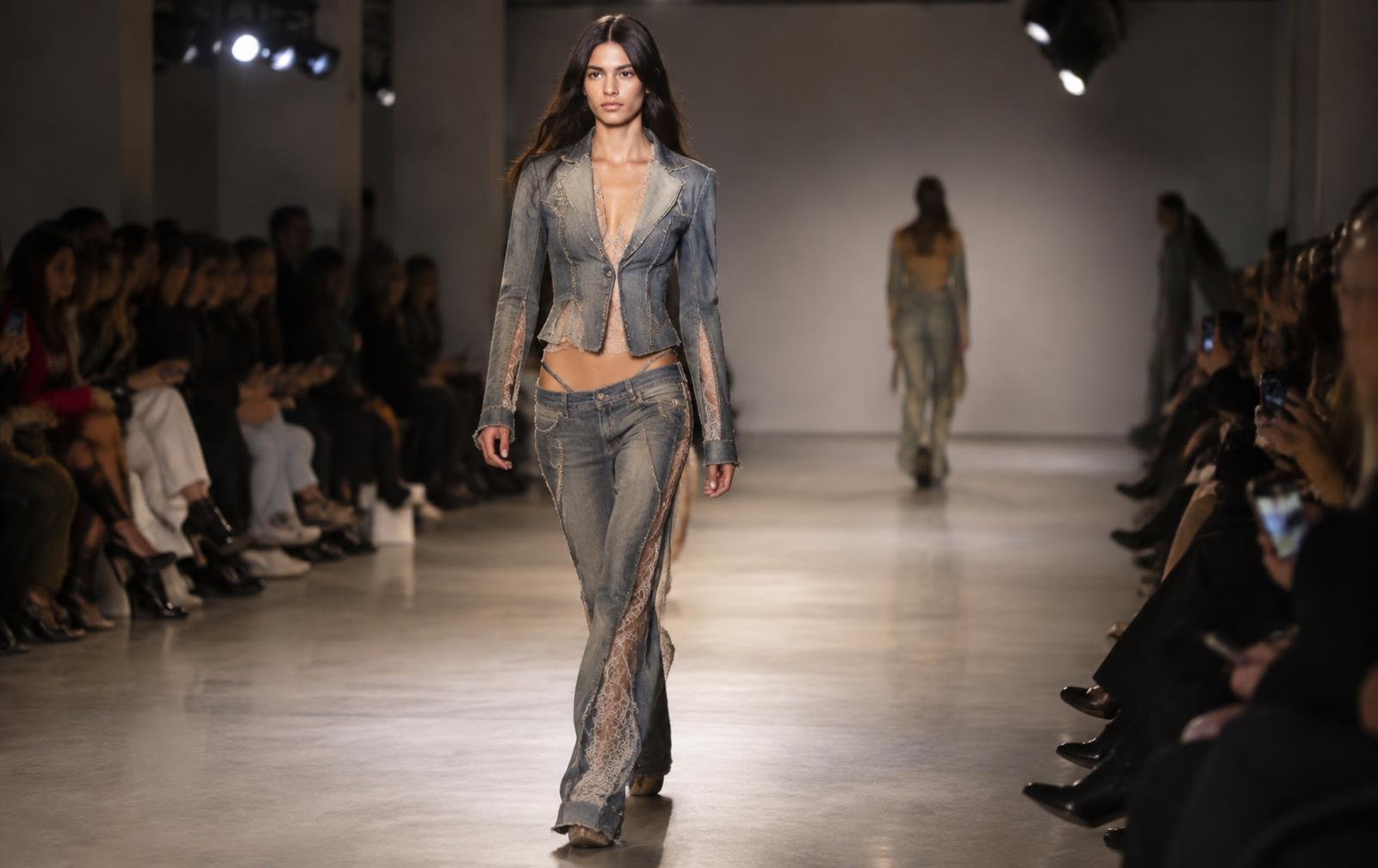
The distinction between denim as a default and denim as a deliberate design decision became more useful. A low-set waistband, reworked seam, altered leg or contrast with delicate cloth changes a familiar material's role. It stops being a neutral background and becomes the sentence itself.
KNWLS's body-conscious design language offers one route into treated denim; the youth-led energy around London offers others. But a reconstructed pair of jeans in one look does not constitute a city-wide verdict. What deserves attention is how designers use cut and construction to make denim carry a point of view usually reserved for tailoring or evening clothes.
If the idea travels beyond SS27, it will not be because everyone buys the same jean. It will be because the seam, waist and finish are once again considered worth designing, rather than inherited without question.
09. The 1980s, 2000s and 2010s Return
References to several decades appeared in the season's vocabulary, but their coexistence is more telling than any single revival. An emphatic 1980s shoulder, a lower 2000s waist and the more dishevelled attitude associated with the 2010s can inhabit the same contemporary conversation. Historical shorthand becomes interesting only once a designer changes its purpose.
Richard Quinn's appetite for grand evening gesture is a different use of the past from the leaner, subcultural tension associated with Aaron Esh or KNWLS. Chopova Lowena's folkloric collisions refuse the idea of a clean decade altogether. None needs to be filed under one revival. London takes the archive apart and lets the fragments disagree.
That is why nostalgia here is a method rather than an endpoint. A reference may attract the first glance, but the present-day proportions, materials and styling determine whether it becomes a garment with a future.
Designer Signals: The Houses and Designers Shaping the Conversation
London's calendar cannot be reduced to its largest houses. Major names establish one kind of continuity; designers working on smaller platforms challenge what that continuity can mean. Read side by side, the following voices show the breadth of the week rather than a consensus between its participants.
Alexander McQueen
For McQueen, precision is never merely correct. Under Seán McGirr, the house's dialogue with tailoring and provocation makes the tension between control and release particularly consequential. Savile Row discipline and club-culture energy may belong to the same historical conversation, but that does not mean every SS27 look can be assigned both. The important question is how a house built on confrontation keeps that charge inside clothes that have to be worn.
Mulberry / Christopher Kane
Christopher Kane's arrival at Mulberry puts a designer known for intellectual friction in dialogue with a house whose leather goods and archive are its most recognisable assets. The debut is significant because heritage cannot simply be quoted; it has to support a contemporary language of product. Watch the relationship between familiar house codes and the sharper perspective Kane brings to them, rather than calling novelty an achievement in itself.
Burberry
At Burberry, Daniel Lee's task is not to make the check disappear but to prevent it from doing all the work. Print, sport and deliberately lived-in styling can loosen a heritage vocabulary when they change how an outer layer is worn, rather than merely decorating it. The larger question is whether intentional imperfection makes the house feel inhabited instead of immaculate.
Simone Rocha
Rocha's flowers, tulle and lace have never been uncomplicated prettiness. The more sensual possibilities of sheer layers and visible construction sharpen that established language without erasing its vulnerability. Her significance to this London story lies in the difference between romantic decoration and romance that alters the body's relationship to clothing.
Erdem
Erdem's historical imagination gives embellishment an interior life. Corseted forms, sheer fabrics and intimate details belong to a conversation about what is revealed and what remains formally dressed. The useful distinction from Rocha is the degree of theatrical framing: history becomes a means of giving femininity an edge, not a licence to turn it into costume.
Roksanda
Roksanda makes colour and volume do structural work. A wide shape need not be stiff, and a fluid one need not be quiet. Her approach is a useful counterargument to the assumption that London experimentation must read as disorder: architecture can be expressive, tactile and controlled at once.
Richard Quinn
Quinn's extravagant vocabulary offers the maximalist counterpoint to the week's quieter negotiations. Feathers, lace, bows, sequins and sculptural evening shapes speak to glamour at full scale. That mode is not the same as a wearable romantic detail, but its continued presence helps explain why ornament has returned to the conversation without embarrassment.
KNWLS
KNWLS brings a darker, more direct sensuality to London's mix. Corseted lines, sheer layers, denim and leather can frame the body as an active subject rather than a passive display. The distinction from the city's romantic houses matters: exposure here is not softness, and its edge cannot be edited out in a tidy trend summary.
Chopova Lowena
Chopova Lowena's layered folklore, patchwork and unlikely material partnerships make craft feel communal rather than precious. Its exuberance challenges the idea that London creativity should look like a clean future. The past survives here as fragments remade into a highly contemporary wardrobe.
Aaron Esh
Aaron Esh's leaner, more nocturnal vocabulary gives the season's renewed attention to proportion another register. A narrow leg or lower waist is not inherently nostalgic; in a tailored, body-conscious context it can express a present-tense urban attitude. This is a useful reminder that the same silhouette changes meaning with its wearer and its surroundings.
The New London Names
Ahluwalia, Emilia Wickstead and Talia Byre sit in very different parts of the city's fashion ecosystem. The emerging and independent conversation also includes Francesca Lake, Petra Fagerström, Oscar Ouyang, Patrick McDowell and the Fashion East platform, with names such as GOYAGOMA, Jacek Gleba and Mé Mé widening the range of perspectives on the schedule. M&S and other retail partners add a different, commercially scaled presence. None of these participants needs to look alike for London to benefit from having them in the same city.
The point is not to declare a new generation uniformly more daring than the houses. It is that London's identity depends on pathways for designers whose vocabulary is still forming. Their smaller, more personal propositions can test ideas that established names later interpret through larger systems of production and distribution.
What London Fashion Week SS27 Tells Us About Fashion Now
Read across the week, the argument is not that a single trend has displaced another. Low-rise and strong-shouldered tailoring can coexist with loose romance. Saturated colour can live beside neutral cloth worked so carefully that colour would be a distraction. Craft can be both decorative and critical. The most interesting looks held two convictions at once.
This is the difference between a runway signal and an isolated styling moment. A rose attached to a dress is a detail; recurring attention to three-dimensional surfaces, handwork and movement across unlike practices begins to suggest a change in what fashion values. A low waistband is a cut; a renewed examination of waist placement across trousers and denim becomes a proposition about proportion. London's strongest signal was not a silhouette. It was tension.
Our Copenhagen Fashion Week coverage traced softness and utility from a different starting point. Our Milan Fashion Week SS27 analysis asks whether these ideas will find a different material and commercial language. For the method behind that kind of comparison, see our guide to reading a fashion show.
London's strongest trend was not a silhouette. It was tension.
The London Signal
London did not produce a uniform Spring/Summer 2027. Its strength was making opposites visible: precision with imperfection, sensuality with practicality, inheritance with youth culture. Those tensions give the season a vocabulary more useful than a list of pieces. Whether the ideas travel will depend on how other cities interpret them, and on whether designers can sustain them in clothes beyond a show.
London has spoken. Now the question is which of these signals will travel beyond the runway.
Continue exploring Trend Studies and Fashion Week coverage from The Beauty Edit.
Disclosure · The selections below were independently chosen by our editors. Some links are affiliate; we may earn a small commission when you shop through them.
The Beauty Edit Style
Discover your personal style
Before deciding what to buy, it helps to understand what genuinely belongs to you. Our style diagnostic reads the silhouettes, textures and details you're drawn to — and names the identity behind them.
Curated · Tested · Recommended
Suggested to Shop
The pieces mentioned in this story, in one place — independently chosen by our editors.
Some links are affiliate. We may earn a commission at no cost to you.