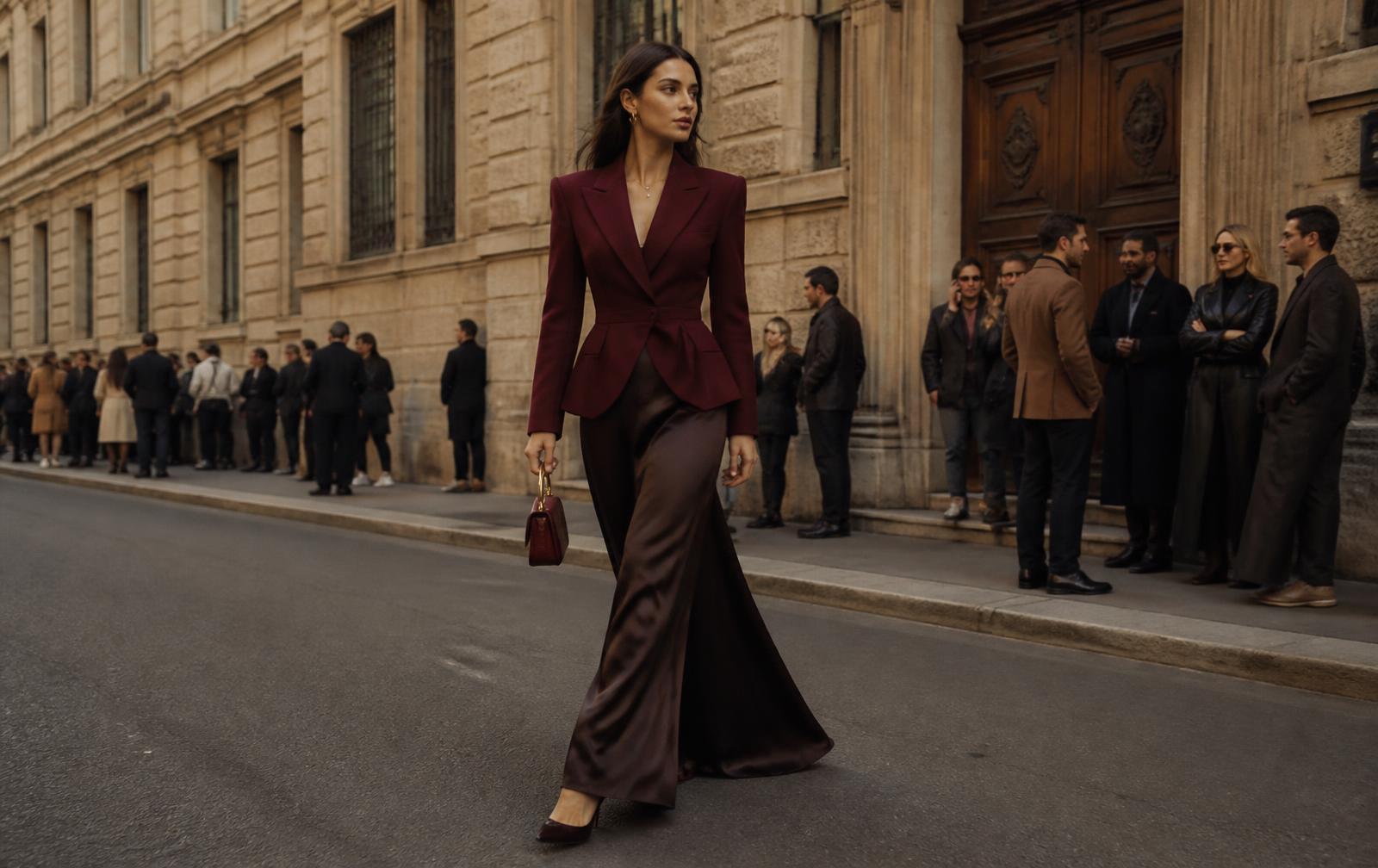
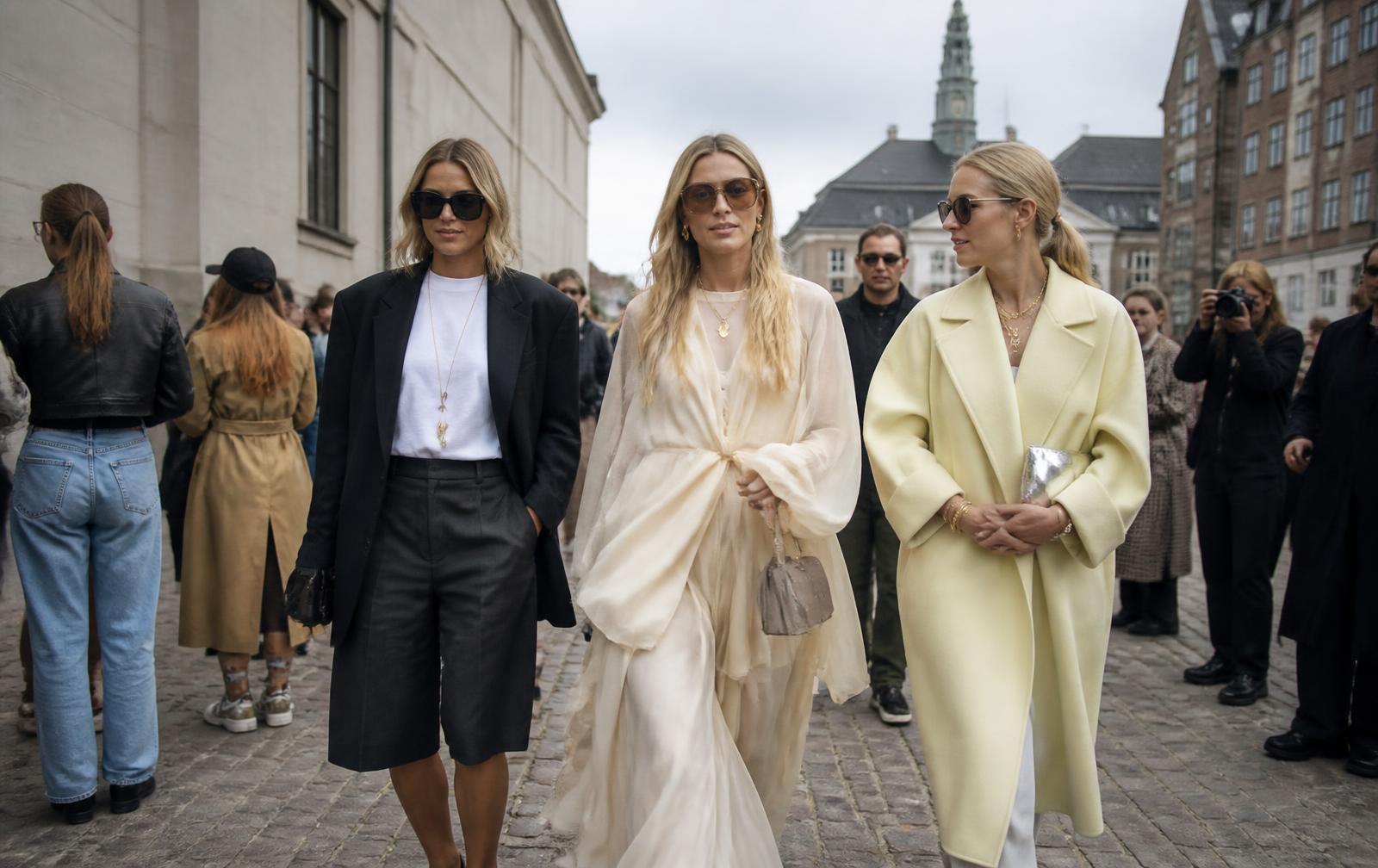
What Stood Out at New York Fashion Week: The Trends and Signals Shaping Spring/Summer 2027
New York Fashion Week Spring/Summer 2027 was not defined by one viral look. Its real story was a wider return to personality, emotional colour, tactile surfaces and clothes capable of building a world.
September 15, 2026
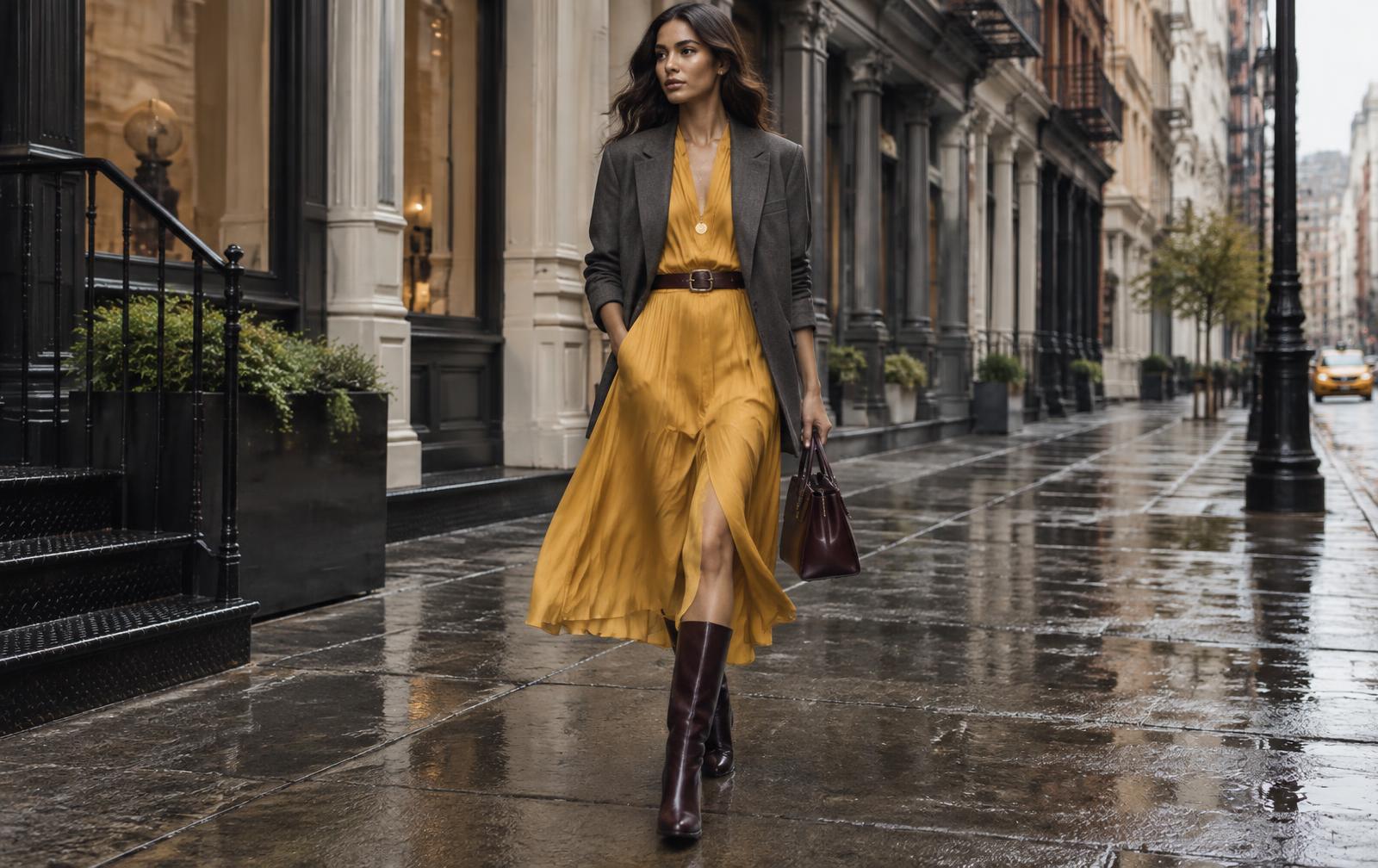
New York Fashion Week Spring/Summer 2027 concluded on September 15, 2026, after an official CFDA schedule of approximately 70 runway shows and presentations from September 10 to 15. Diane von Furstenberg opened the official programme with Henry Zankov's runway debut as artistic director; Thom Browne closed it. Around that calendar sat the wider machinery of New York fashion: Ralph Lauren, Coach and other pre-week shows, emerging-name presentations, store openings, parties and cultural events.
The scale matters because the week's clearest message did not belong to one collection. It emerged through repetition. New York's designers did not collectively abandon minimalism, nor did they agree on a single silhouette. What changed was the range of expression. After seasons governed by immaculate restraint, the city made more room for personality, saturated colour, tactile cloth, historical reference, loosened construction and styling that suggested a character rather than a uniform.
This is the distinction at the centre of The Beauty Edit's Trend Studies: a memorable look is not automatically a trend. A brand signature is not the same as a market signal. The useful reading begins when unrelated designers make comparable decisions for different reasons. Across New York, those decisions formed a more expressive language for Spring/Summer 2027.
Personality Replaced the Safety of Restraint
The strongest shift was not from minimalism to maximalism. It was from uniformity to recognisable point of view. Altuzarra, Zankov, Prabal Gurung, Tommy Hilfiger, Diane von Furstenberg and Coach each worked within a distinct vocabulary, yet all resisted the anonymous polish that had made so much recent fashion look interchangeable.
At Diane von Furstenberg, Zankov's debut brought acid brights, graphic knit intelligence and a renewed sense of movement to a house built around colour and self-possession. Tommy Hilfiger's Plaza Prep revisited archive codes without treating heritage as a museum object. Coach used its 85th anniversary to frame celebration itself as a dress code. Altuzarra drew on the photographs of Casa Susanna, allowing historical narrative to deepen rather than overwhelm the clothes. Prabal Gurung's Ray of Light gave colour and emotion a civic dimension.
These were not versions of one trend. They were evidence of a broader appetite for clothes with authorship. In commercial terms, distinctiveness matters at a moment when consumers can recognise generic luxury from across a room. A garment that carries an intelligible world gives a brand something harder to copy than a hemline.
Colour Became an Emotional Language
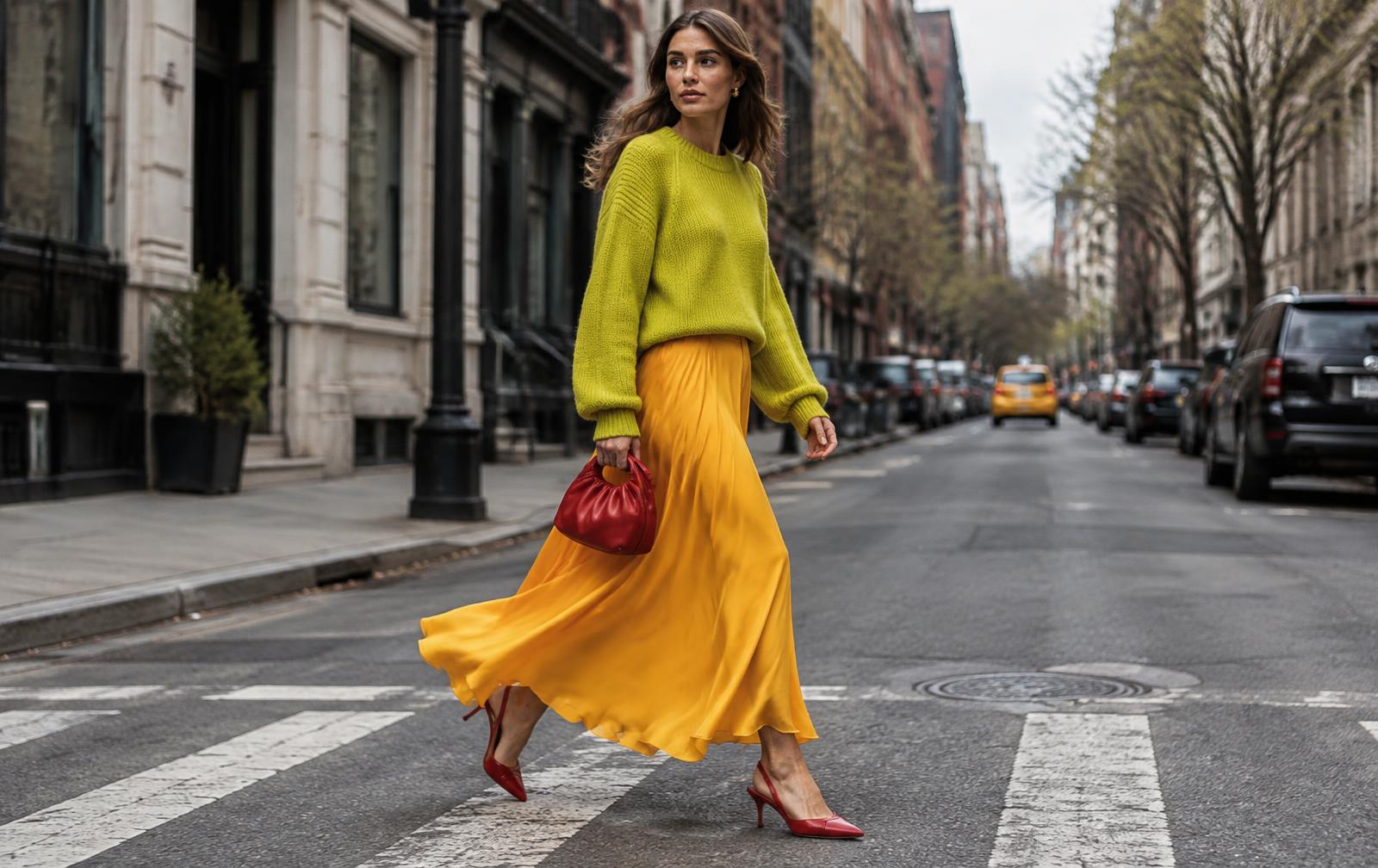
Colour was not simply applied as a seasonal accent. It carried temperament. Vivid yellow and green sharpened Tommy Hilfiger's familiar American vocabulary. Marigold, chartreuse and red gave Prabal Gurung's collection heat and optimism. At Diane von Furstenberg, acid brights and colour blocking restored the directness that made the house's visual codes legible in the first place. Zankov used saturated brights and stripes with the confidence of a designer for whom colour is structural, not decorative.
Altuzarra's joyful passages and flashes of brightness at Coach contributed to the pattern, but repetition alone is not the point. The important observation is how colour was used: to establish identity before the eye had time to process cut or fabrication. That makes it commercially useful. In a crowded image economy, colour can communicate a brand's emotional proposition in a thumbnail, a store window or a single moving look.
New York therefore offers an early signal for the wider Spring/Summer 2027 conversation. Neutral wardrobes are not disappearing. They are being interrupted by colours expected to do more than coordinate. The new role of colour is to make the wearer, and the house, more immediately knowable.
Romance Returned with More Character
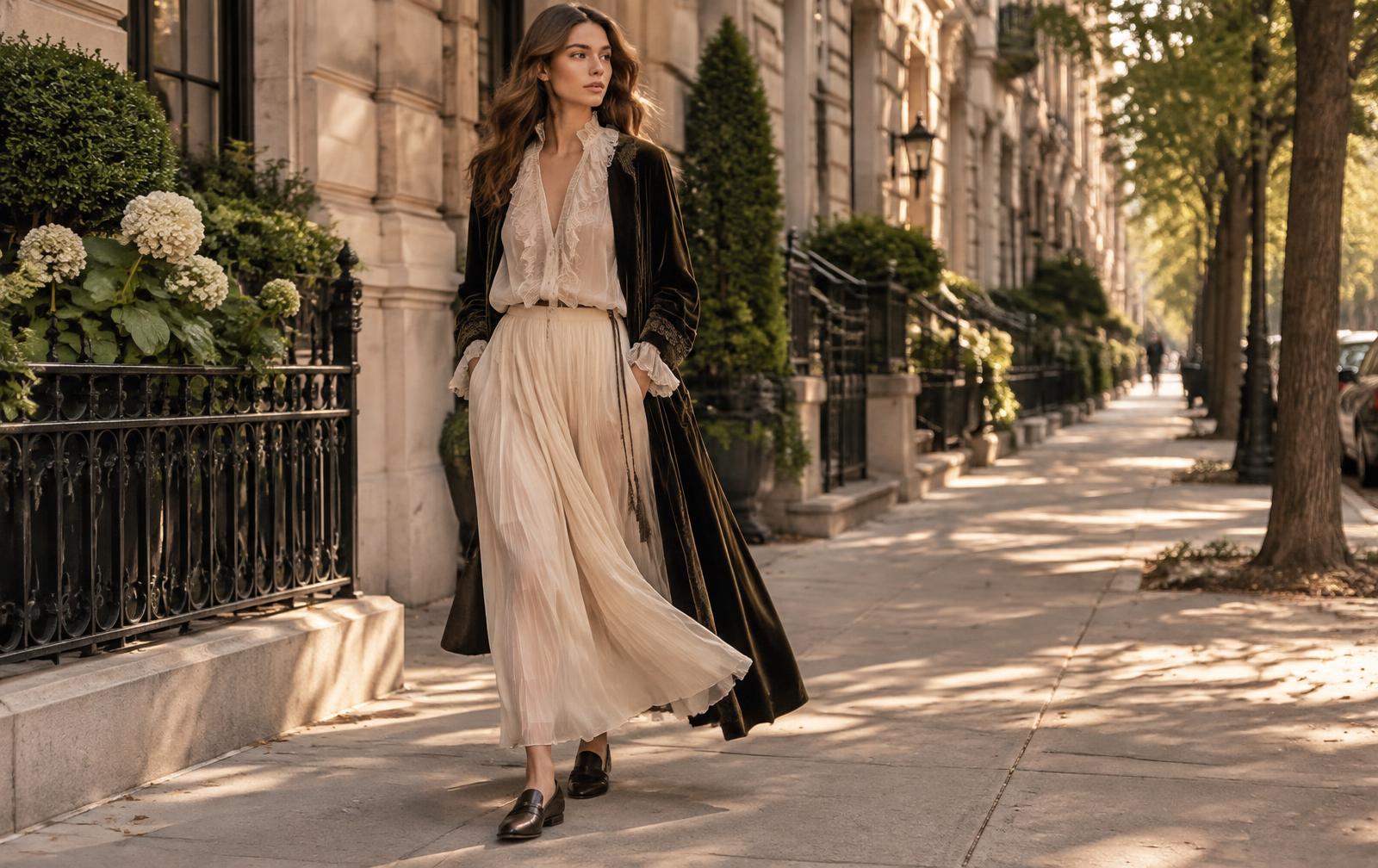
Sheer cloth, ruffles, longer hems, corsetry, velvet, ornamental surfaces and fluid layers brought romantic and bohemian codes back into focus. Ralph Lauren made the argument with particular clarity, combining a boho-baroque sensibility, velvet dusters, waistcoats and historical references with the fluency of an established American world. The result was not nostalgia so much as character construction.
Diane von Furstenberg and Tory Burch approached femininity from different positions, but both helped complicate the strict divide between polished and undone. At Tory Burch, opulent femininity met American pragmatism through aged surfaces, imperfect finishes and personal styling gestures. Romance became convincing when it was given friction: a sheer layer against practical construction, an ornate reference made casual, a familiar feminine code refused perfect behaviour.
That distinction matters. A ruffle at one show is a detail. Ruffles, sheerness, elongated movement and historically inflected styling across unrelated collections form a directional shift. New York did not revive one past decade. It used history as material for present-tense identity.
Clothes Began to Build Characters and Worlds
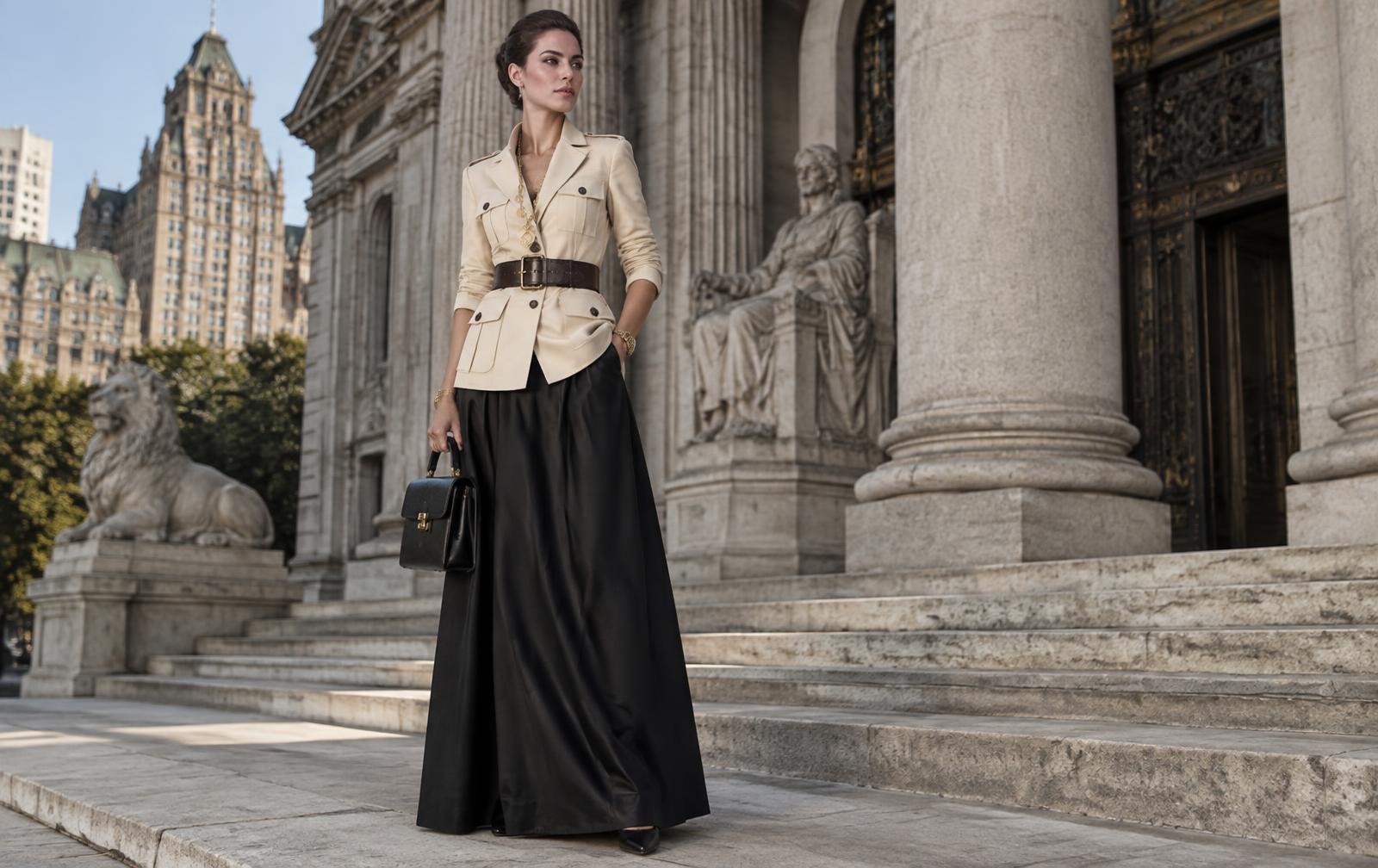
Several of the week's most resonant collections seemed to ask who the woman was before asking where she was going. Ralph Lauren's Gilded Age, safari and bohemian references created a fully inhabited character. Sergio Hudson imagined a James Bond woman with the power relation reversed. Wiederhoeft's Last Look constructed a theatrical, hyperfeminine dystopian fantasy. Christian Cowan filtered Old Hollywood through a darker, more self-aware glamour.
Tory Burch's mid-century references and Coach's celebratory runway language operated with less theatricality but the same underlying logic. The clothes communicated a social world. This is costume dressing only in the literary sense: not disguise, but the deliberate construction of character through garments.
For fashion, world-building has practical value. It gives an audience a reason to follow more than a product. It allows accessories, beauty, casting, location and styling to work as one narrative system. In a market where individual garments are instantly separated from their runway context, the brands with the strongest worlds may be the ones whose meaning survives that separation.
The Body Was Given More Room
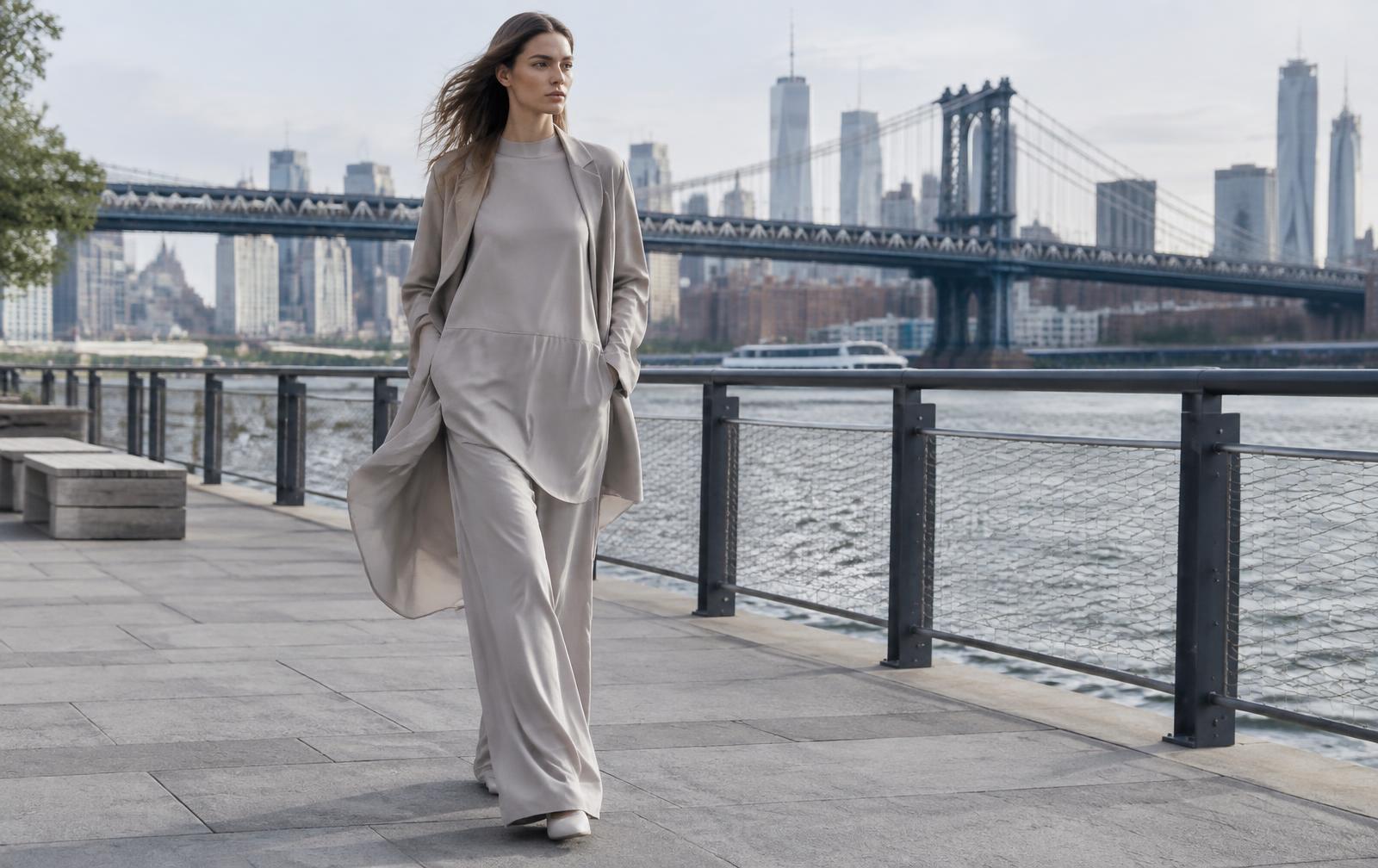
Dropped waists, elongated layers, fluid silhouettes, easy tailoring and looser construction suggested a less prescriptive relationship between clothing and the body. This did not erase the fitted waist. Carolina Herrera's crisp glamour, corsetry elsewhere and the continued authority of structured evening silhouettes made that impossible to claim. Instead, New York expanded the available positions.
The useful signal is choice. A garment could define the body, skim it or suspend away from it without one approach being treated as the season's correct answer. That freedom appeared in the contrast between structured shoulders and relaxed waists, between long fluid skirts and precise jackets, and between softness and the hard punctuation of an accessory.
For the market, this is more than a styling story. Looser relationships between garment and body widen wearability and make layering more important. They also shift design attention toward movement, cloth and proportion, qualities that are felt in person even when they are difficult to reduce to a product description.
The Newness Was Often in the Combination
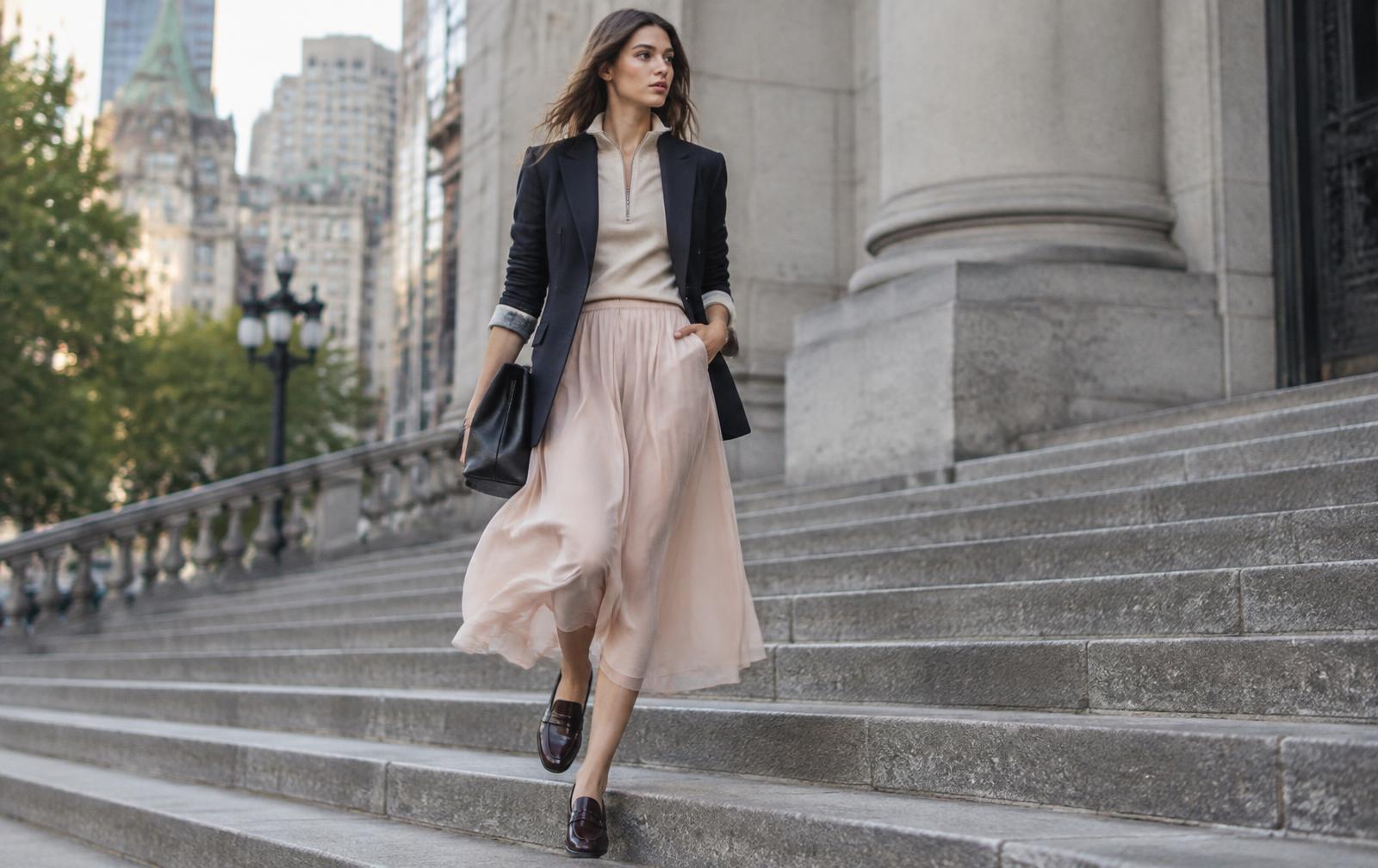
One of NYFW's clearest lessons came not from new garment categories but from new relationships between familiar ones. Structured jackets over skirts appeared at Altuzarra and Sandy Liang, while sport met femininity, tailoring met softness, and polished pieces were made more persuasive by something deliberately undone.
This is where a runway review must separate product from styling. A jacket over a skirt is not, by itself, a trend. But when multiple designers use that combination to change proportion, mood and the reading of the body, styling begins to reveal a directional instinct. The same garments already exist in many wardrobes. Their renewed relevance comes from the tension created between them.
That makes this an unusually accessible signal. Spring/Summer 2027 may not require an entirely new wardrobe so much as a less obedient one. Familiar pieces gain character when their expected partners are removed.
Accessories Carried the Personality
Large belts, coin belts, long necklaces, fringe, assertive bags and jewellery did more than finish looks. They supplied the identifying gesture. Tory Burch's coin-belt styling was a particularly clear example: the accessory introduced movement, sound, reference and personality while leaving the wardrobe beneath it legible.
This direction complements rather than contradicts the relaxed silhouette. When garments become fluid or familiar, an accessory can establish focus without returning the body to rigid construction. It also provides the most immediate commercial translation of the week's expressive mood. A belt or necklace can alter an existing wardrobe faster than a complete silhouette change.
The distinction remains important. One oversized belt is a styling moment. Belts, long jewellery, fringe and declarative bags recurring across different aesthetic systems suggest that personalisation itself is becoming a category of value.
Texture Did the Work of Decoration
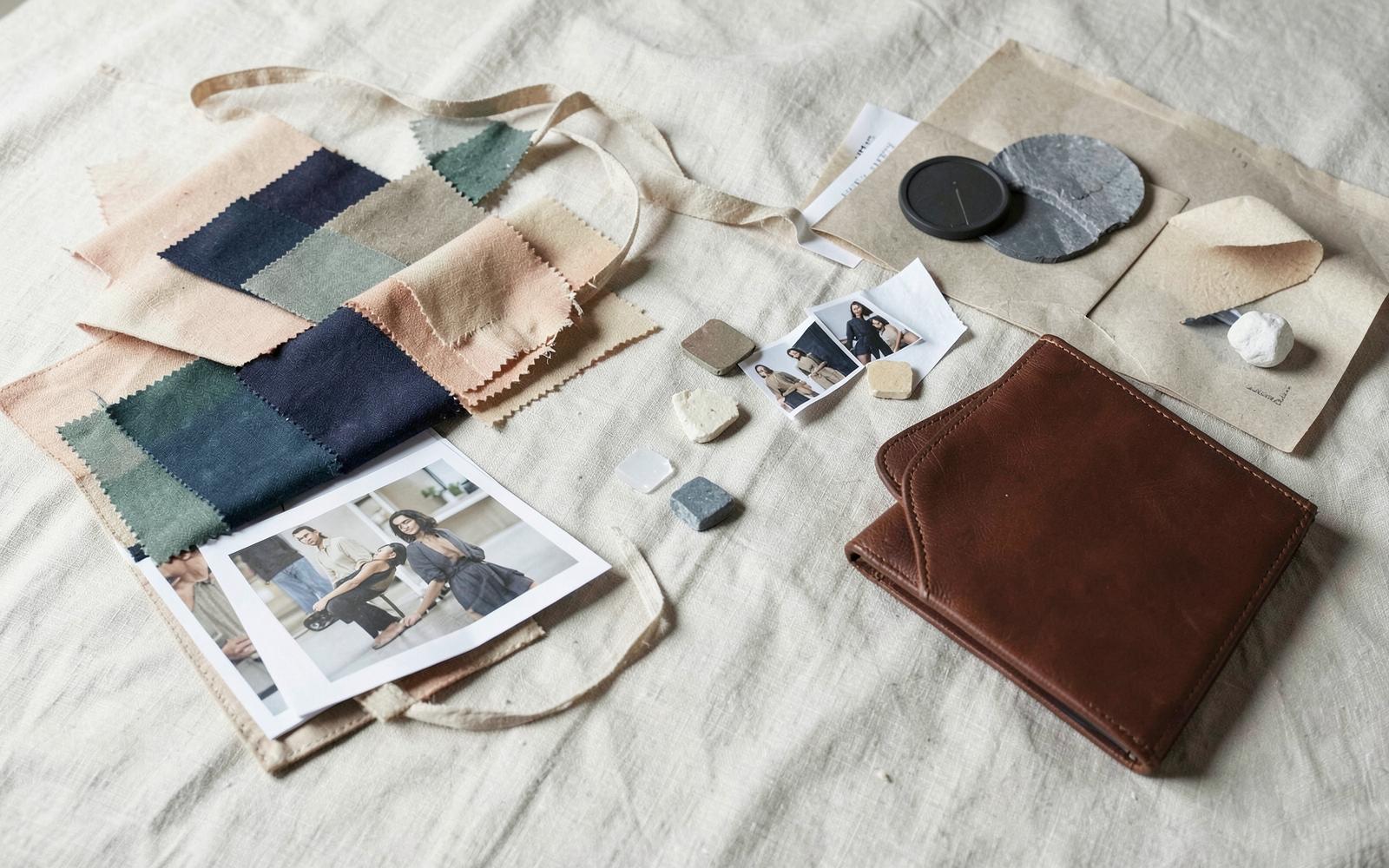
Crinkled fabrics, sheer layers, fringe, knit, aged finishes and material contrast created visual density without depending on conventional embellishment. Tory Burch's deliberately imperfect surfaces and Cult Gaia's tactile approach made the idea especially visible. The eye was asked to register how a surface moved and felt, not simply how brightly it reflected light.
Texture is becoming a sophisticated answer to the fatigue around overt decoration. It can make a restrained shape feel emotionally rich while preserving wearability. It also rewards close attention, which is one reason it reads as luxury: the value becomes clearest in movement, touch and construction rather than through a logo.
For buyers and product teams, this is a consequential signal. Texture changes photography, fit, care, production and perceived value. It is not a superficial layer. When several designers invest in surface, they are making a bet that the next cycle's newness will be experienced materially.
Beauty Followed Fashion Toward Deliberate Imperfection
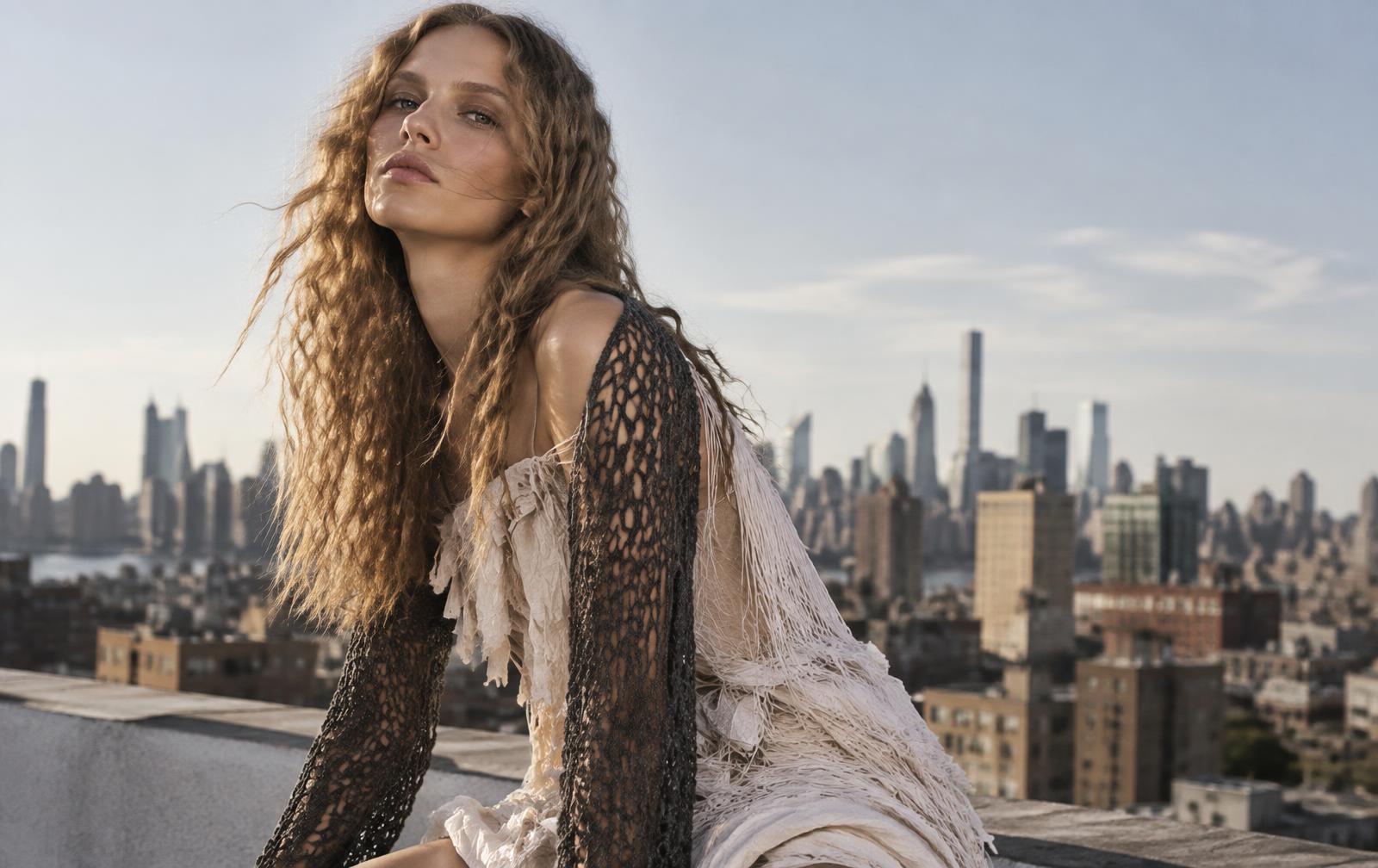
The return of crimped hair at Christian Siriano, Christian Cowan and Area offered a concise beauty parallel. This was not a literal reproduction of an earlier era. Texture was controlled, exaggerated or placed against contemporary clothes so that the reference felt intentional rather than nostalgic.
The broader implication is consistent with the fashion: one uniformly polished ideal is giving way to more visible character. Hair can carry texture. A surface can look touched. Beauty can complete a role rather than neutralise it. This does not mean polish has vanished. It means polish is no longer the only credible expression of care.
The Collections That Gave the Week Its Weight
Diane von Furstenberg's official-calendar return under Henry Zankov mattered as both institutional story and creative proposition. Coach's 85th anniversary connected a house milestone to a social, celebratory vision of American dressing. Carolina Herrera marked 45 years with Wes Gordon working through yellow, crisp shirting, polka dots and the codes of New York social glamour rather than abandoning them for novelty.
Ralph Lauren demonstrated the continuing power of a complete historical world. Luar's Christopher Street Columbus, staged beneath the Unisphere, brought Renaissance reference, Caribbean identity and New York street culture into one highly narrative frame. Tory Burch made optimism, imperfection and personal memory feel like parts of the same design language. Khaite's tenth anniversary sustained New York's darker vocabulary of polished sensuality, while Rachel Scott's second collection for Proenza Schouler continued the measured work of evolving a house rather than performing a reset.
These are not winners. They are collections that clarified different aspects of the week's larger argument: heritage can be active, identity can be specific, and expressive fashion does not require every designer to speak at the same volume.
Beyond the Runway
NYFW now operates as a cultural and commercial ecosystem. Retail openings, brand activations, parties, presentations and emerging-name showcases competed with the official calendar for attention. For the American market, this expanded week matters because visibility, community and direct consumer contact increasingly sit beside wholesale appointments and press coverage.
A separate incident at the COS show also became part of the week's public record. PETA activists entered the runway to protest the use of wool, and CFDA president and chief executive Steven Kolb physically intervened. The confrontation drew substantial public reaction. Kolb subsequently apologised, describing his response as inappropriate, while the CFDA said security should have handled the situation. The incident deserves factual acknowledgement, but it should not eclipse the collections or be converted into fashion-week spectacle.
What New York Is Telling Us
Taken together, the week proposed a more expressive relationship with fashion. Uniformity loosened into individuality. Neutral restraint admitted emotional colour. Decoration moved into texture. Rigid waist definition made room for fluidity. Isolated garments became parts of characters and worlds. Perfect surfaces acquired creases, friction and evidence of touch.
None of these movements is absolute, and that is precisely why the reading is credible. New York did not issue a dress code. It widened the language available to designers and wearers. The strongest signal was permission: to be recognisable, to combine pieces less predictably, to let a fabric carry feeling and to use fashion as a form of narrative identity.
As fashion month moves through London, Milan and Paris, those cities will confirm, challenge or complicate New York's propositions. The Beauty Edit will be looking for repetition across houses with no shared aesthetic, because that is where an appealing runway idea becomes a broader shift. Our Milan SS27 watch list sets out the next questions in that process.
How to Read the Week Beyond the Clothes
A fashion week becomes useful when looking turns into observation, observation into pattern, and pattern into meaning. That method prevents one viral image from standing in for six days of work. It also makes room for contradiction, which is often where the most important change begins.
Want to learn how to read a runway beyond the clothes? Explore The Beauty Edit's How to Read a Fashion Show, a practical guide to identifying silhouettes, repetitions, cultural signals and the patterns that give a collection meaning.
Frequently Asked Questions
When did New York Fashion Week Spring/Summer 2027 end? The official CFDA schedule ran from September 10 to 15, 2026, with additional pre-week and off-calendar events. Thom Browne closed the official programme on September 15.
How many shows were on the NYFW SS27 schedule? The preliminary official CFDA schedule included approximately 70 runway shows and designer presentations, with a wider ecosystem of off-calendar shows, appointments and events.
What were the main NYFW Spring 2027 signals? The recurring signals included stronger visual personality, emotional colour, romantic and historical references, more fluid relationships with the body, unexpected styling combinations, assertive accessories and texture used as decoration.
Was minimalism over at New York Fashion Week? No. The more accurate reading is that minimalism became one language among many. Restrained shapes remained, but were increasingly animated by colour, texture, accessories and more individual styling.
New York rarely tells the whole story. It does, however, tell us where the conversation begins. The most important result of SS27 was not one dress, one front row or one image engineered to travel. It was the growing desire for fashion to feel personal, expressive and alive.
Continue following The Beauty Edit's Fashion Week Intelligence as the season moves through London, Milan and Paris. The point is not to collect trends city by city, but to understand when separate creative choices begin to form the language of a season.
Disclosure · The selections below were independently chosen by our editors. Some links are affiliate; we may earn a small commission when you shop through them.
The Beauty Edit Style
Discover your personal style
Before deciding what to buy, it helps to understand what genuinely belongs to you. Our style diagnostic reads the silhouettes, textures and details you're drawn to — and names the identity behind them.
Curated · Tested · Recommended
Suggested to Shop
The pieces mentioned in this story, in one place — independently chosen by our editors.
Some links are affiliate. We may earn a commission at no cost to you.