What Stood Out at Paris Fashion Week: The Trends Shaping Spring/Summer 2027
The trends, silhouettes and signals shaping Spring/Summer 2027: a more deliberate femininity, lighter construction and house identities made useful again.
October 9, 2026
Paris did not agree on what a woman should look like next. It agreed, more persuasively, that the clothes needed a reason to exist. A familiar skirt could change the balance of an outfit. A jacket could retain its history while losing its weight. Sportswear could admit elegance without pretending to be something else. Across Spring/Summer 2027, recognisable garments became the site of serious design work rather than the safe territory between spectacles.
The Fédération de la Haute Couture et de la Mode's womenswear calendar ran from 28 September to 6 October 2026. Within that completed season, Paris's major houses offered strikingly different propositions. Saint Laurent pursued the intensity of gold; Dior dissolved established structures into translucent layers; Miu Miu crossed athletic clothes with a more dressed vocabulary. None can stand in for the whole week. Their differences make the collective reading more useful.
The tension was between invention and identity, not creativity and its absence. At Chanel, the suit was something to expand rather than discard. At Balenciaga, construction changed the behaviour of a shirt. At Hermès, air became a practical design problem. These are separate decisions, but they point toward a shared question: what can luxury offer that a recognisable shape, an impressive image or a familiar label cannot supply on its own?
Our answer is an editorial interpretation, not a manifesto issued by the designers. Paris appeared less interested in novelty as a complete reset than in the intelligence of revision. Femininity became more adjustable; craft became more legible; ease acquired precision. Reading the season means separating a visible look from a recurring pattern, then asking what that pattern might mean beyond the runway. That distinction guides The Beauty Edit's Trend Studies.
The Paris Signal
The most consequential change was not one hemline. It was the relationship between a garment's identity and its physical demands. Dior's jacket could suggest the Bar without reproducing its armour. Hermès could work with leather while asking how air passes through clothing. Miu Miu could bring a blazer into an athletic wardrobe without tidying away its contradictions. Heritage became a resource to test, rather than a script to obey.
Femininity was part of that revision, but not a return to one idea of prettiness. Skirts established line and movement; visible underpinnings supplied structure; jewellery concentrated attention. Minimalism survived as a design discipline, though it was frequently disturbed by surface, proportion or styling. Where clothes looked straightforward, the question became what their construction actually did.
The ten signals below concern garments, fabrication and styling, not a common brief shared by every house. Together, lighter structures and more intentional combinations make a stronger case for the making behind luxury. Their wider significance lies in how separate decisions begin to reinforce one another.
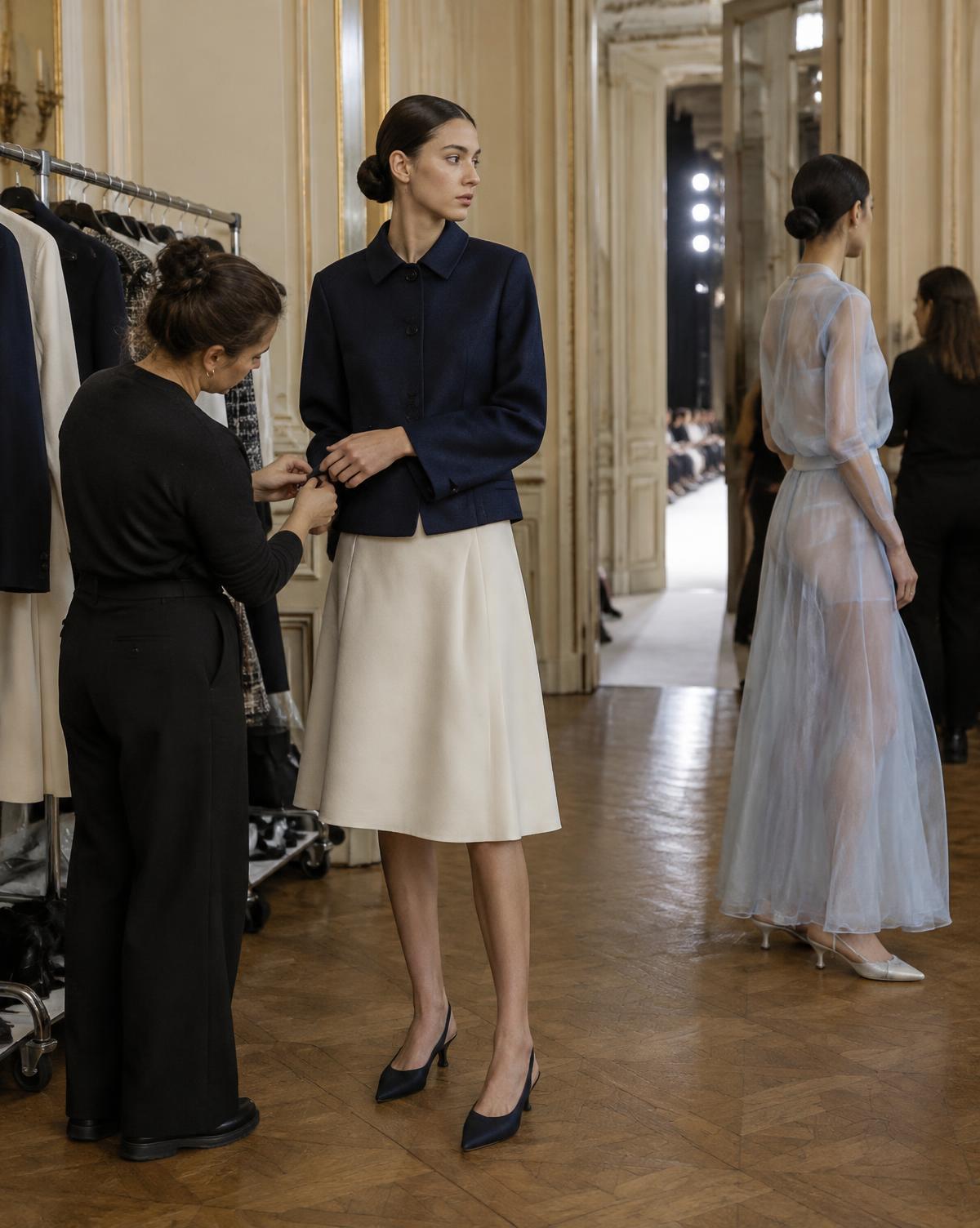
The newness was not always a new garment. Often, it was a different demand made of a familiar one.
01. The Skirt Revival
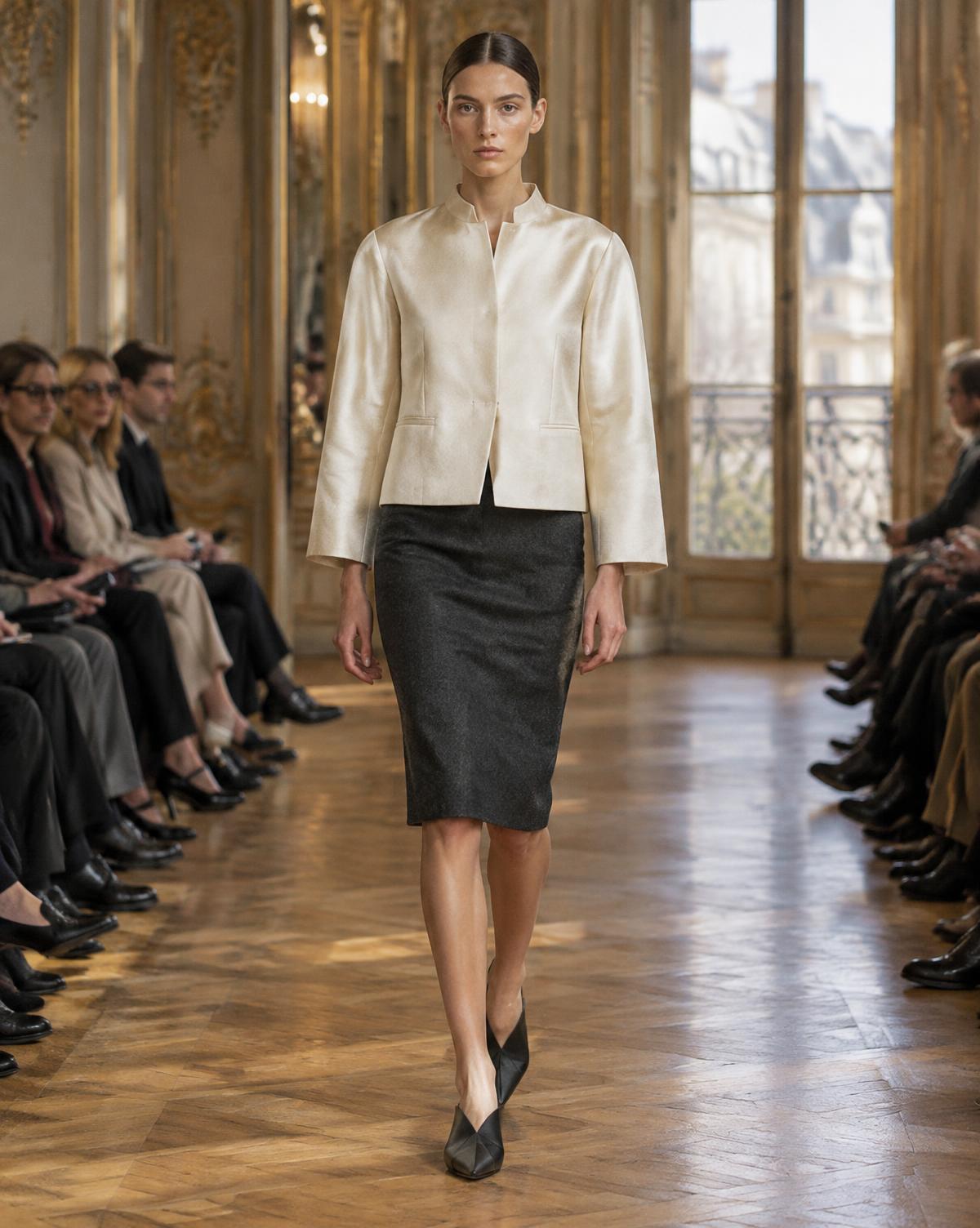
The skirt mattered less as a nostalgic category than as an instrument of proportion. Miu Miu's pleated skirts sat low on the hips against cropped workout pieces and boyish jackets. At Loewe, pencil skirts opened over the hips with a suggestion of an unzipped wetsuit. Dior's small, layered circle skirts proposed another relationship between a defined upper body and a moving hem.
These were not versions of the same silhouette. They made the lower half of the outfit an active design proposition, rather than a neutral partner for a jacket. Attention returned to skirts without declaring trousers obsolete.
The signal is a more deliberate balance between waist, jacket length and hem. A straight skirt offers a different attitude from a floating circle; a low-slung pleat changes the apparent torso. What travels beyond the runway may be this renewed attention to proportion, not one mandatory length.
02. The Bra Is the New Shirt
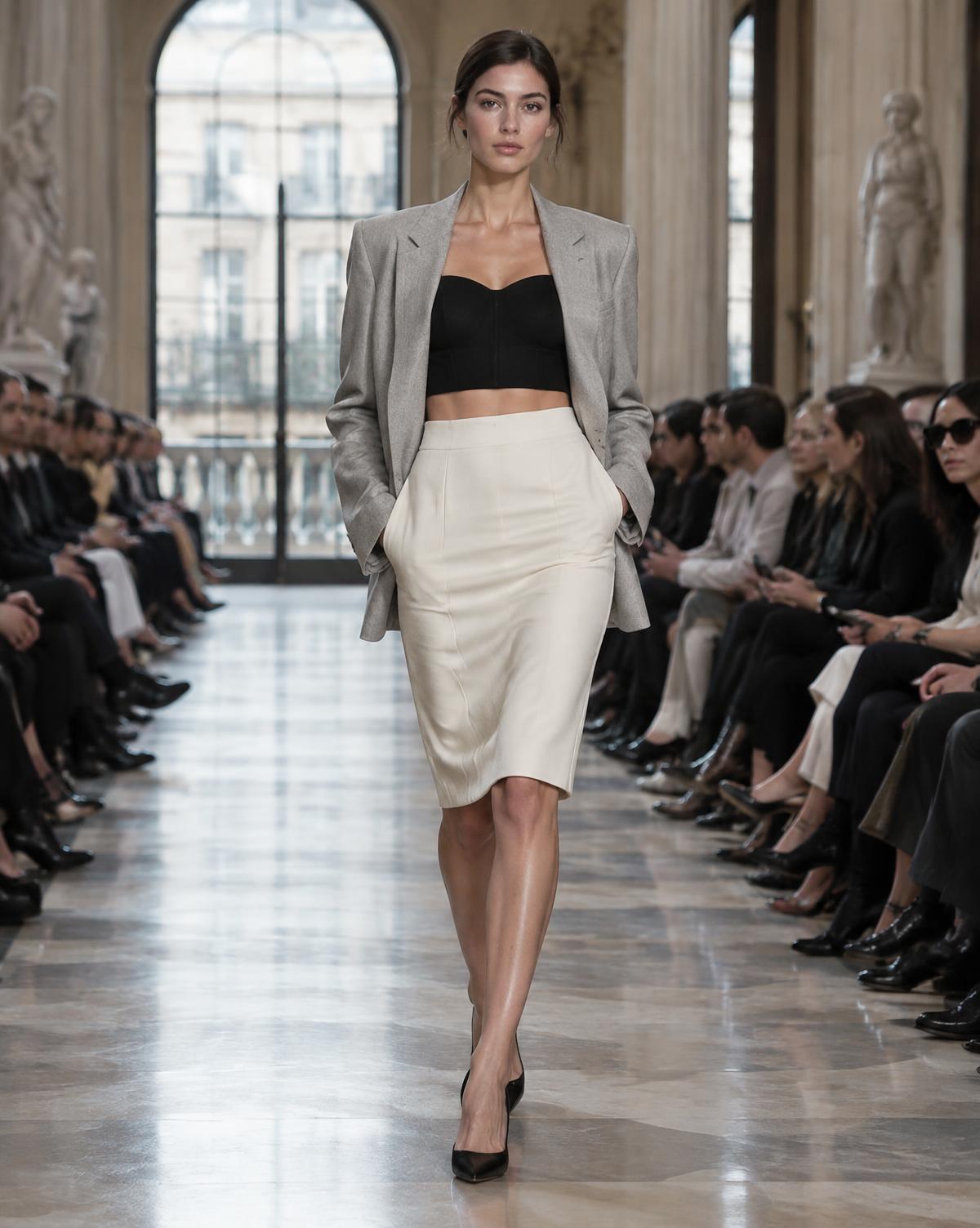
At Hermès, open-knit dresses were worn over statement bra tops and underwear. Chanel placed a pearl-embroidered corset top with masculine black trousers. Miu Miu built combinations around cropped workout tops and swimwear bottoms. Different vocabularies brought the intimate or body-adjacent garment into view, though they did not all propose a literal bra in place of a shirt.
Lingerie dressing becomes more than exposure when it determines an outfit's architecture: a contained line beneath a jacket, an underpinning beneath transparent cloth, a fitted element against looser tailoring. The surrounding clothes decide whether the intimate piece reads as structural, decorative or athletic.
Paris's useful signal was the changing hierarchy of layers. An item once treated as subordinate can establish the look's central line. Its everyday translation may be more restrained than the runway version, but the underlying idea is not simply more skin. It is a different order of dressing.
03. Weightless Luxury
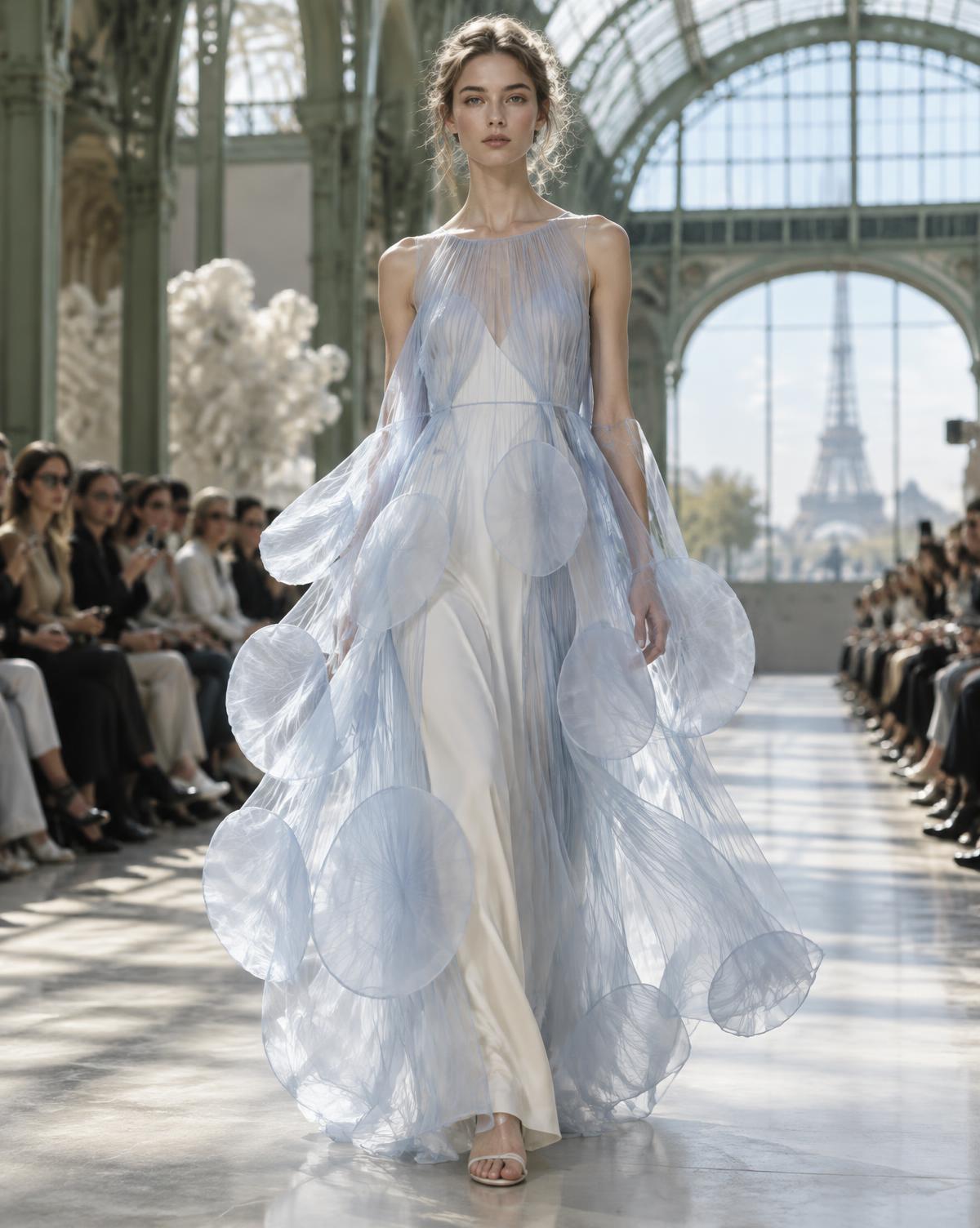
Jonathan Anderson's Dior supplied the season's clearest argument for lightness. WWD's SS27 review describes a sheer jacket with a small circle-cut skirt built from layers of ivory chiffon, alongside checked organza and petal-assembled garments. The familiar outline remained, but its physical authority softened.
At Hermès, Nadège Vanhée approached the same problem pragmatically: sheer panels, perforated suede, open knits and lightweight denim allowed the body more air. Climate was a documented design consideration there and at Dior, not a motive to assign retrospectively to every transparent dress in Paris.
Volume need not require bulk; structure need not demand confinement. Lightness becomes meaningful when construction maintains a garment's character while reducing its burden. Beyond transparency, the proposition is material intelligence in service of movement.
04. Everyday Couture
These are ready-to-wear collections, not haute couture. The distinction makes Balenciaga's proposition more interesting: Pierpaolo Piccioli transferred a stitching technique from his couture work into familiar garments. Dense stitching and a second fabric layer shaped a white shirt into a cinched waist and gently flaring peplum. Bias cutting changed the behaviour of jeans and unlined suits.
Dior's assembled petals and Loewe's glass-beaded garments made other techniques visible. Each addresses a different problem of shape, surface or movement. Artisanal detail alone does not establish wearability.
The signal is couture-informed construction entering the vocabulary of ordinary dressing. A shirt or trouser can carry substantial design intelligence without becoming ceremonial. Luxury's claim to value becomes more convincing when the technique changes how a piece sits, moves or feels, rather than merely adding a story to its price.
05. Minimalism, Reconsidered
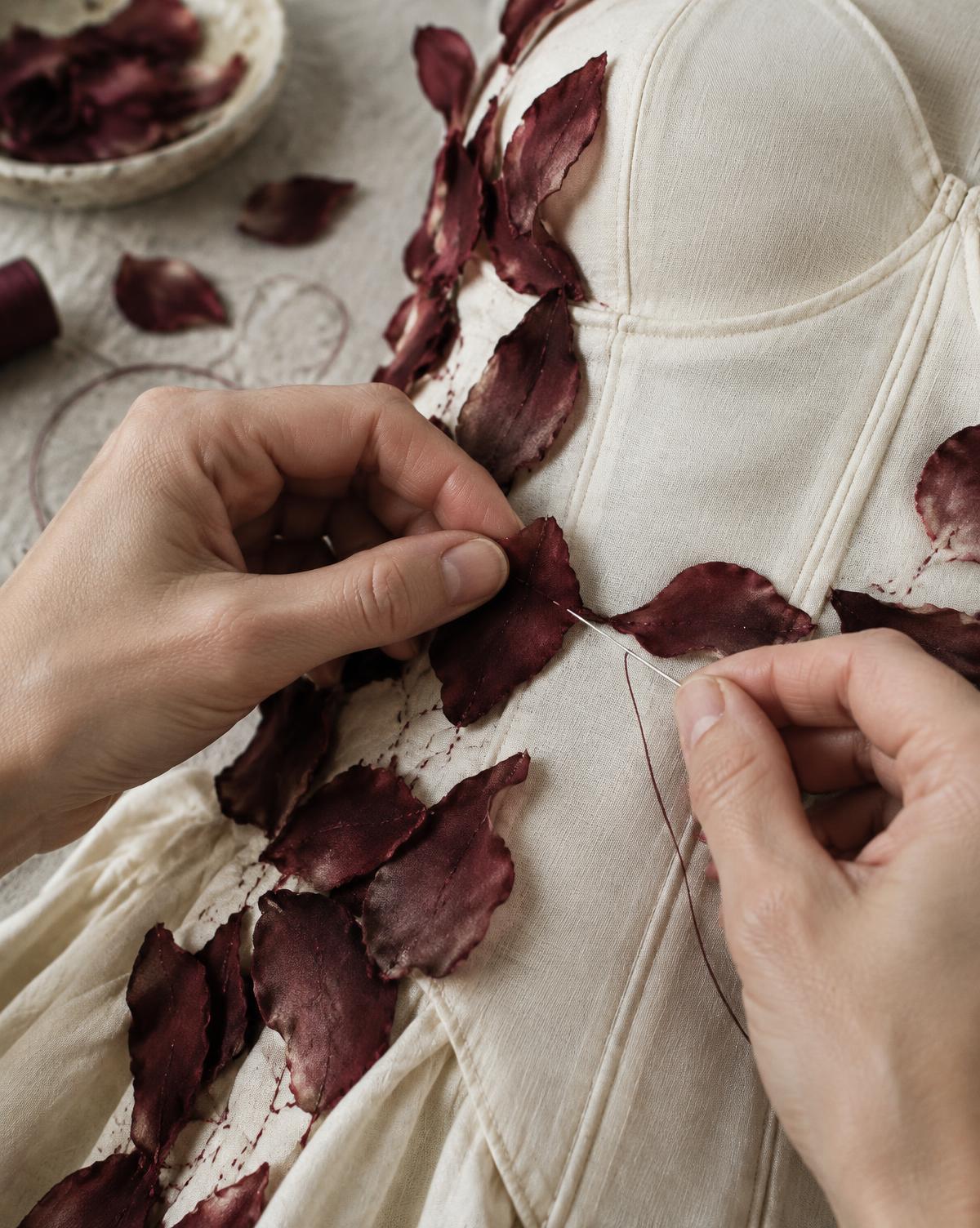
Minimalism did not return as a sterile uniform. Celine's black and midnight-blue satin-finish clothes could appear austere until a huge silver bangle, a deliberately scuffed trainer or an unexpected T-shirt shifted their register. Hermès supplied a different restraint, where ventilation, adjustable lengths and the handling of leather gave a clear silhouette its substance.
Loewe's leather jackets and preppy pieces coexisted with material experiments. These houses did not become minimalist. Restraint remained useful where proportion, surface or a concentrated accessory carried the design.
This is a more demanding form of simplicity. Removing decoration exposes the decisions underneath it. The signal for 2027 is less about reducing a wardrobe to anonymous essentials than about making each restrained piece earn its place.
06. Sport Meets Elegance
Miu Miu made the argument directly through athletic tops, warm-up jackets, swimwear, pleated wool skirts and blazers. New Balance trainers sat within that mixed wardrobe. Crystal, crinkled silk and a sophisticated colour sense complicated any easy reading of the collection as clothes for exercise.
Loewe approached sport through cycling caps, technical windbreakers and basketball-jersey references translated into chiffon dresses. Chanel developed a stretch fabric joining a tweed-like appearance to athletic ease. These are different design operations: styling contrast, reinterpretation of a garment and textile development.
Beyond the familiar trainer-under-a-dress gesture, sport influenced luxury's construction and materials from the outset. Comfort and elegance no longer required opposing wardrobes.
07. Liquid Gold and Luminous Surfaces
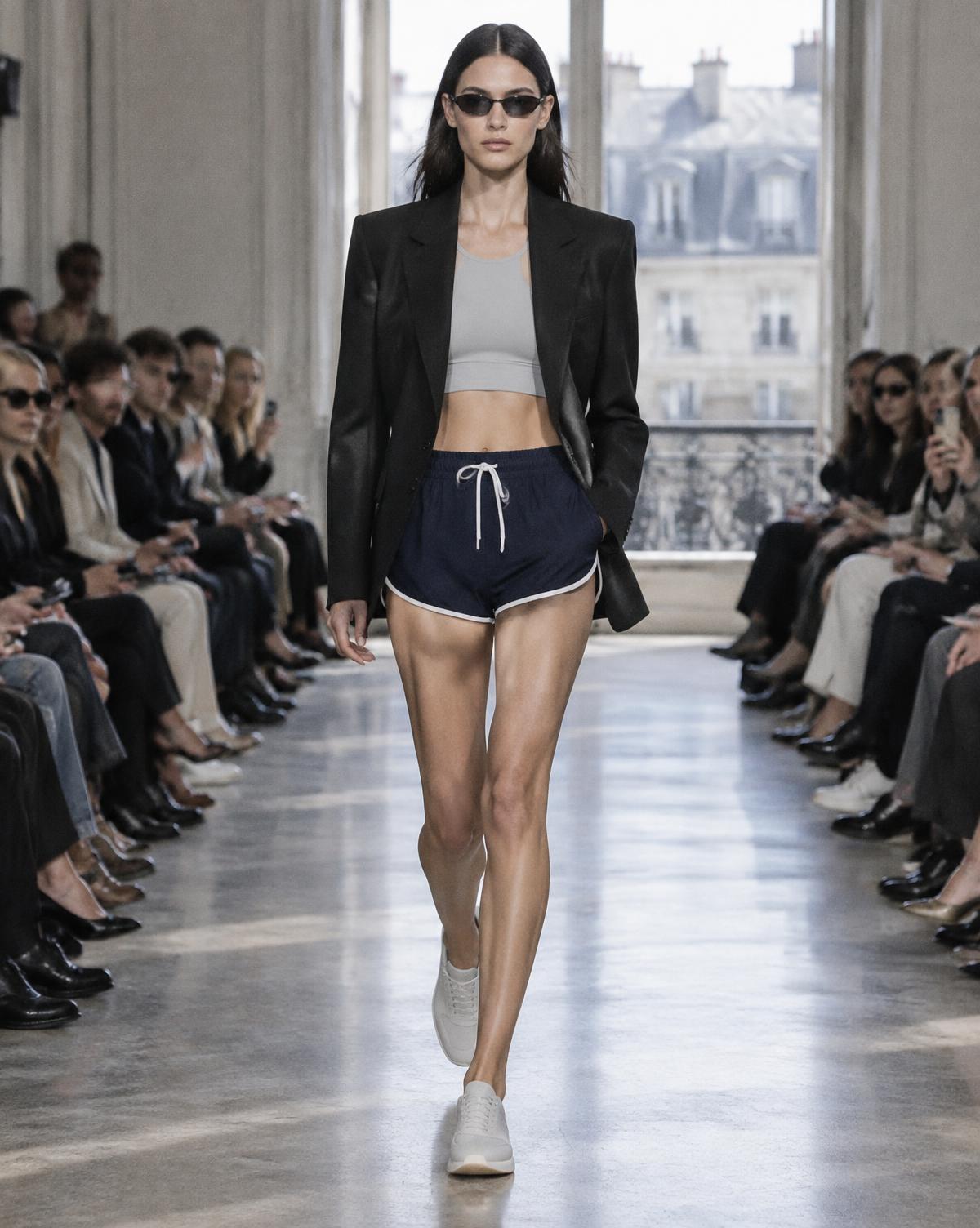
Saint Laurent made gold a sustained proposition rather than a finishing touch. Anthony Vaccarello gilded trench coats, pencil skirts, safari jackets, suits and cocktail dresses across lamé, organza, guipure, chiffon, brocade, jacquard, metallic cotton and latex. The Eiffel Tower backdrop and suspended chandeliers intensified a collection already organised around light.
Different fabrics gave gold crinkled, pleated, reddish or darker casts before a closing passage of black. Surface animated recognisable house shapes rather than replacing them with an unrelated theatrical idea.
This remains principally a Saint Laurent statement, not proof that Paris collectively abandoned neutrals. Its wider relevance is how luminosity can animate established codes. Metallic dressing becomes more interesting when fabrication determines its character, rather than when every garment simply shines.
08. Pearls, Jewellery and the New Accessory
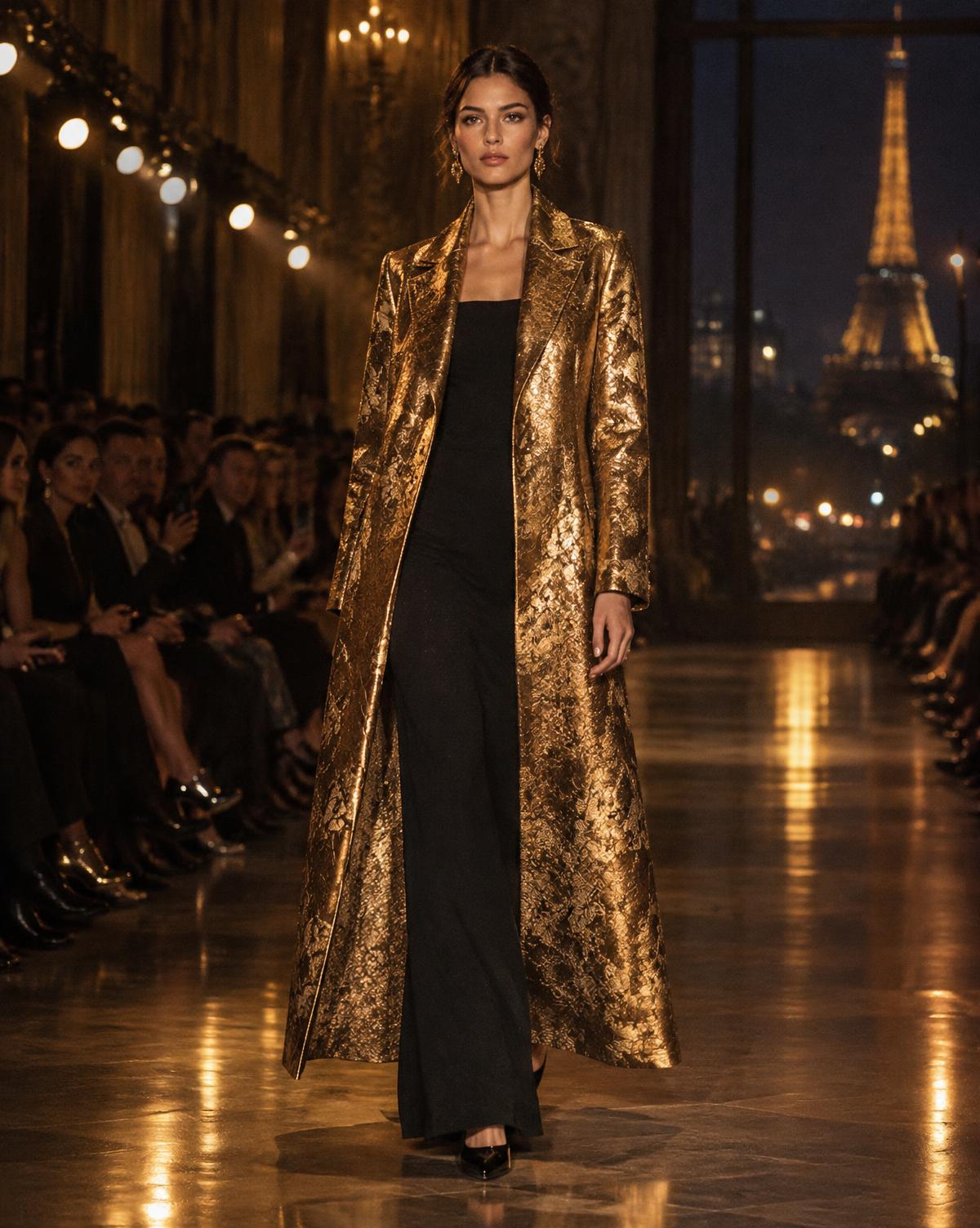
At Chanel, pearls could enter the garment itself through an embroidered corset. At Celine, a large silver bangle redirected attention within a slim silhouette. Hermès used stacks of leather bracelets, while Miu Miu's crystal details enriched athletic-minded clothes. Accessories and embellishment were related forms of emphasis, though not the same category.
A concentrated gesture can redirect a familiar look. Jewellery becomes punctuation through scale and contrast, especially when hard or luminous elements meet soft, spare or practical cloth.
An accessory may offer a simpler wardrobe adaptation than a new silhouette, though that does not establish affordability or sales. The signal is strategic emphasis: which element carries the personality?
09. Human Imperfection
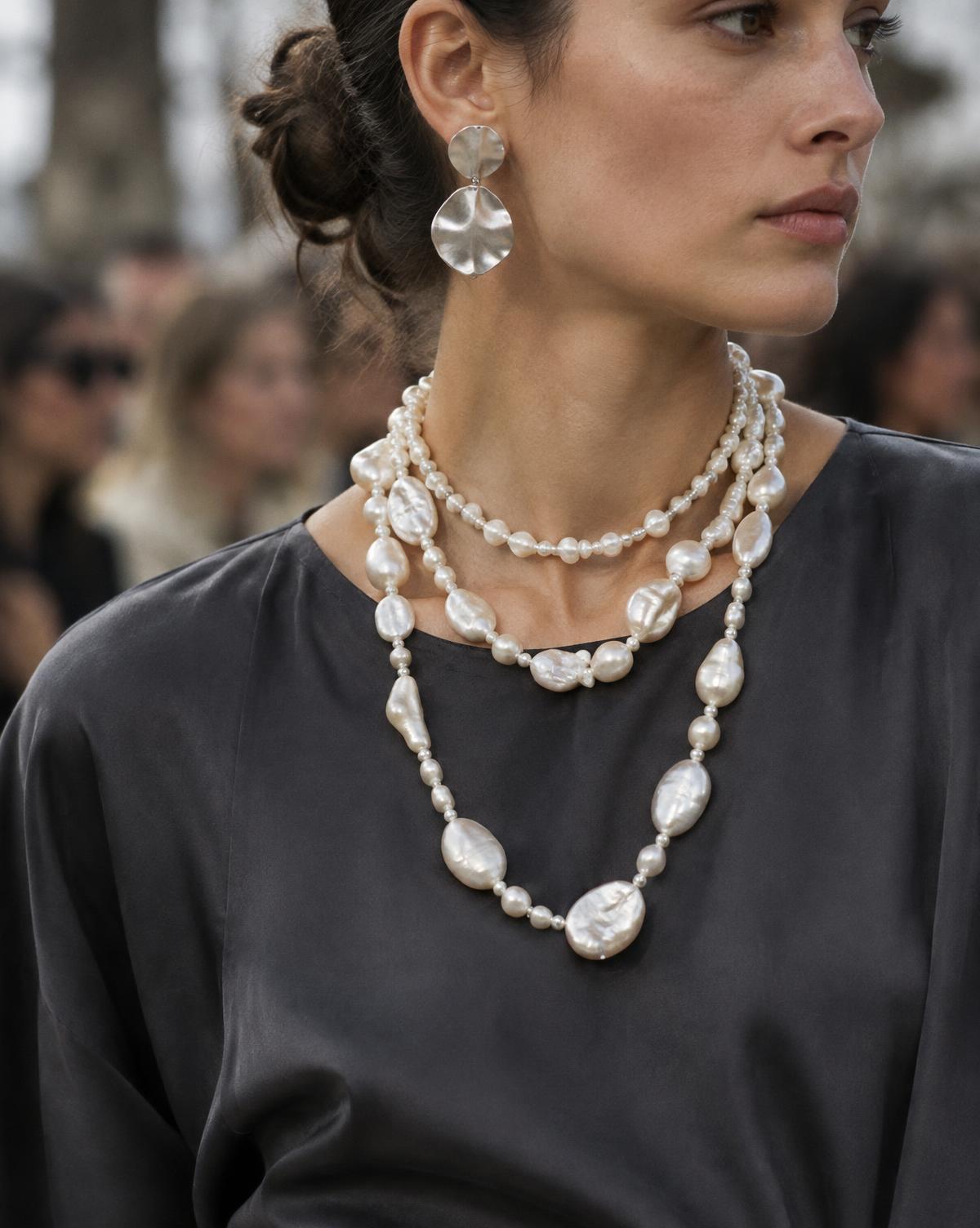
Dior's floral assemblies and irregular layers, Celine's deliberate creases and scuffed shoes, and Loewe's materially complex beadwork created different kinds of friction with pristine polish. A worked surface is not necessarily unfinished; a styling irregularity is not necessarily evidence of craft. The differences must remain visible.
They suggest an appetite for objects that resist seamless sameness. Particular decisions gain significance in a digitally optimised visual culture. This is an editorial interpretation, not evidence that designers were collectively responding to AI.
The more durable luxury signal may be specificity: an unusual construction, an individual pairing, a surface whose making rewards attention. An image cannot establish how something was made. That requires documentation, and conceptual illustrations cannot substitute for it.
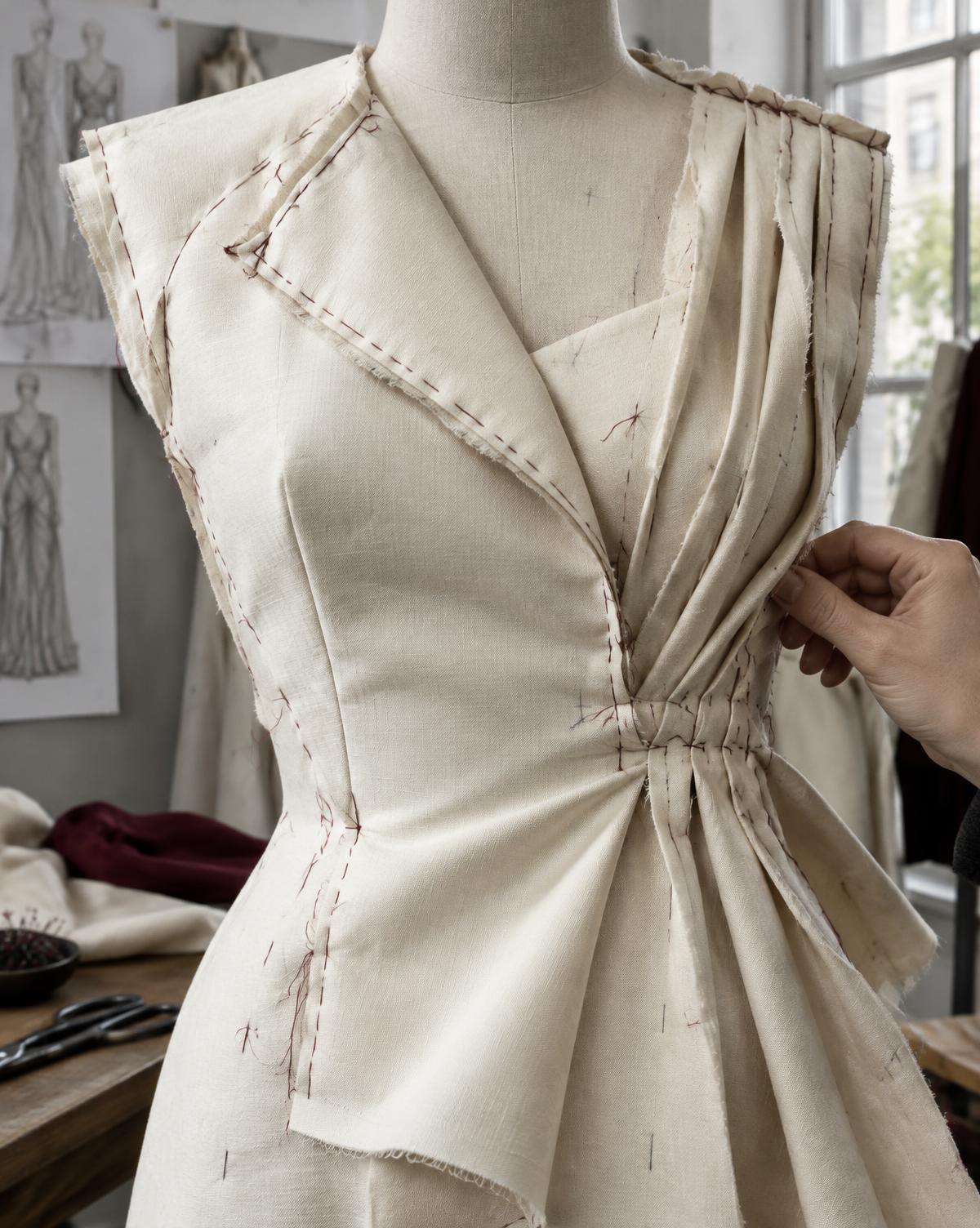
Imperfection becomes meaningful when it reveals a decision, not when it is applied as another finish.
10. Commercial Fashion, Reconsidered
Chanel's expanded suit vocabulary, Balenciaga's recut everyday pieces and Hermès's adjustable garments offered recognisable wardrobe propositions without withdrawing from experiment. Celine demonstrated how spontaneous combinations could make familiar clothes feel less predictable. Commercial legibility did not require every house to choose the same safe answer.
Wearability does not establish commercial success. Reviews cannot predict sell-through or customer adoption, but they can identify a clearer relationship between ideas and usable garments.
Coherent identity gives products a reason to belong together; inventive construction makes familiar categories feel new. The proposition is creativity that understands the wardrobe it is entering.
8 Maison Signals to Know
The macrotrends become more precise when returned to the houses that produced them. These eight readings draw on season-specific reviews, not the imagined looks illustrating the article.
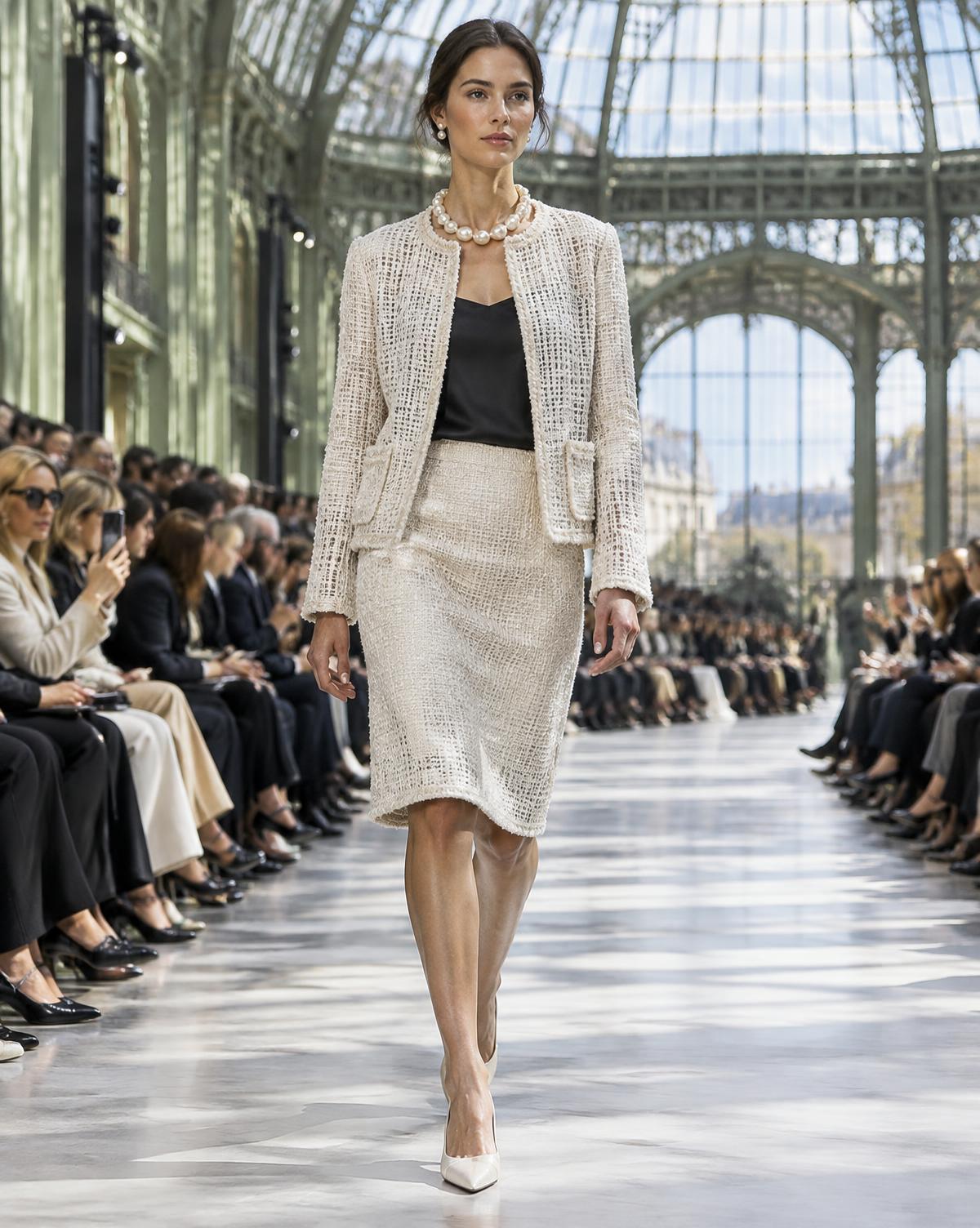
Chanel: Identity with More Than One Silhouette
Matthieu Blazy's Chanel SS27 expanded the suit rather than fixing the house around a single body. WWD's review records cropped wide jackets alongside more fitted forms, patchwork constructions and a pearl-embroidered corset with masculine trousers. A newly developed stretch fabric connected a tweed-like surface with athletic ease.
The contribution was plurality within a recognisable identity. House codes remained legible, but they could support different attitudes toward the body and different levels of formality. That is more substantial than an archive reference: it asks how Chanel can remain itself while giving the wearer more choices. The suit becomes a framework for revision, not a fixed answer.
Dior: Structure without the Weight
Jonathan Anderson's Dior SS27 made the historical silhouette permeable. Sheer jackets, chiffon circle skirts, organza and petal assemblies retained the recognisable tension between torso and hem while making it less physically imposing. In Vogue's review, the heat surrounding the show is part of the design context, not incidental scenery.
Dior's distinctive signal was to change the material logic of an inherited shape. It is not enough to call the result romantic. The more consequential move was preserving identity while releasing rigidity. Lightness became a method of updating the house, with climate and movement adding practical force to the aesthetic decision.
Saint Laurent: A Surface Can Hold a Whole World
Anthony Vaccarello organised Saint Laurent SS27 around gold across multiple fabrics and familiar archetypes. The season's review identifies the trench, safari jacket, pencil skirt and cocktail dress within that gilded vocabulary, followed by a passage of black. The consistency of colour made material differences unusually visible.
Saint Laurent's contribution was a counterargument to the idea that useful clothes must retreat from spectacle. Its house shapes were recognisable; their surfaces made them emotionally heightened. Unlike a broad palette trend, this was a tightly authored world. Its influence may lie in that precision of commitment, rather than in every wardrobe becoming gold.
Miu Miu: Elegance Refuses a Dress Code
Miuccia Prada's Miu Miu SS27 combined warm-up clothes, cropped athletic tops, swimwear, wool jackets and pleated skirts with crystal and crinkled silk. WWD's account also records lace-front Wrangler jeans and colourful New Balance trainers. Those verified collaborations belong to the collection; the conceptual image here does not reproduce them.
The signal was not simply youthfulness. It was an outfit allowed to contain different social registers without resolving their tension. Sport supplied movement and informality; tailoring and richer surfaces changed the mood. Miu Miu made elegance a relationship between pieces rather than a property confined to a conventional evening garment.
Balenciaga: Construction as the Argument
Pierpaolo Piccioli's Balenciaga SS27 put technique inside ordinary categories. The collection review describes dense stitching shaping a white shirt, bias-cut jeans and unlined wool suits. These are ready-to-wear applications of couture-informed thinking, not grounds to relabel the collection haute couture.
Its contribution was a precise account of what design adds. The shirt remained a shirt, but its relationship with the waist changed; trousers acquired a different fall. Romanticism and colour mattered, yet construction supplied the stronger argument. Whether every customer reads those changes as sufficiently Balenciaga remains a separate question from whether the clothes demonstrate invention.
Loewe: Familiar Clothes, Unfamiliar Material Logic
Jack McCollough and Lazaro Hernandez brought several registers into Loewe SS27: cycling references, windbreakers, backwards-styled polos and leather archetypes. WWD's review describes glass-beaded garments and basketball-jersey references transformed into tiered chiffon dresses. These are more specific observations than a generic claim that the house offered real clothes.
Loewe's signal was the meeting of familiar categories and materially unusual execution. Sport was not only a styling accent; it supplied forms to reinterpret. Craft was not only ornament; it changed the surface itself. The collection's relevance lies in that crossing, even where the competing references do not settle into one neat identity.
Celine: The Precision of Looking Spontaneous
Michael Rider's Celine SS27 used crisp satin-finish fabrics, dark colours and dressy shapes, then interrupted them. The review notes large silver bangles, deliberately scuffed trainers, unusual belts and a concert T-shirt under a white satin trouser suit. Restraint and eclecticism remained in productive proximity.
The contribution was character through combination. A familiar garment changed meaning when its expected partner disappeared. Celine therefore complicates minimalism rather than simply endorsing it: rigorous clothes can accommodate spontaneous wear. Its useful signal is not an instruction to copy one outfit, but permission to make a polished wardrobe less obedient.
Hermès: Air as a Practical Luxury
Nadège Vanhée's Hermès SS27 began with air as a design problem. WWD's account records parka-derived dresses and skirts with sheer panels and adjustable zips, perforated suede, open knits and lightweight denim. Leather strips on silk mesh offered another way to preserve the house's material identity while opening the garment.
The contribution was functional sensuality rather than weightlessness as an effect. Ventilation, movement and adjustability gave the body room without erasing the precision associated with Hermès. This is a quieter proposition than Saint Laurent's luminosity, but no less authored. Luxury becomes convincing when material expertise answers an actual physical need.
What Paris Tells Us About 2027
The strongest Paris signal is not a rejection of spectacle. It is a demand that spectacle, restraint and usefulness have something behind them. Saint Laurent's gold held because familiar shapes gave its intensity a framework. Dior's softness held because it changed a recognisable structure. Balenciaga's everyday proposition held because technique altered the clothes. These are not interchangeable routes, and that is precisely what makes the season worth reading.
Femininity became more architectural where skirts, corsetry and visible underpinnings determined the outfit's line. Lightness became more consequential where it addressed movement or heat. Craft acquired force where it changed construction rather than merely decorating it. Sportswear and elegance met at several levels, from the combination of existing pieces to the development of new cloth. Accessories supplied focus when garments did not need to supply every kind of drama themselves.
This does not establish what everyone will wear in 2027. A runway signal is an early proposition, not a sales forecast. Its strength increases when independent houses produce comparable changes for different reasons, and when those changes remain useful outside their original presentation. Our Milan Fashion Week SS27 analysis, London coverage and Copenhagen Fashion Week coverage provide other points of comparison, not evidence that all four cities spoke alike.
Paris's persuasive idea was revision with a point of view. Houses revisited what made them recognisable and asked what those codes could do now. The next cycle may be defined less by the invention of another wardrobe than by the intelligence brought to the one we already understand.
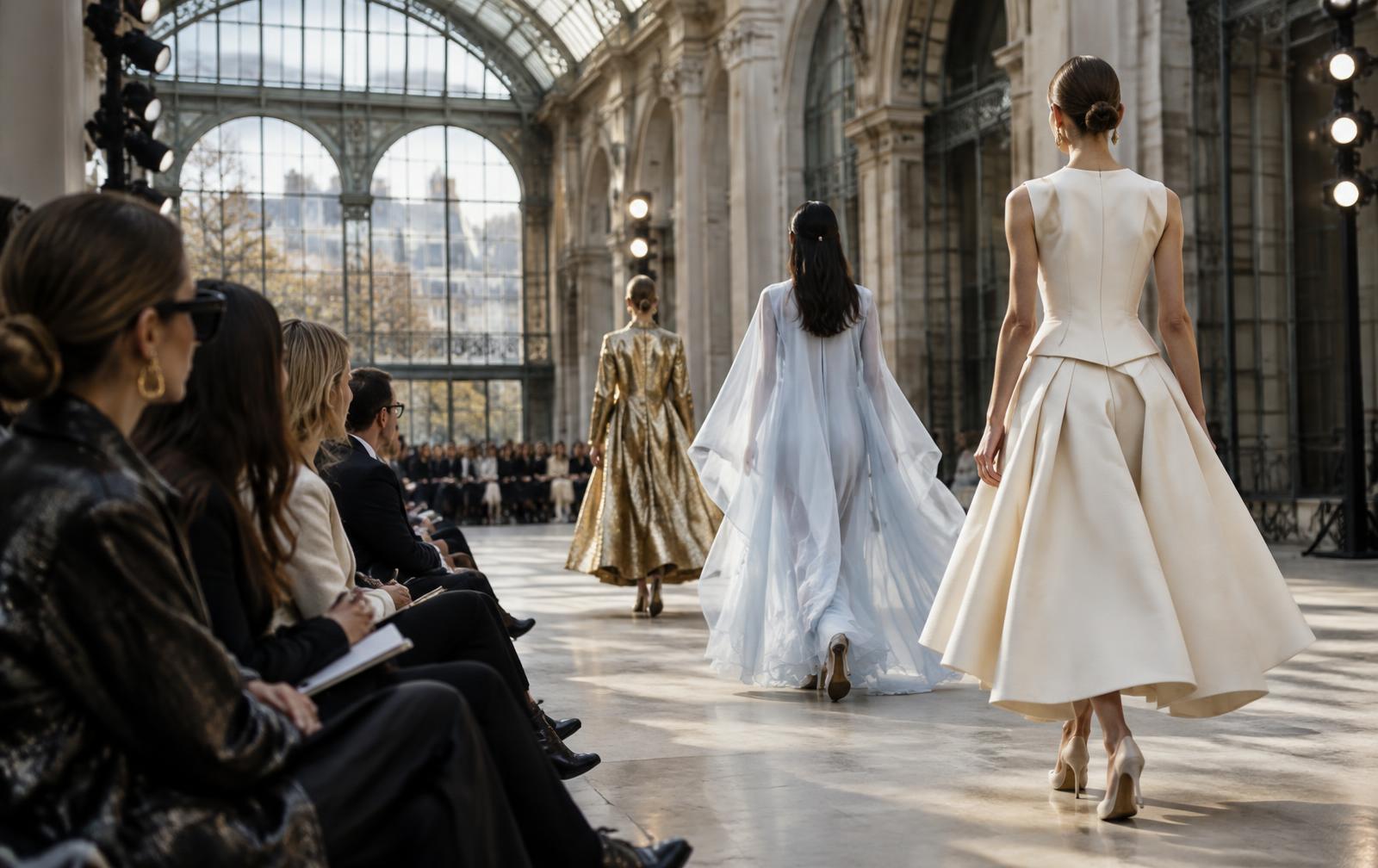
Related Trend Studies
For the method behind these readings, see How to Read a Fashion Show. Continue exploring our Trend Studies and Fashion coverage.
Sources and Visual Note
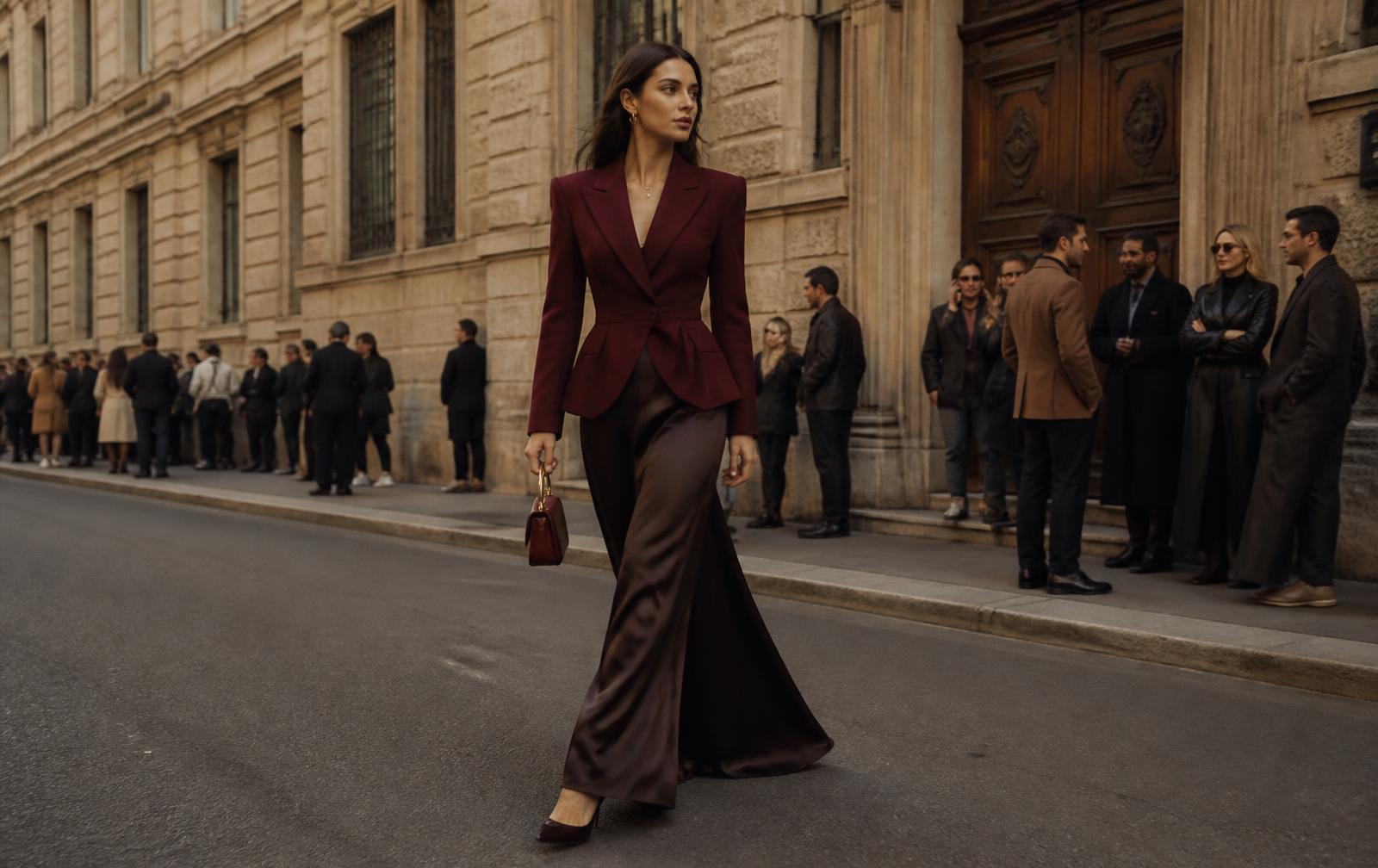
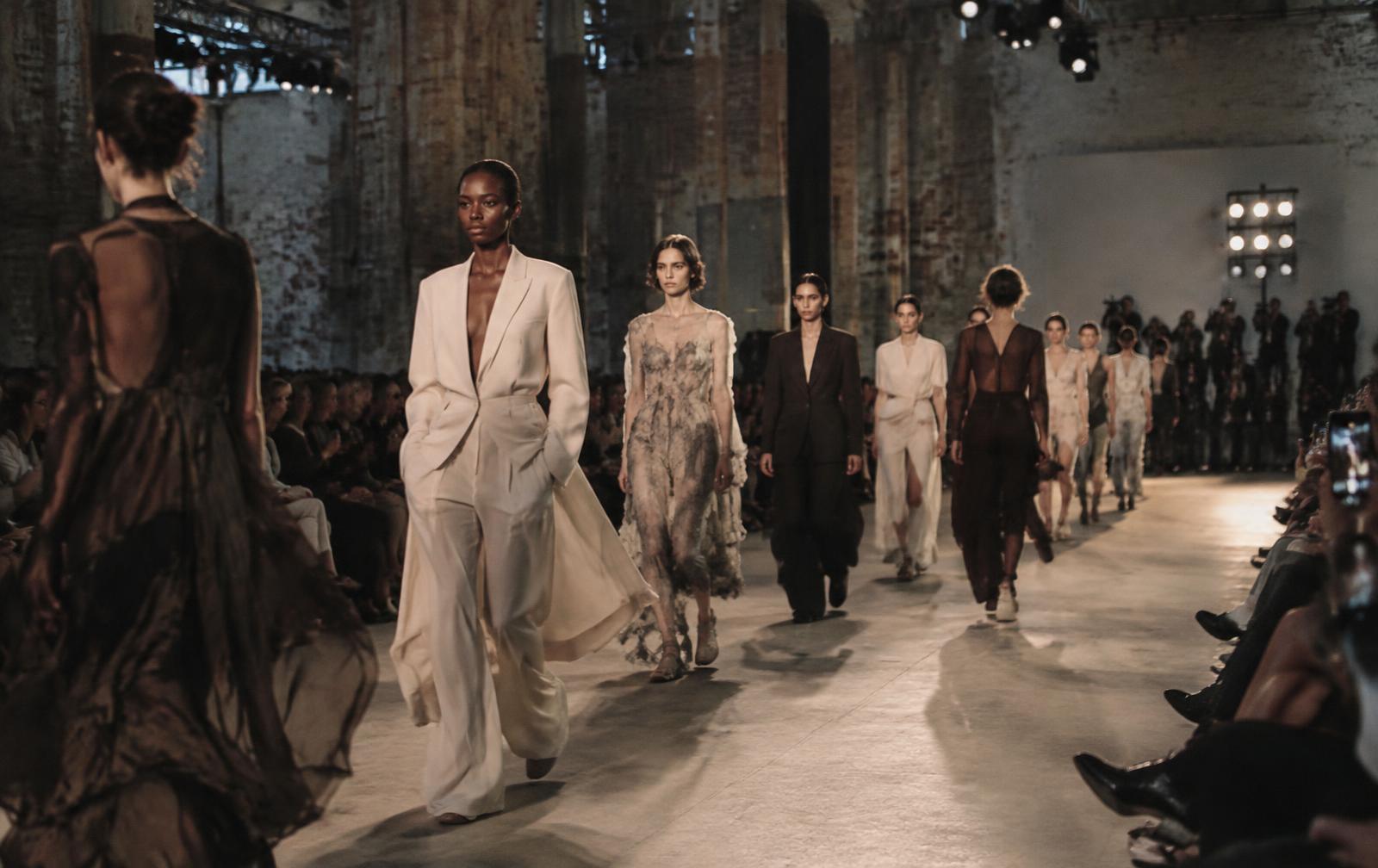
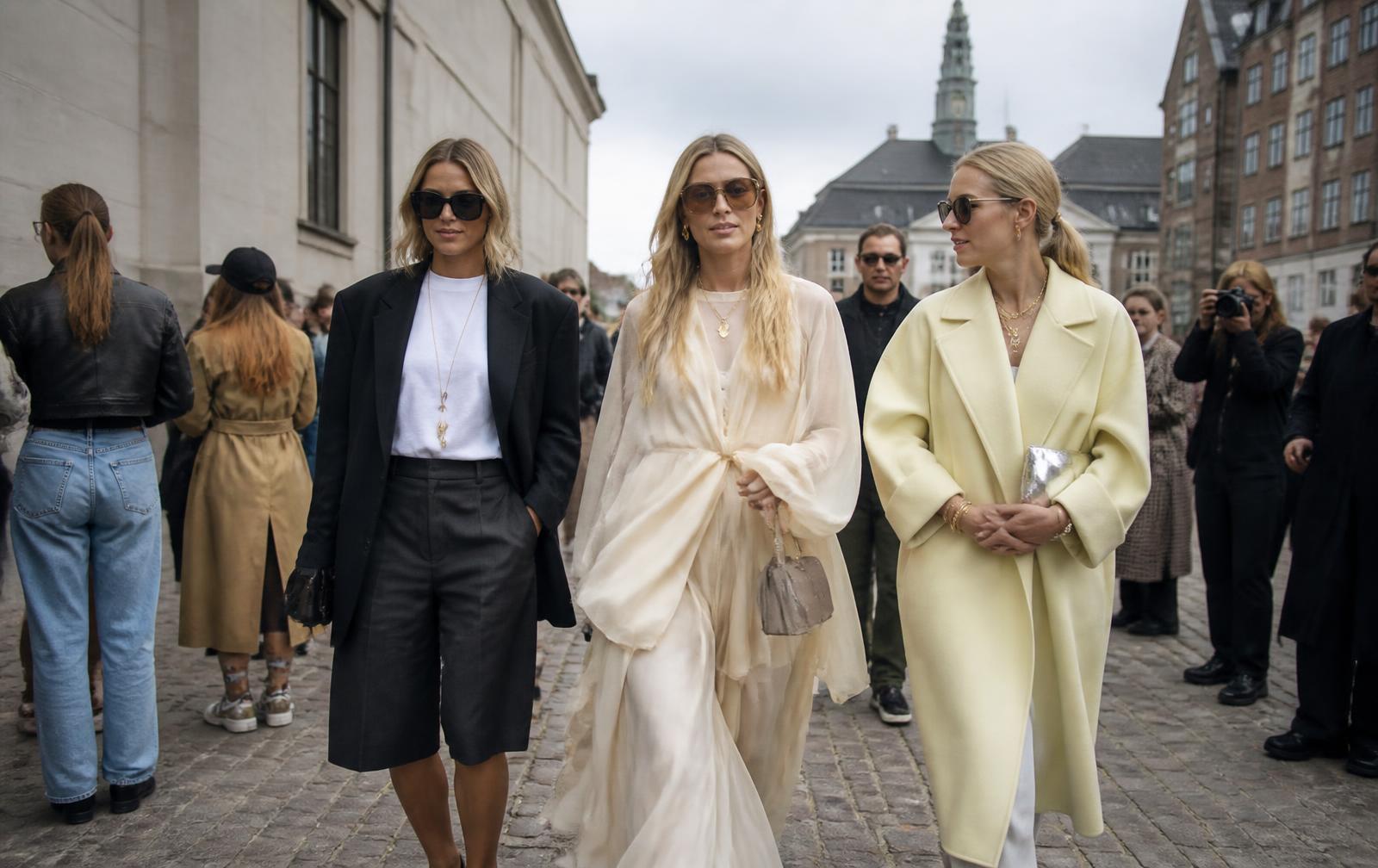
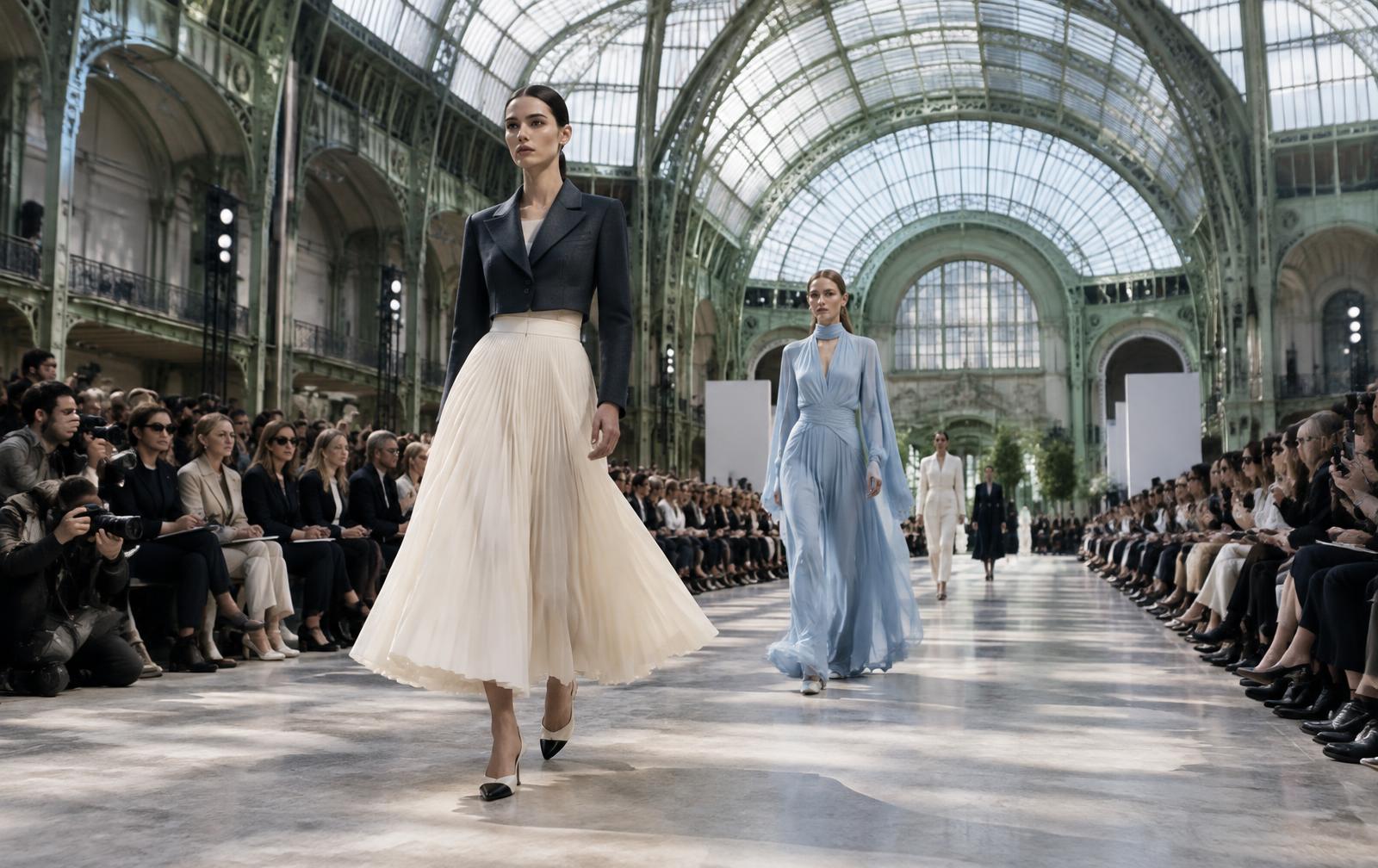
This analysis draws on the FHCM calendar and the linked Spring 2027 collection reviews from WWD and Vogue. Runway observations are separated from The Beauty Edit's interpretation and forward-looking inference. All twelve illustrations are conceptual editorial images. They do not document real shows, reproduce authenticated maison looks or provide evidence of the materials and workmanship described in the reporting.
Paris has offered its propositions. What matters next is which ideas retain their meaning when they leave the runway.
The Beauty Edit Style
Discover your personal style
Before deciding what to buy, it helps to understand what genuinely belongs to you. Our style diagnostic reads the silhouettes, textures and details you're drawn to — and names the identity behind them.