Tuscany, Slowly: The Art of Living Well in Italy
Where to go, where to stay and how to travel through Italy's most photographed region without rushing a single hour of it.
August 17, 2026
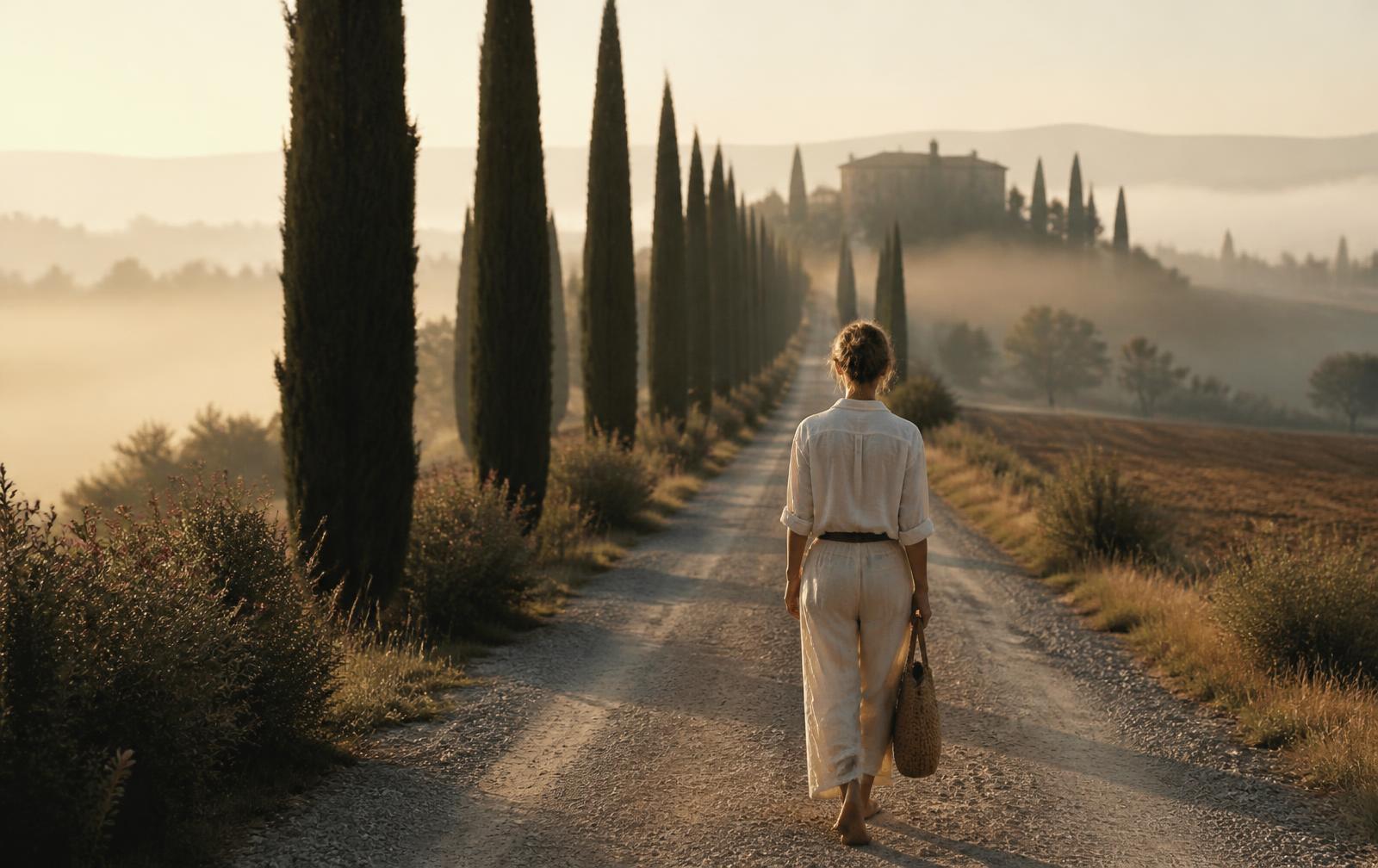
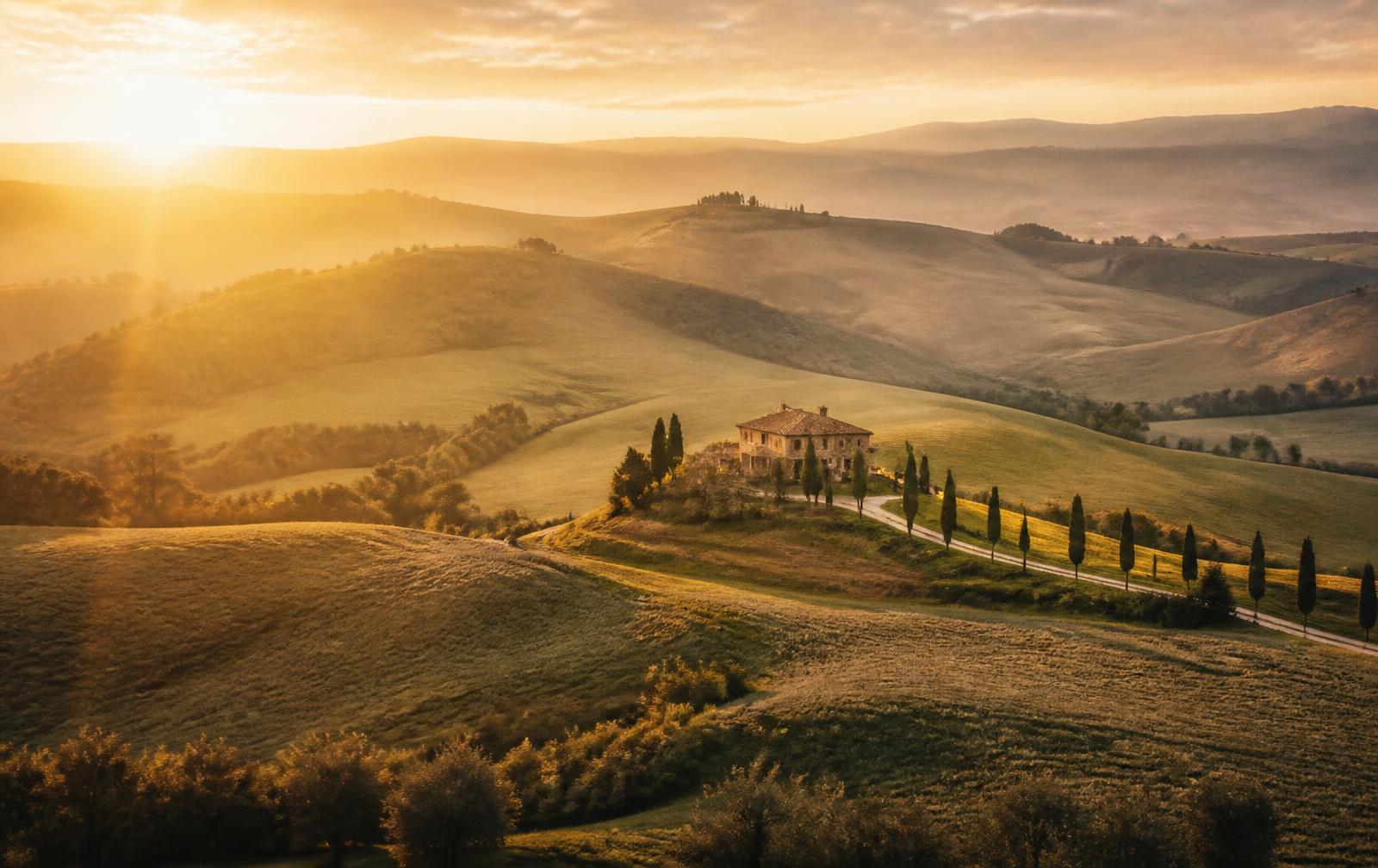
At seven in the morning the countryside between Siena and Pienza is the colour of unbleached linen, and entirely silent apart from a tractor two valleys away. By nine the light has hardened, the first cars appear on the cypress-lined roads, and the day has quietly decided what it wants to be. Nothing about this landscape asks to be conquered before lunch.
This is the argument for travelling through Tuscany differently. The region has enough Renaissance masterpieces, hill towns and vineyards to fill a month, which is precisely why the standard approach — four towns a day, a wine estate squeezed in before dinner — produces the least Tuscan experience available. What is memorable here is rarely on the itinerary: the second coffee, the walk that overruns, the lunch that turns into an afternoon.
Tuscany is not a destination to rush through. It is a destination to experience slowly. What follows is a Tuscany travel guide built around that idea — where to go, where to stay, what to eat, and how to structure five days so the region has a chance to behave like itself.
The Tuscan Rhythm
The first thing to understand about travelling in the Tuscan countryside is that the day has a shape, and it is not yours. Mornings are long and useful: markets open early, churches are empty before ten, and hill towns belong to their residents until the coaches arrive. Then, between one and four, the region closes — not out of laziness but out of sense. The heat is real, the lunch is serious, and shops genuinely will not reopen until half past three.
Plan against that rhythm and Tuscany becomes exhausting. Plan with it and it becomes the most restorative kind of travel there is. Use mornings for the things that reward emptiness — Siena's duomo, a market in Greve, a walk between two villages. Give lunch two hours and treat it as the day's main event rather than an interruption. Sleep, read, or swim through the afternoon. Then come back out at six, when the light turns and every stone town in the region looks like a film set nobody bothered to dress.
Aperitivo is the hinge of the evening: a glass of Chianti Classico or a spritz, something salted, an hour on a piazza watching the passeggiata. Dinner follows late and unhurried. Two experiences a day is a full itinerary here. Three is a schedule.
The Beauty Edit Tip: Leave space in the itinerary. Tuscany rewards spontaneity — the unplanned detour to a village you saw from the road tends to be the day you remember.
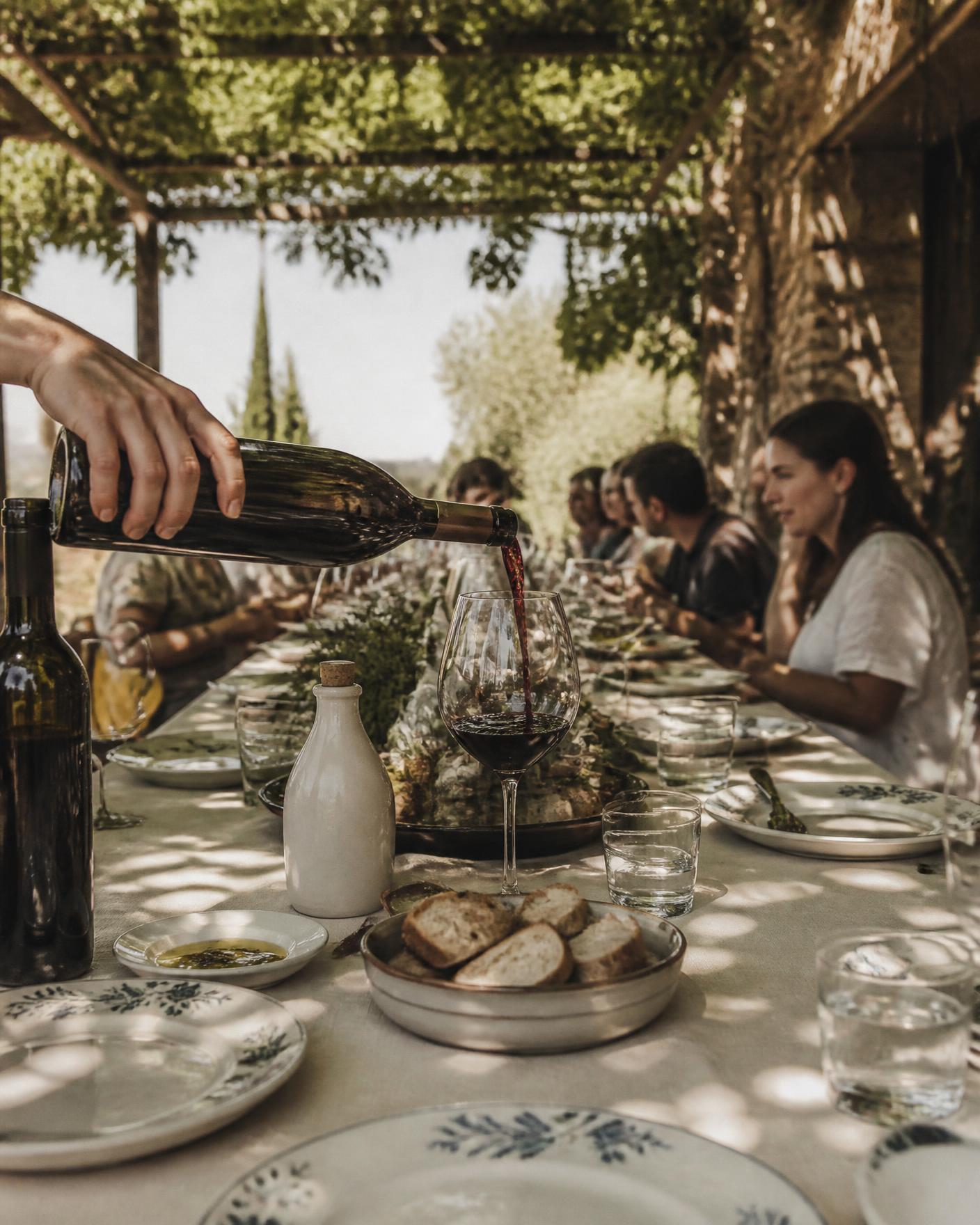
Where to Go
A useful Tuscany itinerary is built from fewer places, held longer. These are the seven worth building a trip around — and the honest version of what each one actually feels like.
Florence. Why go: the density of Renaissance art and architecture is unmatched in Europe, and the city's contemporary life — leather workshops, perfumeries, design studios, an exceptional fashion culture — is far more interesting than the queue for the Uffizi suggests. What it feels like: compact, tawny, occasionally overwhelming at midday and genuinely beautiful at seven in the morning. Best for: art, shopping, food, a two- or three-night opening chapter. Base yourself in the Oltrarno and the city changes character entirely — find your dates →.
Siena. Why go: a medieval city that never modernised its centre, built in brick the colour of burnt sugar around the most theatrical square in Italy. What it feels like: slower and more inward than Florence, organised into contrade that still define local identity. Best for: architecture, evening walks, a second city stop without the crowds.
Val d'Orcia. Why go: this is the Tuscany of the imagination — UNESCO-protected, cypress-lined, absurdly photogenic — with Pienza, Montalcino and a series of thermal towns folded into it. What it feels like: agricultural, quiet, best experienced from a farmhouse rather than a hotel lobby. Best for: countryside stays, wine, doing very little on purpose.
Chianti. Why go: the classic wine country between Florence and Siena, where the vineyards are working estates rather than attractions. What it feels like: greener and more wooded than the Val d'Orcia, with villages — Greve, Radda, Panzano — that still function as villages. Best for: wine, food, an easy countryside base near both cities.
Lucca. Why go: a walled Renaissance city with a tree-planted rampart you can cycle around in forty minutes and a café culture that never became a spectacle. What it feels like: elegant, lived-in, refreshingly unbothered by visitors. Best for: a more intimate alternative to Florence, especially in summer.
Montepulciano. Why go: a Renaissance hill town stacked along a single ridge, with cellars cut into the rock beneath it and Vino Nobile in most of them. What it feels like: vertical, dramatic, glorious at sunset from the Piazza Grande. Best for: wine, views, one very good long lunch.
San Gimignano. Why go: fourteen surviving medieval towers, a skyline unlike anywhere else in Italy. What it feels like: extraordinary at eight in the morning and at eight in the evening; crowded in between. Best for: a first-light detour rather than a full day.
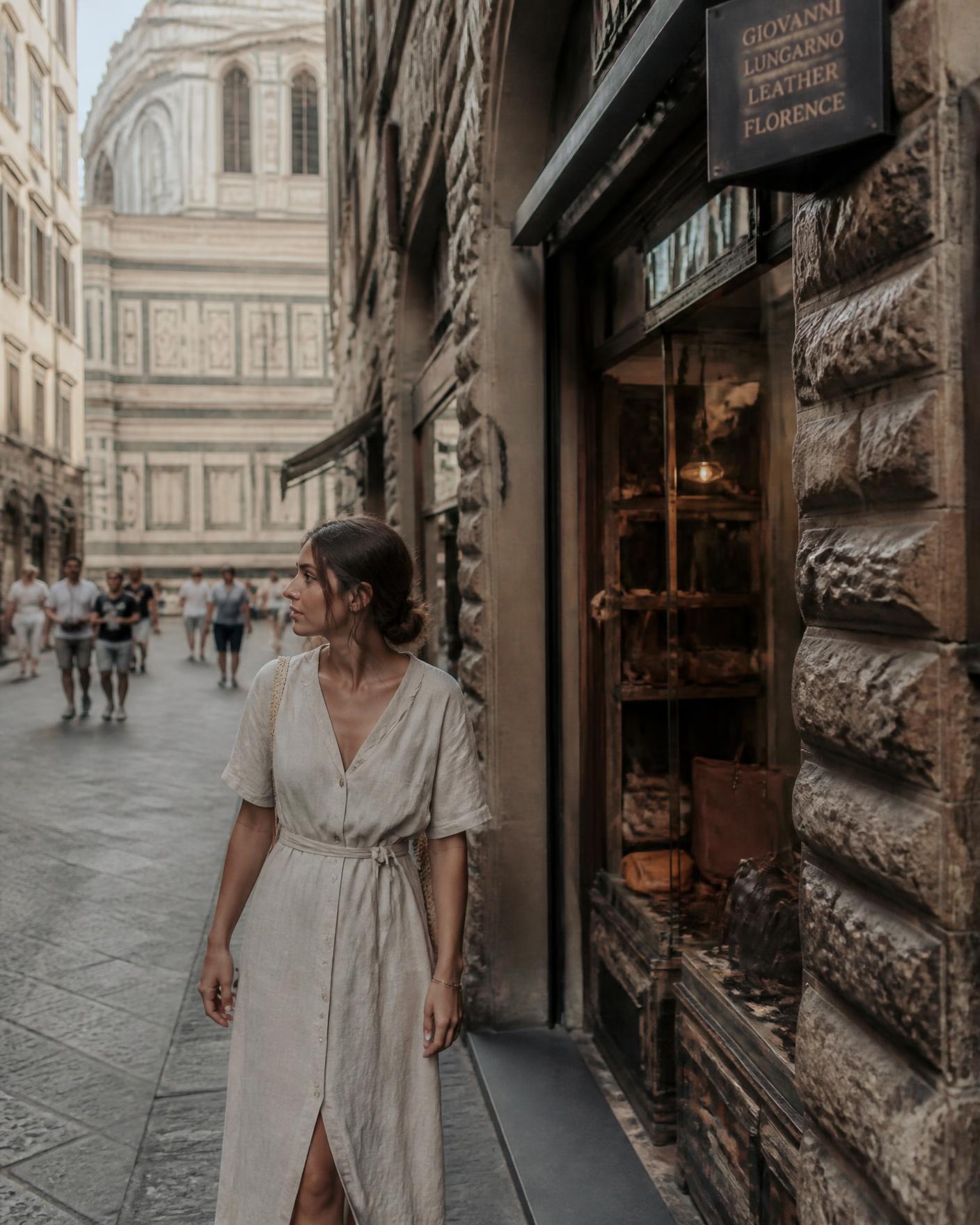
Where to Stay
Where you sleep decides the trip here more than in any other Italian region. A countryside estate turns Tuscany into a stay; a city hotel turns it into a tour. Our selection favours properties with architectural integrity, real landscape around them and service that behaves like hospitality rather than performance — the criteria we apply to every stay we recommend.
Castello di Casole, Casole d'Elsa. A tenth-century estate on 4,200 acres of private Tuscan countryside between Siena and Volterra — the scale is the point: you can walk for an hour and see nothing but oak, vine and your own hotel on the ridge. Restored stone, a genuine working farm, and one of the best countryside spas in the region. explore the stay →
Borgo Santo Pietro, Chiusdino. A thirteenth-century villa with a 300-acre farm behind it, and arguably the most serious food story in Tuscany — vegetables, dairy and honey from the estate, a Michelin-starred restaurant, a cookery school worth planning a day around. Grand, but not stiff. check availability →
Rosewood Castiglion del Bosco, Montalcino. A restored medieval hamlet inside a Brunello estate in the Val d'Orcia, with its own vineyard, church and village square. This is the address for anyone whose Tuscany runs on wine — the tastings are on your doorstep. see the hotel →
Villa Lena, Palaia. The contemporary interpretation: a nineteenth-century villa turned artists' residency and hotel, with organic gardens, a considered restaurant and a creative, unpolished atmosphere that appeals to people allergic to marble lobbies. Excellent value for the setting. find your dates →
Hotel Il Salviatino, Florence. A fifteenth-century villa in the hills at Fiesole, fifteen minutes above the city, with frescoed rooms and a terrace looking straight down at the Duomo. The way to do Florence without sleeping inside its heat. explore the stay →
Grand Hotel Continental, Siena. The only five-star property inside Siena's walls, a seventeenth-century papal palace two minutes from the Campo — the case for staying in Siena overnight rather than visiting it for an afternoon. check availability →
Il Borro, Val d'Arno. A restored medieval village owned by the Ferragamo family, with an organic wine estate, artisan workshops in the borgo and villas rather than rooms — the most family- and group-friendly of the estates. see the hotel →
Two nights in a city and three in the countryside is the ratio that works for most first trips. If you can only choose one, choose the countryside — Florence and Siena are both easy day trips from an estate; the reverse is not true.
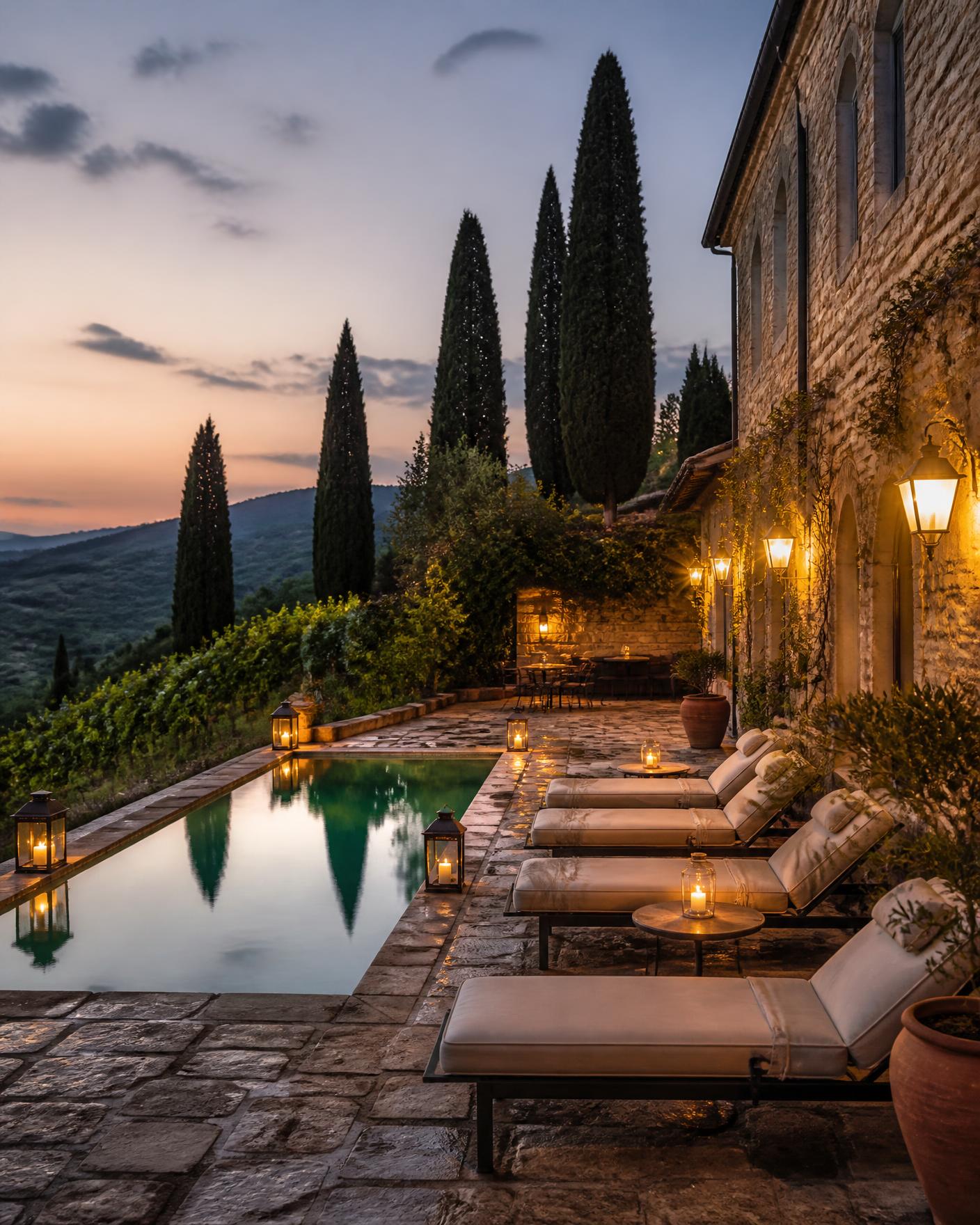
What to Eat & Drink
Tuscan cooking is famously frugal in origin and unfashionably rich in practice. Almost everything worth eating here began as a way of not wasting bread. Ribollita — cavolo nero, beans and yesterday's loaf, reboiled until it holds a spoon upright — and pappa al pomodoro are the two dishes that explain the region's whole relationship with food. Order them in winter and summer respectively, always with olive oil poured over at the table.
Bistecca alla fiorentina is a commitment: a Chianina T-bone, at least a kilo, rare, salted, sold by weight and shared between two or three. Order it at lunch rather than dinner. Elsewhere, look for pici — thick hand-rolled pasta from the Siena hills, usually with garlic or wild boar — pecorino from Pienza in every stage of ageing, and new-harvest olive oil if you travel in November, when it arrives green and peppery enough to catch in your throat.
The wine map is simpler than it looks. Chianti Classico for lunch and everything informal; Brunello di Montalcino for the one dinner you plan properly; Vino Nobile di Montepulciano as the accessible middle ground; and Vin Santo with cantucci at the end, which is less a dessert than a way of not leaving the table. A quiet local rule: the house wine in a rural trattoria is very often from the hill you can see through the window, and is very often the best value on the list.
The Beauty Edit Tip: Book one memorable long lunch rather than trying to fit several restaurants into one day — ideally at a wine estate, ideally at one o'clock, ideally with nothing scheduled afterwards.
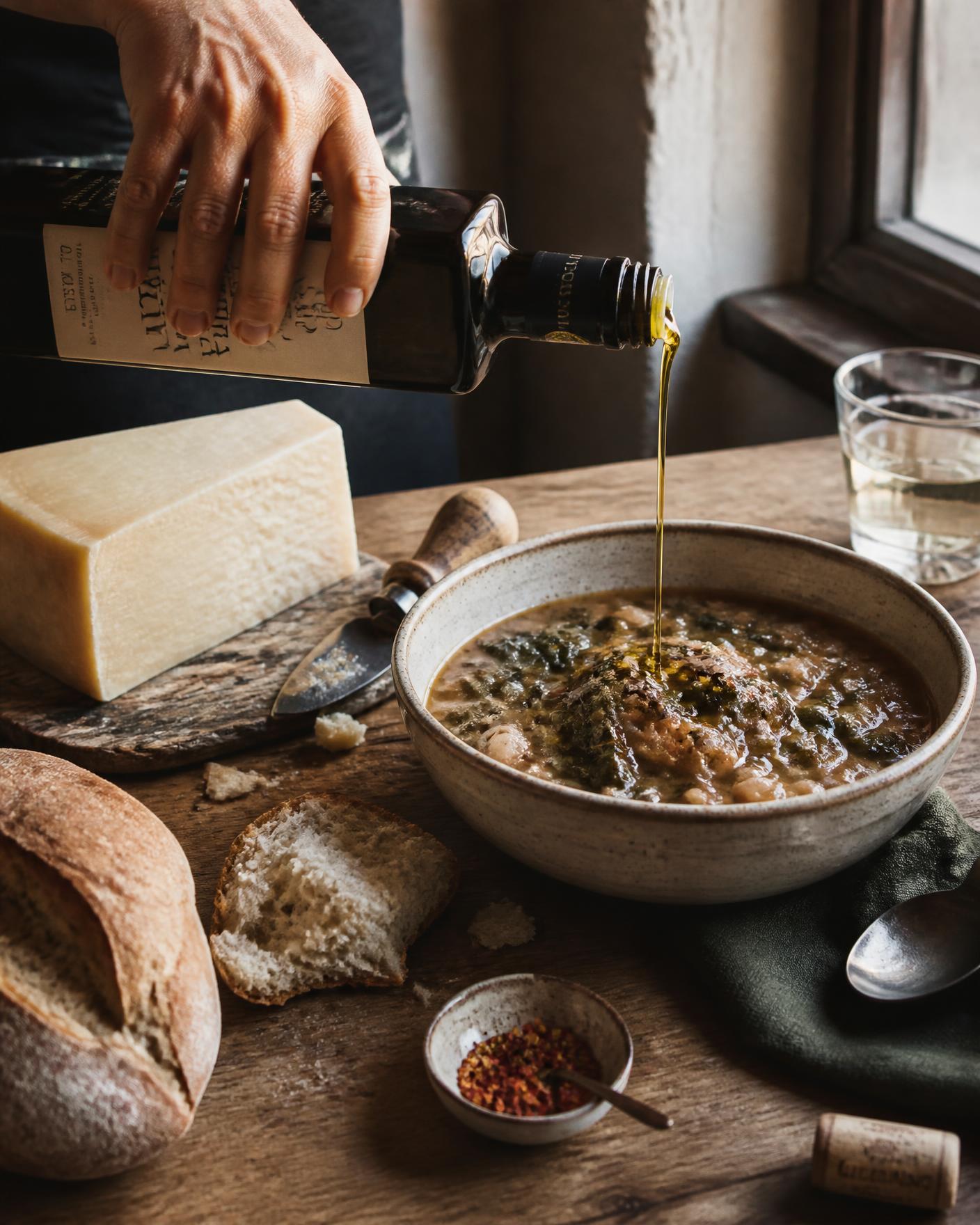
The Tuscan Experiences Worth Making Time For
Six things, not sixteen. Each of these is worth half a day and none of them requires an early alarm.
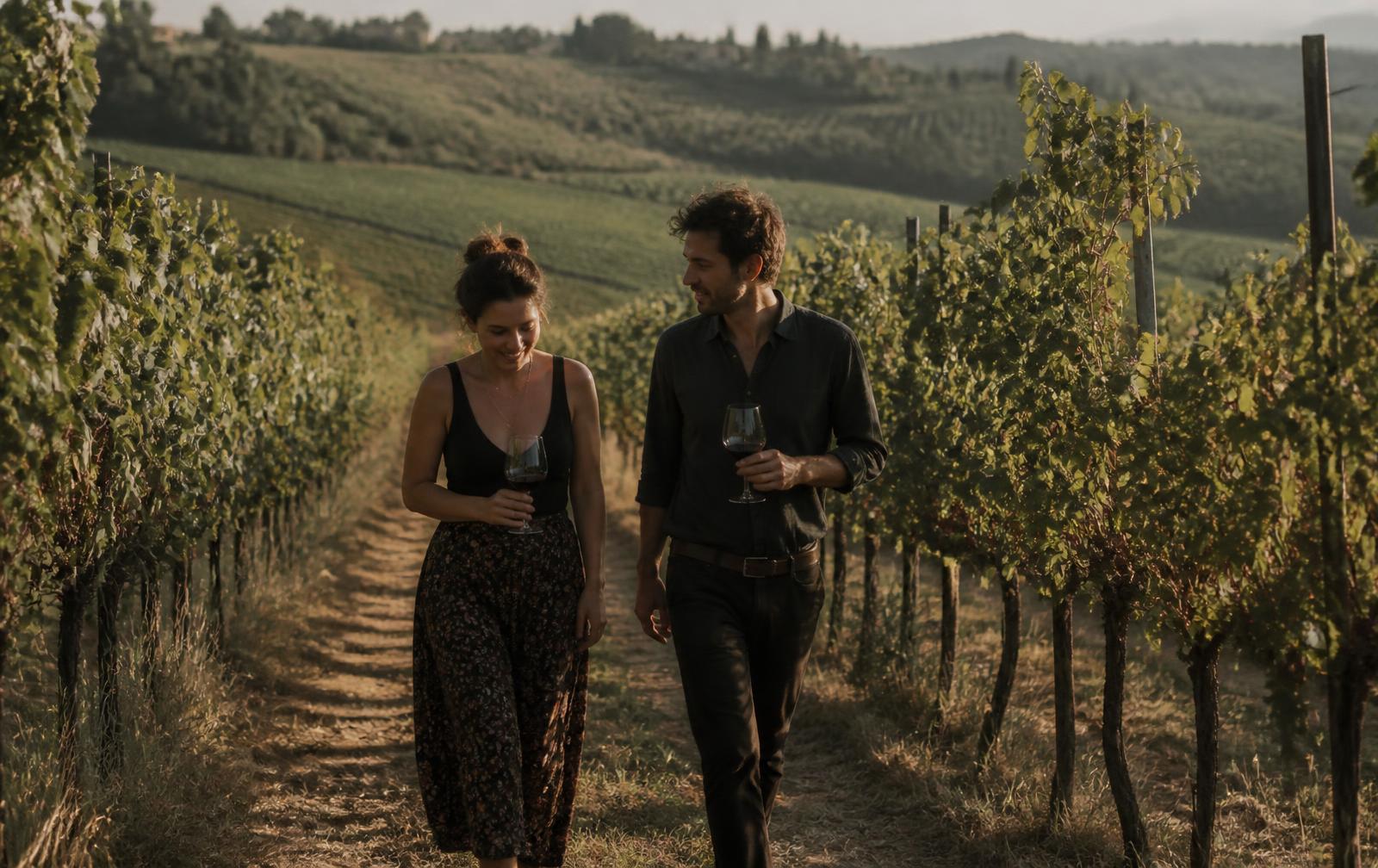
A vineyard visit with lunch attached. The distinction matters: a tasting is forty minutes, an estate lunch is three hours and includes the vineyard, the cellar and the family. Chianti Classico and Montalcino both do this exceptionally well, and most estates require booking a week ahead in high season. browse vineyard lunches and tastings →
A cooking class in a farmhouse kitchen. Pasta by hand, one sauce, one dessert, then lunch with the wine you helped choose. It is the single most reliable way to eat well on the day you have no restaurant booked. see cooking classes →
The Saturday market. Greve in Chianti, Pienza, Lucca — go for the cheese, the oil and the sense of what the region actually eats when nobody is watching.
Thermal baths. Bagno Vignoni's Renaissance pool at the centre of the village, or the free cascades at Saturnia for something wilder. Late afternoon, always. find thermal spa experiences →
A countryside walk at golden hour. The stretch between Pienza and Monticchiello is the classic — an hour and a half of the exact landscape people come here for, on foot rather than through a windscreen. guided countryside walks →
Sunset aperitivo somewhere high. Montepulciano's Piazza Grande, Fiesole above Florence, or simply the terrace of wherever you are staying. Nothing else planned for the evening.
A Sample 5-Day Tuscany Itinerary
Realistic distances, two anchors, and deliberate gaps. Driving is the easiest way to see the countryside, but it is not the only one — alternatives are noted throughout.
Day 1 — Florence. Arrive, walk the Oltrarno, an early Uffizi or Accademia slot if you have booked one reserve skip-the-line tickets →, aperitivo at sunset, dinner in San Frediano. Florence is entirely walkable; a car here is a liability. Fly into Florence or Pisa, or arrive by fast train from Rome or Milan.
Day 2 — Florence to Siena. Morning in Florence — the Bargello, the Santa Maria Novella pharmacy, or simply the markets — then move south after lunch. Siena is 75 minutes by car or 90 by direct coach from Florence's main bus station, which is faster and simpler than the train. Evening in the Campo.
Day 3 — Val d'Orcia. Collect a car if you are driving, or arrange a private transfer and a guided countryside day. see Val d'Orcia day tours → Pienza in the morning for pecorino, Bagno Vignoni for the thermal pool, then the Pienza–Monticchiello walk before dinner. Check into your countryside estate for the last three nights and stop moving.
Day 4 — Montepulciano and Montalcino. One wine town in the morning, one estate lunch in the afternoon, and nothing else. Organised small-group wine tours run daily from Siena and Montepulciano if you would rather not drive after tasting — the sensible option, and easily booked in advance. compare Montalcino and Montepulciano wine tours →
Day 5 — Chianti. Drive or take a guided day trip north through Radda, Panzano and Greve, ending with a cellar visit before returning to Florence. book a Chianti wine day trip → If you are flying out the same evening, allow two hours from Chianti to the airport.
If you are not driving: Florence, Siena, Lucca, Pisa and Arezzo are all connected by regional train, and Montepulciano, Montalcino and San Gimignano are reachable by regional bus with patience. For the Val d'Orcia and Chianti, a private driver for one or two days costs less than most travellers expect and removes the only genuinely stressful part of a Tuscan itinerary — parking in a walled hill town in August.
Book Ahead in Florence
Florence rewards the traveller who reserves the essentials before arriving — museum slots, wine-country departures and countryside days all sell out first in spring and early autumn. A current selection of what is bookable now:
When to Go
Spring (April to early June). Wildflowers, green hills, mild days and long light without the heat. The best window for walking, cycling and hill towns. Book countryside estates early — May is no longer a secret.
Summer (late June to August). Long evenings, festival season and warm nights, but genuine heat at midday and peak crowds in Florence and San Gimignano. Choose a property with a pool, stay in the countryside, and treat the afternoon as off-limits.
Early autumn (September to mid-October). Our recommendation for most travellers: harvest in the vineyards, softer light, warm water in the thermal baths, and a region that is working rather than performing. The single best period for a wine-led trip.
Winter (November to March). Empty towns, low prices, olive-oil season in November and truffle season in the Crete Senesi. Some estates close, but Florence, Siena and Lucca in January are an entirely different, more intimate proposition — and the food is at its best.
Elsewhere in Italy
Tuscany pairs well with almost anywhere in the country, and travels particularly well with cities that share its refusal to hurry. For another Italian city where heritage and contemporary life coexist beautifully, read our guide to the new dolce vita in Rome — 90 minutes by fast train from Florence, and an easy first or final chapter.
If the countryside version of Italy is what draws you, Puglia and Sicily offer the same slowness at a lower altitude and a lower price. For coast rather than hills, our Amalfi Coast edit and Capri guide cover the summer end of the same instinct, and the Santorini guide handles the Greek equivalent.
As for what to pack: linen, one good pair of walking shoes and very little else. Our Mediterranean capsule wardrobe was built for precisely this kind of trip.
Plan the Trip
Plan the Trip
Florence · Siena · Val d'Orcia · Chianti
Planning a Tuscan escape? Explore our curated stays and travel recommendations — countryside estates, walled-city hotels and wine-country villas, in one place.
Explore stays in Tuscany →The travellers who love Tuscany most are rarely the ones who saw the most of it. They are the ones who found a hill town they liked and went back twice, who ate the same lunch three days running because it was that good, who learned the name of the woman at the market stall in Pienza.
Fewer plans, more time, closer attention to the details — that is the whole method. Tuscany is not really a list of places to visit; it is a way of arranging a day that people have been refining here for several centuries, and which happens to work just as well when you are only borrowing it for a week.